Kīlauea Summit Lava Flow Signals Episode 44 Eruption Coming Soon
A south-vent lava flow captured at Kīlauea just after 6 a.m. Thursday puts Episode 44 on track to begin as soon as Sunday, threatening ash and vog for Volcano Village and Hilo.
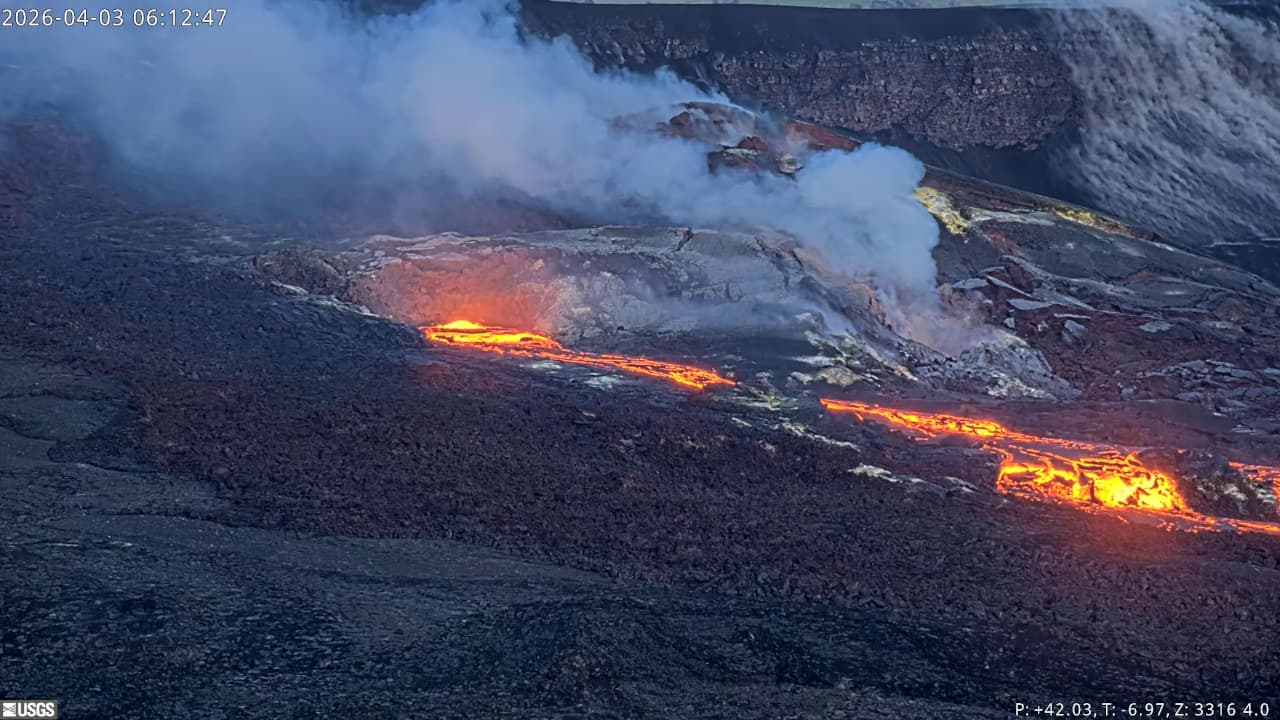
A precursory lava flow from Kīlauea's south vent Thursday morning confirmed what the Hawaiian Volcano Observatory's monitoring network had been telegraphing for days: Episode 44, the next short fountaining event in the ongoing summit eruption cycle, is likely to begin between April 6 and April 14.
The U.S. Geological Survey's Hawaiian Volcano Observatory documented the flow just after 6 a.m. HST on April 3, following a night of continuous glow visible from both vents inside Halemaʻumaʻu crater. In their update, HVO scientists wrote that "the summit is currently inflating. Glow was continuously visible from both vents overnight, and the first episode 44 precursory lava flow occurred from the south vent just after 6 a.m." Seismometers, tiltmeters, GPS sensors and webcams across the summit all confirmed sustained inflation after Episode 43 closed — the classic signature of a shallow magma system refilling and pressurizing toward another break. Rather than issuing a single-day prediction, HVO specified a likelihood window because fountaining episodes in this eruption cycle typically run less than 12 hours, with pauses between episodes ranging from days to weeks.
What those short bursts produce, however, is anything but minor. High lava fountains generate ash and tephra that can fall across Volcano Village and, under certain wind conditions, reach as far as Hilo. Previous episodes left fragmented material on rooftops, inside irrigation systems and in pools, creating cleanup costs even when no structures faced a direct threat. Vog spreads more broadly and can degrade air quality across the island for days after active fountaining ends.
The primary hazard is not lava reaching populated coastlines. HVO has been consistent that summit fountaining in this cycle poses no direct lava-flow threat to lower elevations. The realistic risks are ash dispersal, tephra fall near the park, vog concentration downwind, and rapid access changes inside Hawaiʻi Volcanoes National Park. Helicopter tour operators, park vendors and school administrators managing outdoor facilities all sit inside that impact radius and need contingency plans in place before Sunday.
Hawaiʻi County Civil Defense, Hawaiʻi Volcanoes National Park managers and local emergency services have maintained regular coordination with HVO throughout this eruption cycle. Because park closures and access restrictions can shift within hours of a fountaining onset, the fastest official notifications come directly from Hawaiʻi County Civil Defense and the park's own channels. The USGS daily volcano update page tracks the technical indicators, including tilt readings, tremor levels and GPS displacement, that will signal how close Episode 44 is to breaking. The Hawaiʻi State Department of Health provides real-time air quality data for communities downwind of the summit.
While Oʻahu, Maui and the neighbor islands measure volcanic risk in geologic epochs, the Big Island remains the only place in the United States where residents check lava webcams before heading to work. With observable precursory activity already recorded and the April 6-14 window now formally projected, that monitoring starts now.
This article was produced by Prism’s automated news system from verified source data, official records, and press releases, then run through automated quality and moderation checks before publishing. The system is built and supervised by the people who set the standards it runs under. Read our full AI policy.
Did this article answer your question?