Kona Coast Night Manta Ray Snorkels Draw Visitors to Big Island Waters
Manta Village in south Kona reports a 96% sighting success rate — here's everything you need to know before booking a night snorkel on the Kona coast.

Floating in dark water off the Kona coast while giant manta rays glide through beams of underwater light is, by most accounts, unlike anything else available on the Big Island. The mechanics are deceptively simple: operators shine high-powered lights beneath the surface, drawing plankton toward the glow, and the mantas follow. The result is a reliable, close-range encounter with animals whose wingspan can reach up to 15 feet, yet which, as one operator puts it, "have no teeth, no stingers, and are completely harmless... graceful and curious, not aggressive."
Three named sites concentrate most of the action. According to the Hawaii Vacation Guide, Manta Point sits in Kohala, Manta Heaven serves north Kona, and Manta Village anchors south Kona, where operators claim a 96% sighting success rate. A separate operator, The Manta Snorkel Co., reports a 95%+ success rate across their tours and notes "a quick 3-minute boat ride to Manta Ray Village, the shortest trip on the island." Both figures are operator-stated claims rather than independently verified data, so it's worth checking directly with whichever company you book before treating them as guarantees.
How the Night Unfolds
The experience begins well before anyone enters the water. Kona Snorkel Trips departs from Honokohau Small Boat Harbor, where guests meet a lifeguard-certified crew that runs an educational briefing on manta ray biology and the history of the Kona rays. Hawaiʻi Tours operates a separate 1.5-hour evening product departing from Kawaihae South Boat Ramp, priced from $175. Because departure points vary by operator, confirm your specific launch location when booking rather than assuming a single harbor covers all tours.
The boat ride out doubles as one of the better sunset-viewing opportunities on the island. "As your boat pulls away from the harbor, you get a front-row seat to a classic Kona sunset, with the sky blazing in shades of orange and purple," according to Kona Snorkel Trips. "This boat ride is more than just getting from point A to point B; it's that perfect moment where you leave the busy land behind and head out into the quiet mystery of the ocean at twilight."
Once the boat reaches the site, guests hold flotation boards fitted with downward-facing lights while mantas feed below. "You'll watch as these majestic rays enter the light beams, mouths wide open to filter-feed on the tiny shrimp-like creatures drawn to the glow," as one Big Island manta tour operator describes it. "It is a spectacle of nature that is both raw and incredibly peaceful." Guides are in the water with participants throughout, ensuring both safety and positioning.
How Long It Takes
Timing varies meaningfully between operators. Kona Snorkel Trips states that most tours run about 2 to 3 hours from check-in to harbor return, with 30 to 45 minutes spent in the water: "the perfect amount of time to be completely mesmerized without getting too chilly." The Manta Snorkel Co. describes a much tighter structure, roughly one hour from start to finish, with approximately 35 to 40 minutes in the water, noting that some guests choose to exit earlier. When comparing tours, ask each operator for their specific timeline so you can plan the rest of your evening accordingly.
Gear, Safety, and Who Can Participate
Operators provide the core equipment: wetsuit, mask, snorkel, and flotation board. The wetsuit is not optional comfort gear but, as Kona Snorkel Trips notes, "essential for warmth and buoyancy." The Hawaii Vacation Guide recommends arriving in your swimsuit and bringing a towel and a change of warm clothes since the return ride can feel cool after time in the water. Beyond personal items, operators handle the rest.
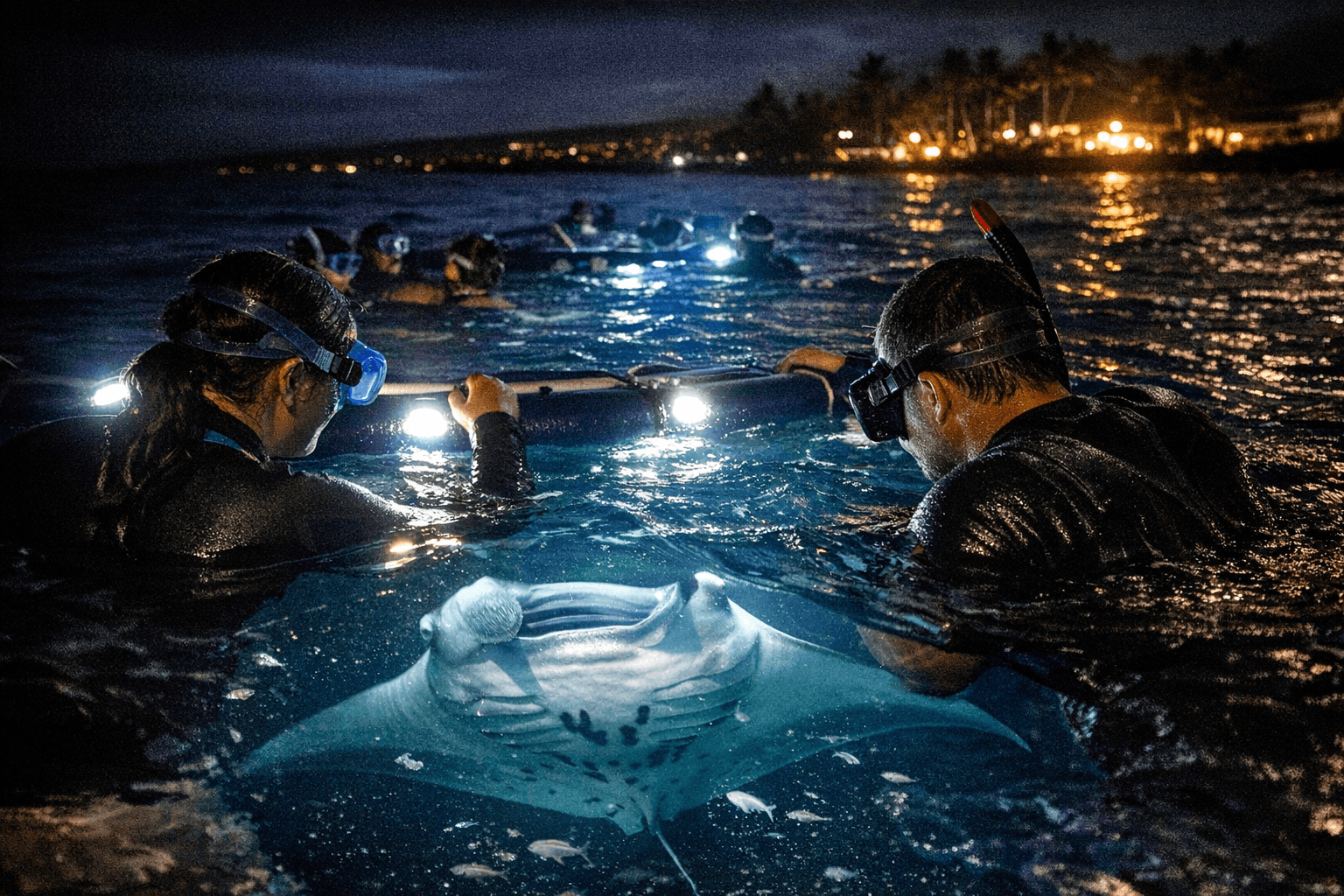
Safety briefings are structured and thorough. The Manta Snorkel Co. breaks their orientation into distinct phases: gear setup, a quick safety overview before entering the water, and an in-water briefing covering snorkeling techniques and clear safety protocols. Lifeguard-certified guides accompany guests both on the boat and in the water.
There are firm eligibility restrictions. At least one operator states plainly: "Non-swimmers are not permitted on this tour. Swimming Skills REQUIRED, No Exceptions." The same operator notes that their vessel is not suitable for those with limited mobility. If either factor applies to someone in your group, contact the operator directly before booking.
Pricing
Group manta snorkel tours start from $139 on some operator pages, while Hawaiʻi Tours lists their Kawaihae South Boat Ramp departure from $175. Private tour options are available for those who want an exclusive experience, with pricing starting from $1,999. All figures are operator-stated starting prices and subject to change; verify current availability and rates with the specific company before finalizing any reservation.
After the Swim
Re-boarding is built into the boat design on some vessels, with two ladders on the back for easy exit from the water. Once back on board, drinks and a snack are included, with at least one operator offering complimentary hot chocolate and water after the swim. The return ride also doubles as a stargazing opportunity. Hawaii County's dark-sky lighting regulations keep the night sky unusually clear along the coast, and on a calm night you can see the Galactic Center of the Milky Way from the boat. Mauna Kea, visible from the water on clear nights, is recognized as one of the premier astronomy sites on the planet.
Booking Strategy
If the tour you select offers a manta ray sighting guarantee, the Hawaii Vacation Guide recommends booking early in your trip rather than saving it for the final night. That way, if conditions don't cooperate and no mantas appear, you have time to rebook before you leave the island. The three named viewing sites, particularly Manta Village in south Kona, are designed to maximize sighting odds through the light-plankton-manta chain, but ocean conditions remain variable by nature.
The Kona coast manta experience draws visitors from across the world precisely because reliable wildlife encounters of this scale are genuinely rare. Mantas that big, that close, that consistently, do not exist in a predictable format anywhere else in Hawaiʻi.
This article was produced by Prism’s automated news system from verified source data, official records, and press releases, then run through automated quality and moderation checks before publishing. The system is built and supervised by the people who set the standards it runs under. Read our full AI policy.
Did this article answer your question?