Kona Coffee Belt Tours Offer Visitors a Taste of Big Island Tradition
Hundreds of small farms dot the volcanic slopes above Kona, where visitors can trace a cup of coffee from cherry to cup on one of the Big Island's most beloved tours.
Few agricultural landscapes in the United States carry the name recognition of the Kona coffee belt. Stretching along the west slopes of Hualālai and Mauna Loa, this narrow ribbon of volcanic terrain produces one of the world's most sought-after coffees, and the farms that grow it have quietly become one of the Big Island's most compelling visitor experiences. For anyone spending time on the island's western coast, a tour through the belt offers something a hotel luau or snorkel trip simply cannot: direct contact with the people and land behind a product that has defined this region for nearly two centuries.
What Makes the Kona Coffee Belt Distinct
The geography here is specific and unforgiving in the best possible way. The west-facing slopes of Hualālai and Mauna Loa catch morning sun and afternoon cloud cover, creating a microclimate that coffee agronomists describe as close to ideal. Elevation, volcanic soil rich in minerals, and reliable rainfall combine to produce a bean with a flavor profile that commands premium prices on global markets. The belt itself is narrow, running roughly from Kailua-Kona in the south to just above Hōlualoa and through the districts of Captain Cook and Hōnaunau, and that geographic compression means dozens of farms sit within a short drive of one another.
What distinguishes this region from other coffee-producing areas is its structure: hundreds of small, often family-owned farms share the landscape with a handful of larger estates. That mix means visitors can choose between an intimate, hands-on experience at a single-family operation and a more polished, educational tour at an estate with dedicated tasting rooms and processing facilities. Neither is inherently better; they offer genuinely different windows into how Kona coffee is grown, processed, and brought to market.
What to Expect on a Farm Tour
Most farm tours follow coffee from tree to cup, and even a basic visit tends to cover more ground than first-time visitors expect. The coffee plant itself is worth understanding before arrival: Kona grows primarily Guatemalan Typica, a variety introduced to the islands in the early 1800s, and the cherries ripen to a deep red before harvest, which on most farms runs from roughly August through January.
During a tour, you can typically expect to:
- Walk rows of coffee trees on active growing land, with guides pointing out the stages of cherry development
- See the wet-milling process, where harvested cherries are pulped, fermented, and washed before drying
- Observe or participate in hand-sorting, one of the most labor-intensive steps that separates Kona's production model from industrial coffee farming
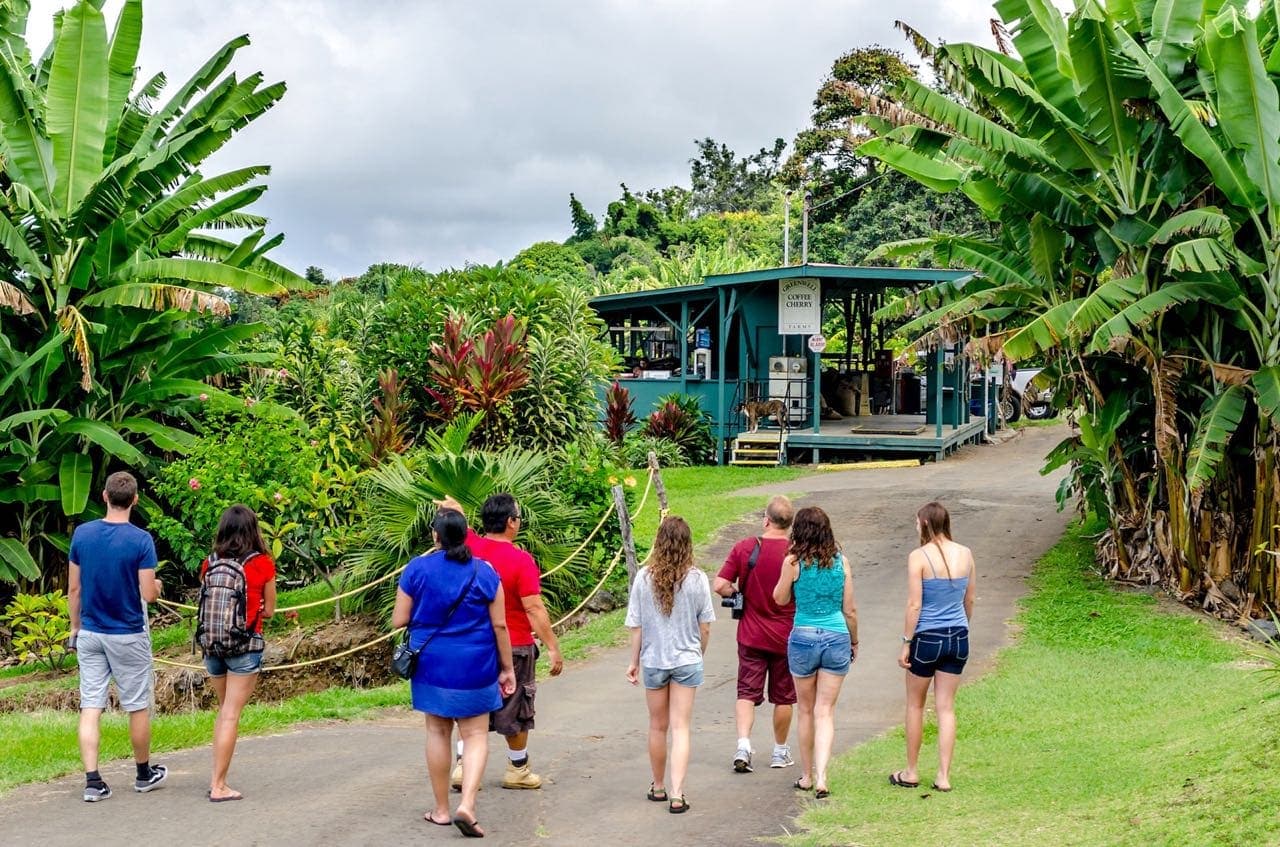
- Sample roasted coffee at various roast levels directly on the farm, often with context about how altitude and processing affect the cup
The tasting portion is where many visitors find the experience clicks into focus. Comparing a honey-processed Kona to a washed version from the same farm, or tasting the difference between beans grown at 1,500 feet versus 2,500 feet of elevation, makes tangible what would otherwise be abstract marketing language on a retail bag.
Navigating the Belt: Small Farms Versus Larger Estates
The hundreds of small farms scattered across the belt operate with relatively lean staffing, and many do not run formal tour programs on a fixed schedule. The best approach is to contact farms directly, check for posted hours at roadside stands, or look for signs along Māmalahoa Highway (Route 11), which threads through the heart of the growing region. A spontaneous stop at a small farm stand can turn into a 45-minute conversation with a third-generation grower who picks, processes, and roasts entirely on-site; that kind of unscripted encounter is genuinely difficult to find elsewhere in Hawaiian agritourism.
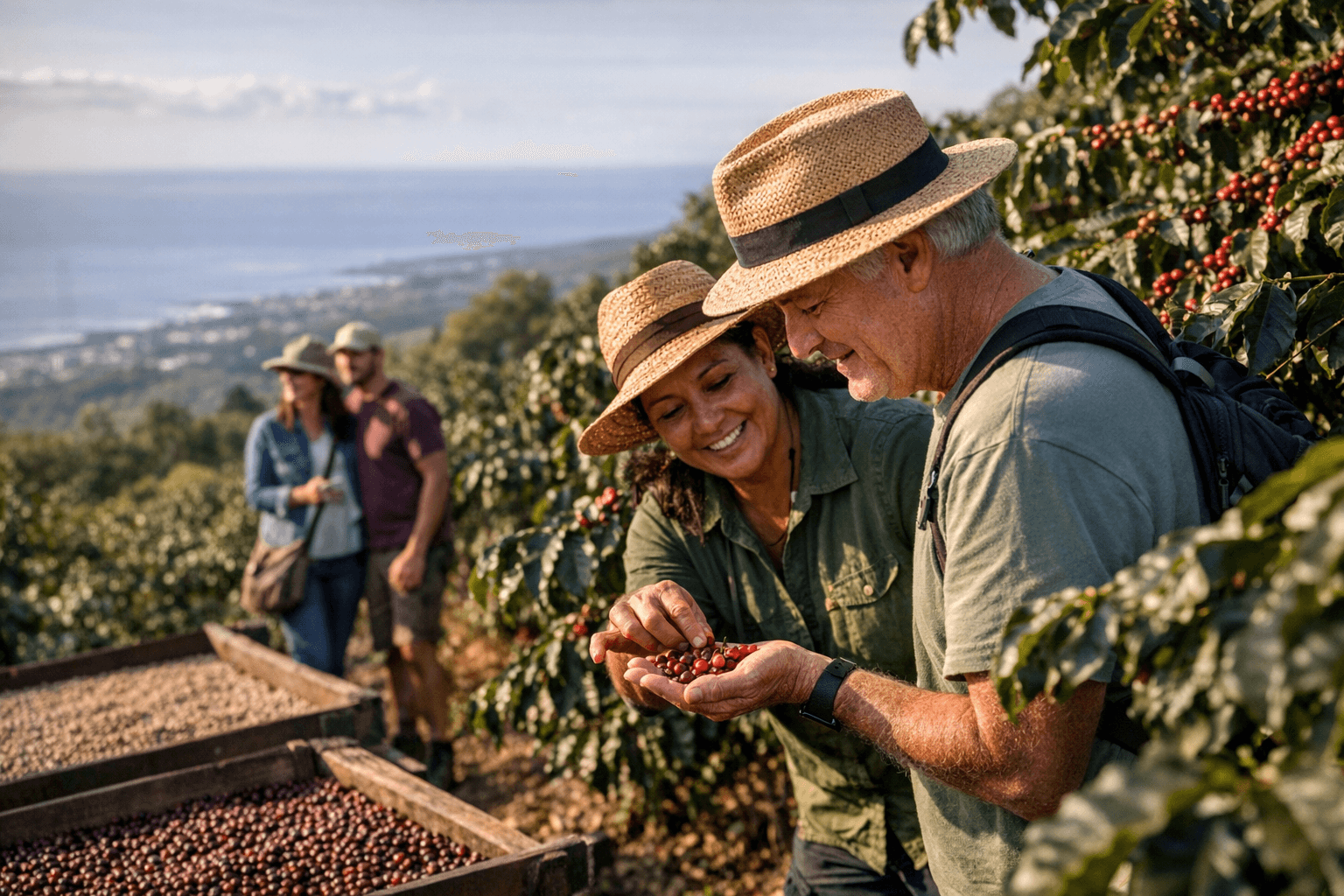
Larger estates offer a different proposition. Organized tours, often bookable in advance online, typically include guided walks, processing demonstrations, and curated tastings in a dedicated space. These operations have the staffing to handle groups and the infrastructure to explain the full production chain systematically. For visitors who want context and structure rather than serendipity, estate tours deliver a more consistent experience.
A practical note: the belt's most concentrated stretch sits between roughly 1,000 and 2,500 feet of elevation, and the driving between farms is scenic but winding. Allow more time than a map app suggests, particularly if you plan to stop at roadside stands or pull off for views down toward the Kona Coast.
The Economics Behind the Coffee
Kona coffee's reputation comes with a price point that surprises some visitors accustomed to commodity coffee. Genuine 100% Kona coffee consistently sells at a significant premium over blends and other single-origins, a reflection of the labor-intensive hand-picking required on steep terrain, the small scale of most operations, and the costs of farming in Hawaiʻi. Visiting a farm puts that price in direct economic context: when you watch workers sorting cherries by hand on a hillside farm with a dozen acres in production, the retail price of a pound of beans becomes easier to understand.
The "Kona blend" labeling issue is also worth knowing before you shop. Under Hawaiʻi state law, a product labeled "Kona blend" needs to contain only 10% Kona coffee, with the remainder coming from lower-cost beans grown elsewhere. Farms and estate shops selling 100% Kona will say so explicitly, and the price difference between a blend and the real thing is substantial. Buying directly from a farm you've just toured is the most reliable way to ensure you're taking home what you think you're taking home.
Timing Your Visit
The harvest season, running approximately August through January, is when the belt is at its most active and visually dramatic, with trees heavy with red and yellow cherries and processing facilities running at capacity. Tours during this period offer the fullest picture of how the farm operates under real working conditions. That said, coffee trees flower in late winter and early spring, and the white blossoms, locally called "Kona snow," give the hillsides a striking appearance in February and March that draws its own category of visitor.
Year-round, the belt's elevation keeps temperatures cooler than the coast below, making farm walks comfortable even on days when Kailua-Kona's waterfront feels oppressively warm. Pack a light layer regardless of the season.
Making the Most of the Experience
The Kona coffee belt rewards curiosity more than efficiency. The farms that leave the strongest impression tend to be the ones where you ask questions, slow down, and let a conversation with a grower extend past what any formal tour script would allow. The combination of volcanic landscape, agricultural history, and genuine small-farm character makes this one of the few visitor experiences on the Big Island that feels equally worthwhile for someone on their first trip to the island and someone who has been coming for decades.
This article was produced by Prism’s automated news system from verified source data, official records, and press releases, then run through automated quality and moderation checks before publishing. The system is built and supervised by the people who set the standards it runs under. Read our full AI policy.
Did this article answer your question?