West Hawaii warned on coconut rhinoceros beetle transport rules
West Hawaii movers now need a compliance agreement for beetle host materials, with fines up to $10,000 and a zone stretching from Waikoloa Road to Hawaii Belt Road.
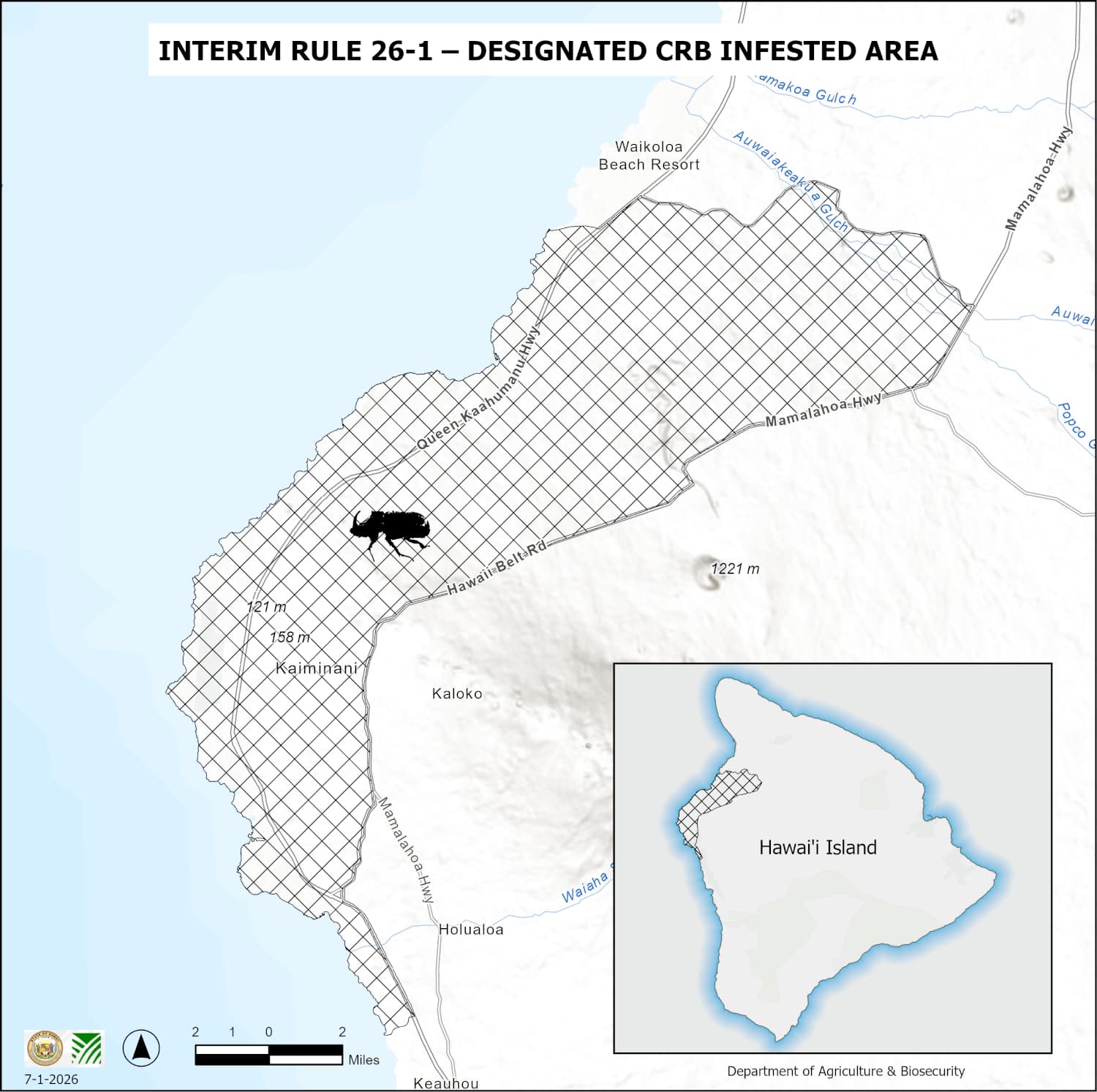
West Hawaii landscapers, nurseries, haulers and property owners moving coconut rhinoceros beetle host material now need a compliance agreement in the Kona and South Kohala infestation zone, or face penalties of up to $10,000. The Hawaii Department of Agriculture and Biosecurity requires the agreement inside the area generally bounded by Waikoloa Road, the coast, Laaloa Avenue and Hawaii Belt Road, where palm debris and other plant waste can carry the beetle from one site to the next.
The rule took effect March 25, 2025 under Hawaii Revised Statutes sections 141-1 and 150A-9.5. It is not limited to farms. The compliance agreement reaches commercial and non-commercial operators who move host material, including potted plants or sod with organic material attached, mulch, trimmings, wood chips, stumps, compost, plant propagation media and erosion control socks. Organizations, companies and private individuals must complete training through the Big Island Invasive Species Committee to get the agreement.

State rules draw a line between that material and products that can move more freely. Allowed items include edible plant products, seeds for planting, cut flowers and decorative foliage, treated or preserved wood items, and rock, coral, sand or gravel that are not mixed with host material. Non-host bare-root plants, propagative cuttings and sterile tissue-cultured plants are also excluded from the restricted list.
Three live adult beetles were trapped in Waikoloa in October 2024, after six larvae were found in a decaying palm tree in Waikoloa Village in October 2023. In July 2025, surveys found two breeding sites in Kona. By September 2025, state and county agencies had fumigated and removed 144 tons of potential breeding-site material from a nursery in Keāhole Agricultural Park.
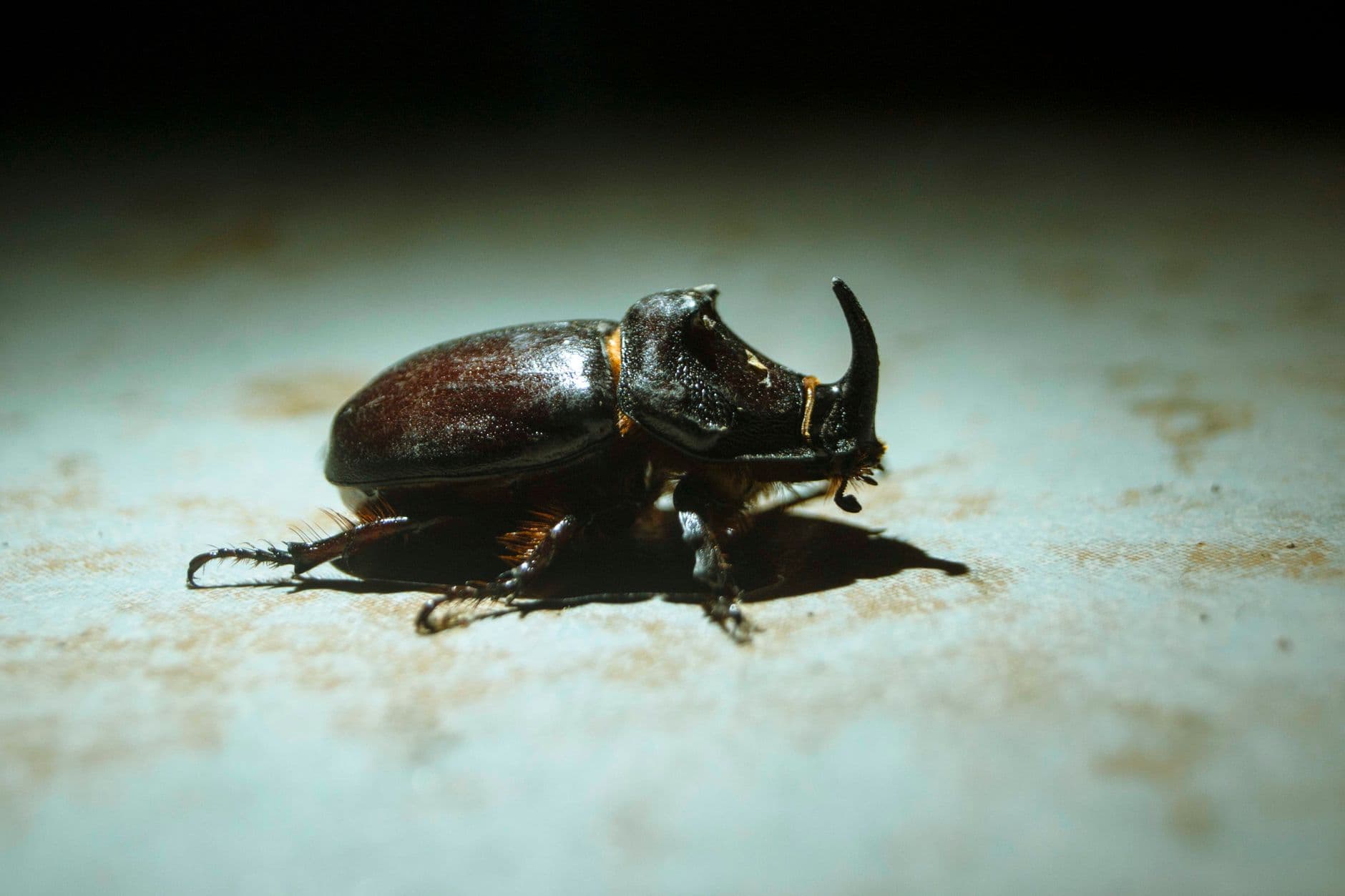
County of Hawaii officials previously used a voluntary compliance order in West Hawaii from July 1 through Sept. 30, 2025, and later extended it in early 2026 to keep host material from being moved out of affected areas.
This article was produced by Prism’s automated news system from verified source data, official records, and press releases, then run through automated quality and moderation checks before publishing. The system is built and supervised by the people who set the standards it runs under. Read our full AI policy.
Did this article answer your question?