Broward pharmacy figure convicted in oxycodone distribution conspiracy
Olushola Yusuf was convicted in a Broward oxycodone scheme tied to two storefront pharmacies and more than 300,000 30mg pills. A burnt-out P left Chans Pharmacy in Pembroke Pines reading HARMACY.
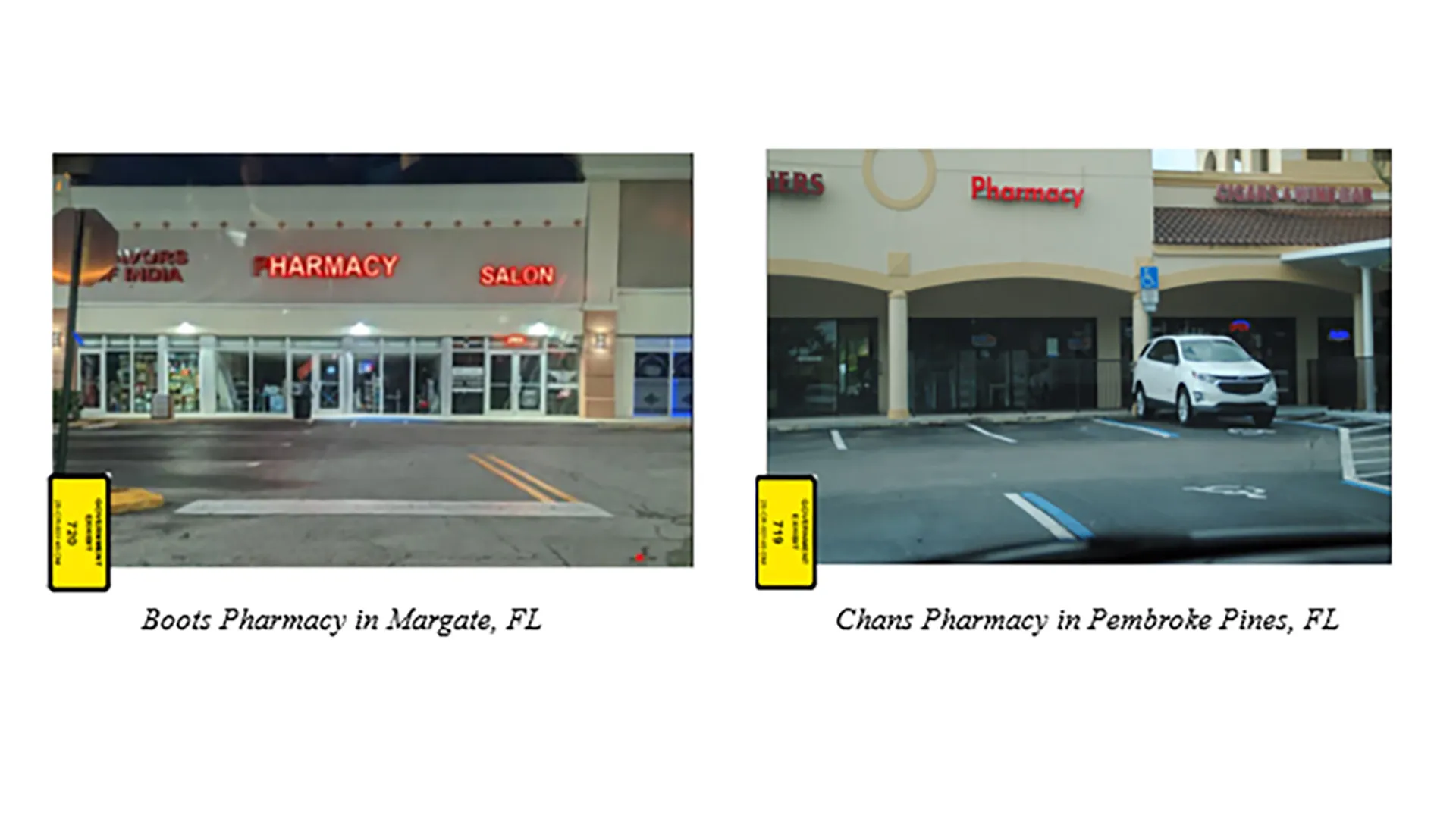
A Broward County pharmacist was convicted in a federal oxycodone conspiracy that prosecutors said moved more than 300,000 30mg pills through two storefront pharmacies. The FBI identified the defendant as Olushola Yusuf, a Florida-licensed pharmacist and pharmacy owner, in a case the Justice Department labeled a massive oxycodone distribution conspiracy.
One of the locations was Chans Pharmacy in Pembroke Pines, where a photo note showed a burnt-out letter P on the sign, leaving HARMACY visible. The two-storefront setup mattered because the pills were not flowing through street corners alone but through businesses that carried the look of ordinary neighborhood pharmacies.
Federal investigators said the pills went to pharmacy patrons who had no medical need for them. That volume, more than 300,000 oxycodone 30mg tablets, put the case among the larger Broward pharmacy-diversion prosecutions tied to the opioid supply chain and the South Florida pill market.

The case also fits a longer Broward enforcement history. In 2011, the Drug Enforcement Administration announced Seven Indicted In Broward Pharmacy Takedown, underscoring how often South Florida pharmacies have sat at the center of diversion cases. The Justice Department, the FBI and the U.S. Department of Health and Human Services Office of Inspector General all treated Yusuf’s conviction as part of a broader federal crackdown on pharmacy-based pill trafficking.
For Broward neighborhoods that have lived with overdoses, dependency and the downstream crime tied to opioid access, the conviction lands as more than a white-collar case. It shows prosecutors are still pursuing the business side of illegal pill distribution, where a trusted storefront can become part of the pipeline instead of a safeguard.
This article was produced by Prism’s automated news system from verified source data, official records, and press releases, then run through automated quality and moderation checks before publishing. The system is built and supervised by the people who set the standards it runs under. Read our full AI policy.
Did this article answer your question?