A-B Tech Students Win Spot on ISS to Study Oil in Microgravity
A-B Tech diesel student Curtis Epley's team beat 14 campus rivals to become one of 20 U.S. schools cleared to fly a lubricating-oils experiment to the ISS this summer.
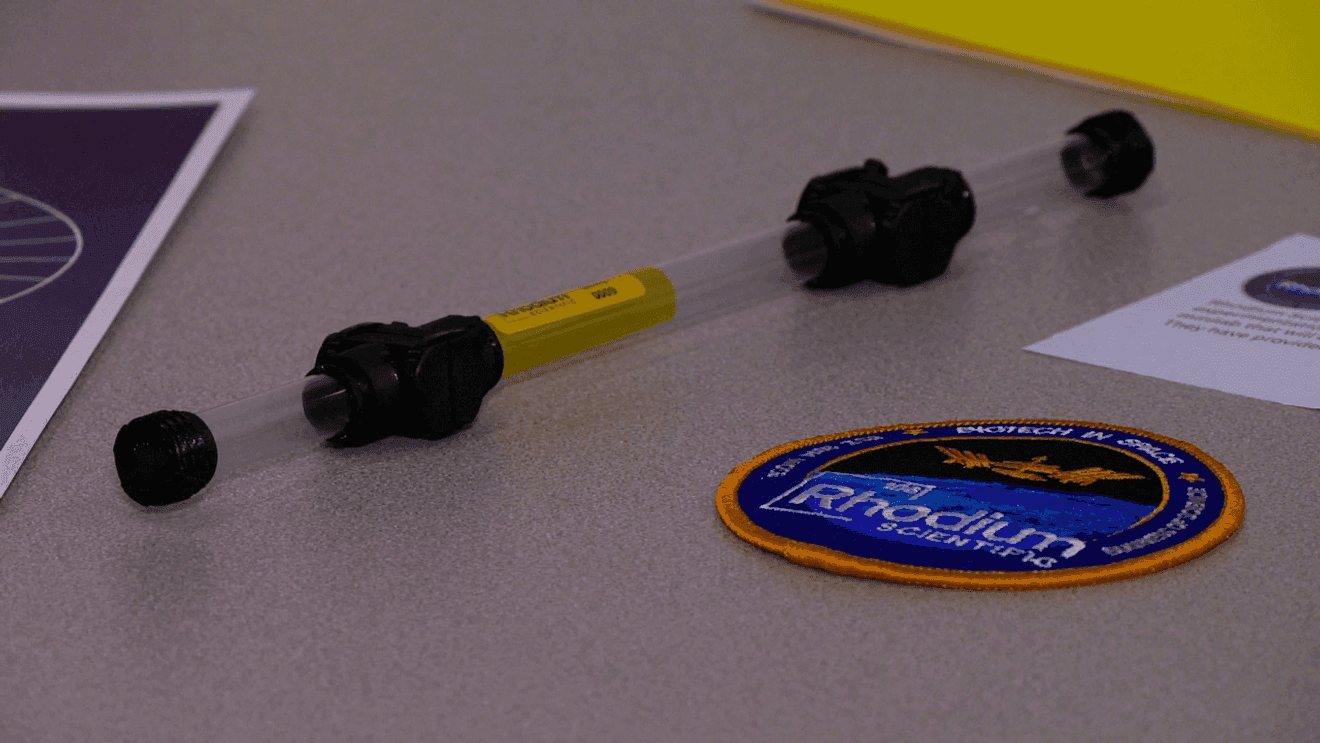
Curtis Epley enrolled at A-B Tech to work on diesel engines and heavy equipment. This summer, a project he helped design will ride a rocket to the International Space Station.
A-B Tech was named one of 20 institutions nationwide to earn a flight slot through the Student Spaceflight Experiments Program, a national competition that has received more than 22,000 proposals since its 2010 founding while clearing only one experiment per participating community per mission cycle. The college's three-student team, drawn from physics courses and technical programs, first had to outcompete 14 other student groups at the campus level before advancing to national selection.
Their experiment examines how lubricating oils behave in microgravity, a question that connects Epley's vocational track directly to an unresolved engineering problem. On Earth, gravity keeps oil pooled at the base of an engine sump; in low-Earth orbit, that downward pull disappears, and liquid lubricants can migrate unpredictably along surfaces, potentially coating sensors or failing to protect moving parts. Understanding how oil films form and perform in weightlessness has implications for spacecraft mechanical systems and for the extreme-condition industrial machinery that Buncombe County's construction, transportation, and advanced-manufacturing employers depend on daily.
Physics instructor Shannon Bonomi guided the team through the proposal and safety screening that every SSEP experiment must clear before being certified for flight. When she told the students they had become finalists, Bonomi recalled their reaction: "They got really excited. They wanted to know, okay, what happens next? What do we do? What does this look like for us?"
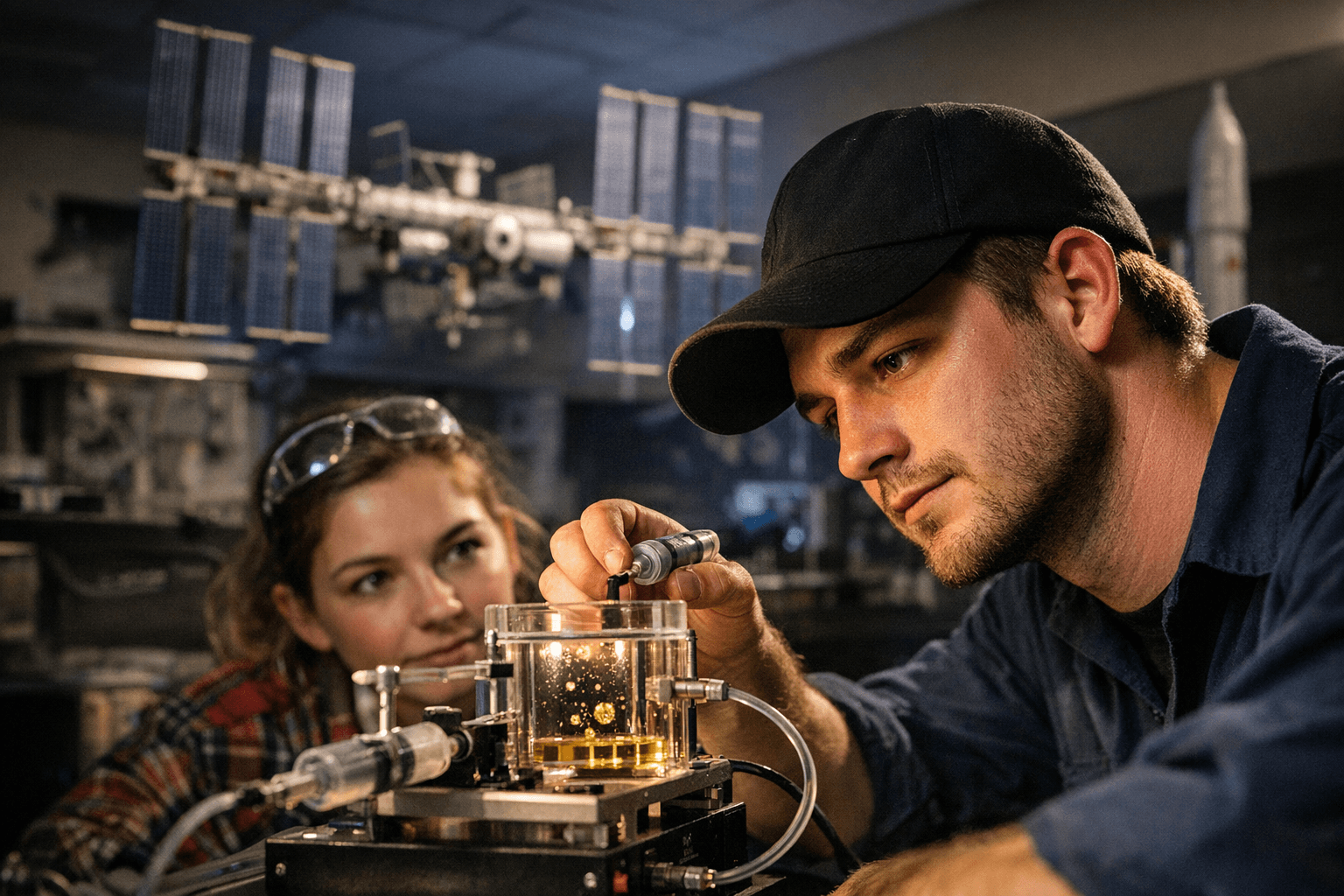
The selection was announced at A-B Tech's Space Fest on April 1, where all 14 competing student groups presented their proposals to the campus and broader community. Students at the event also designed more than 100 space-themed badges; one will accompany the experiment on its flight to the station.
Epley's path from the diesel shop to an ISS payload reflects what A-B Tech has assembled at its Asheville campus. The college's 30,000-square-foot Advanced Manufacturing Center provides CNC machining and industrial training alongside degree programs in diesel mechanics, electrical work, and construction trades, programs that feed directly into Buncombe's employer base. Regional manufacturers and skilled-trades firms have consistently cited the local labor pipeline as a constraint on growth; a team from that same pipeline now generating orbital research data raises the college's profile with industry partners, federal grant programs, and prospective students who may never have connected a diesel certification to a space experiment.
When the experiment launches this summer, its results will be logged in SSEP's public mission history alongside the more than 240 student experiments that have reached the ISS since the program began. That data on oil behavior in orbit won't stay in a classroom; it enters a scientific record that aerospace engineers and industrial designers actively consult, making the work from A-B Tech's Diesel and Heavy Equipment program relevant on the ground long after the capsule returns.
This article was produced by Prism’s automated news system from verified source data, official records, and press releases, then run through automated quality and moderation checks before publishing. The system is built and supervised by the people who set the standards it runs under. Read our full AI policy.
Did this article answer your question?