Asheville Arts Leaders Plan Flood-Resilient Creative Campus for River Arts District
The RADA Foundation has a contract on a Lyman Street parcel for a flood-resilient creative campus after Helene wiped out 80% of RAD studio space.
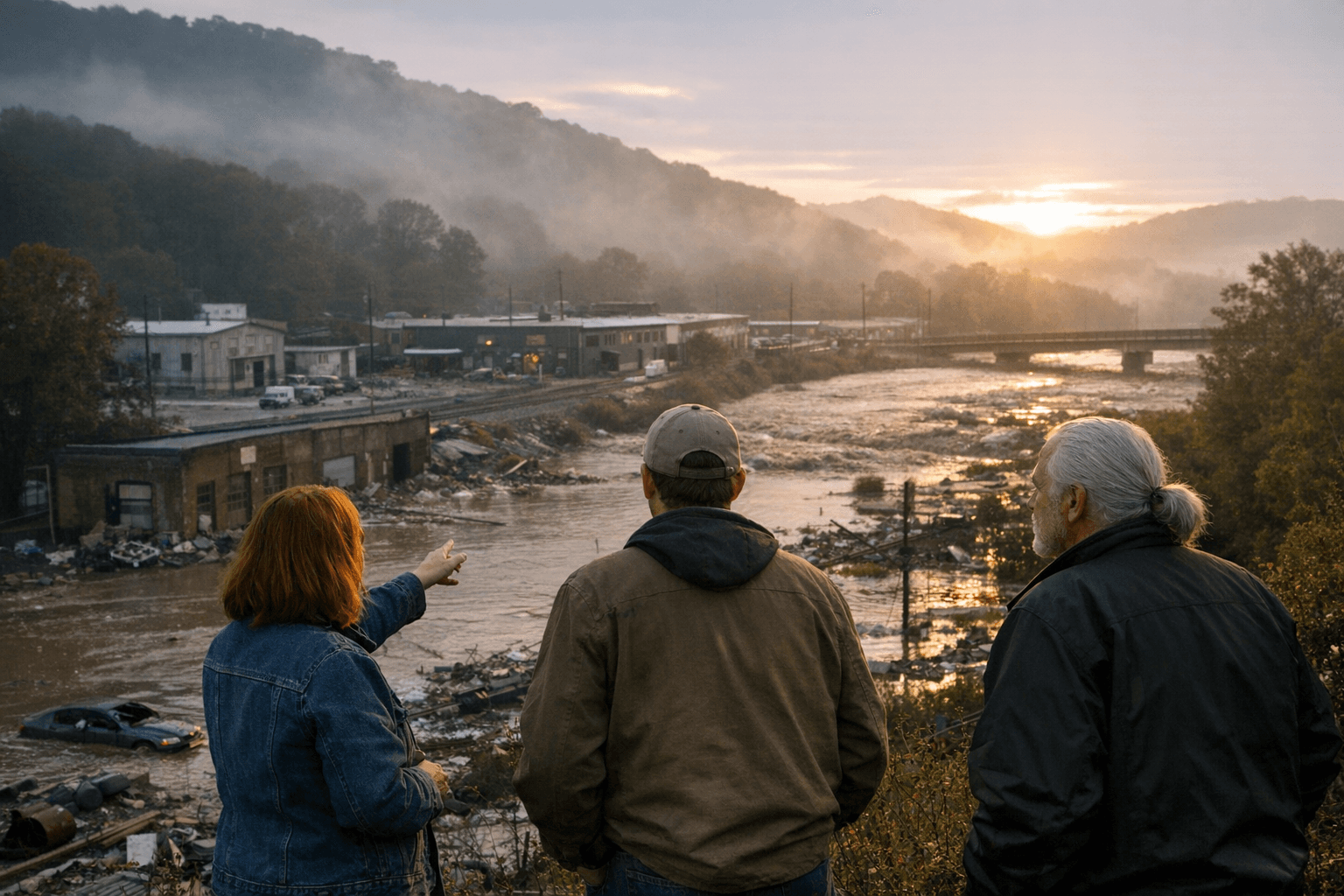
The RADA Foundation has secured a contract on a multi-acre parcel along Lyman Street, marking the most concrete step yet toward a flood-resilient creative campus that could restore what Tropical Storm Helene erased from Asheville's River Arts District: roughly 80% of its working creator spaces.
The campus design calls for affordable artist studios, shared maker facilities, exhibition galleries and flexible community venues, all engineered to withstand future flooding. Planning documents emphasize artist control over governance, affordability covenants protecting emerging creators, and shared infrastructure, including education spaces and fabrication equipment, that small individual studios could never finance independently.
More than 500 artists were displaced when Helene struck the district. Before the storm, the River Arts District generated substantial annual economic activity through tourism, studio visits and gallery sales, making it one of Asheville's most productive cultural and commercial corridors. Organizers say that engine cannot be rebuilt without stable, long-term space on terms working artists can sustain.
The Lyman Street site sits at the intersection of arts preservation and climate infrastructure. Plans connect the proposed campus to broader post-Helene investments already underway in the district, including greenway corridor improvements and flood mitigation projects. Federal recovery dollars, specifically Community Development Block Grant Disaster Recovery allocations, are among the funding streams organizers are pursuing alongside private and philanthropic contributions.
The project's scale, described in early planning documents as encompassing multi-acre acquisition and tens of thousands of square feet of studio space, requires coordination that no single funding source can provide. Supporters frame the campus not only as a local recovery tool but as a potential model for pairing cultural preservation with climate-resilient design, one that could influence how recovery dollars are spent in flood-prone creative districts nationwide.
With hundreds of artists still without permanent space eighteen months after Helene, the pace of land acquisition and design approval carries direct consequences for whether Asheville's creative community rebuilds in the RAD or scatters for good.
This article was produced by Prism’s automated news system from verified source data, official records, and press releases, then run through automated quality and moderation checks before publishing. The system is built and supervised by the people who set the standards it runs under. Read our full AI policy.
Did this article answer your question?