Buncombe County guide helps researchers trace house histories
A Buncombe County house history can start with a street name and lead to Pack Memorial Library’s archives, where maps, photos, and newspapers reveal who lived there and how the block changed.
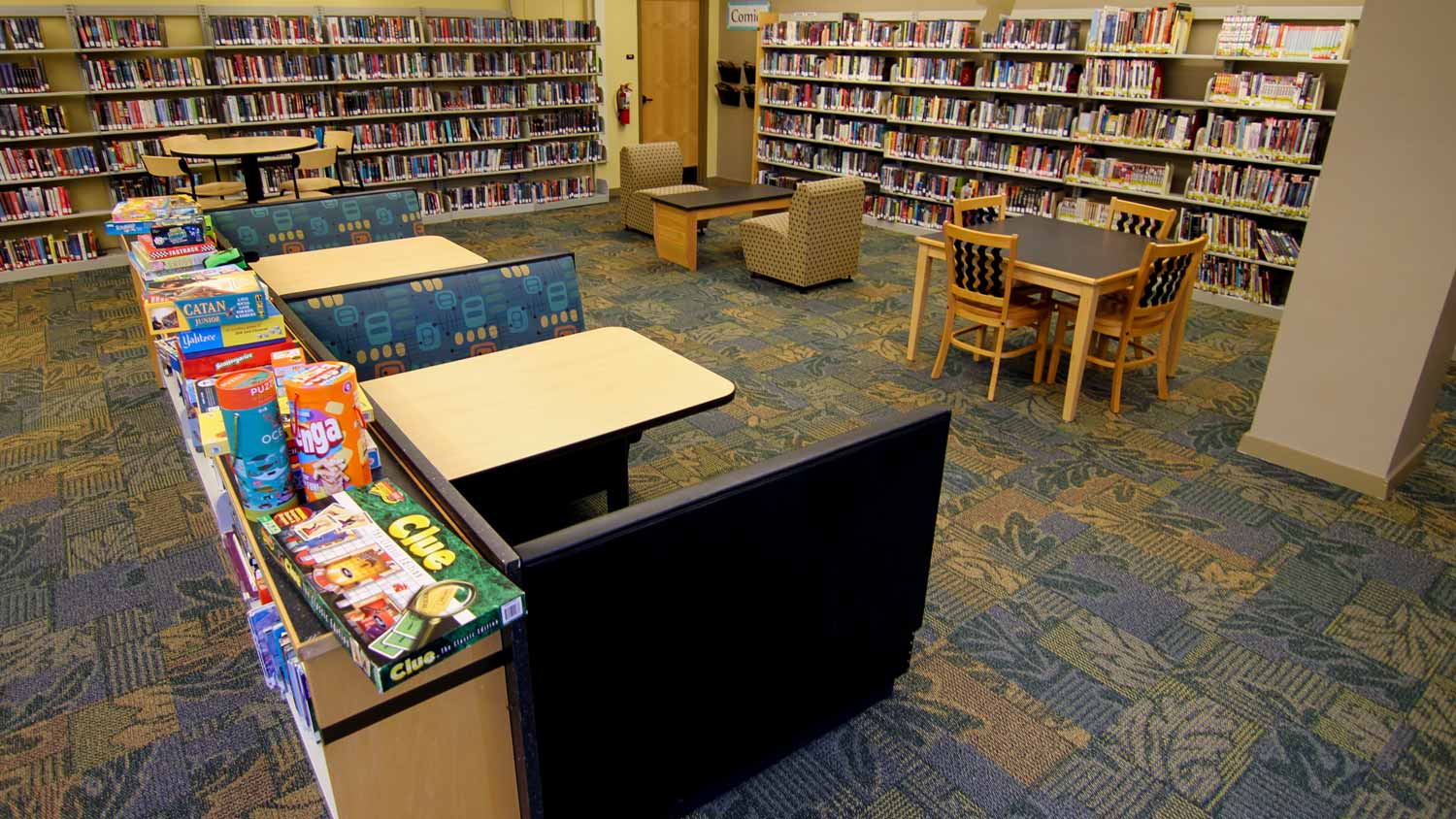
In the archives below Pack Memorial Library in downtown Asheville, a street name can open the door to photographs, newspaper articles, architectural drawings, maps, letters, and manuscript collections that place a property in its neighborhood and in the lives of the people who used it.
Start with the place name you know
Buncombe County Special Collections directs researchers to begin with a street name or neighborhood, not just a modern address. In Asheville and the surrounding communities, streets, parcel lines, and neighborhood names have shifted over time as the county grew.
A current address can still be the right entry point, but it is rarely the whole story. A house may appear under an older address, an earlier owner’s name, a nearby landmark, or a neighborhood label that no longer appears on a mailing label. The archive’s “Browse Locations” tab is designed for that kind of search, letting readers check whether a property is already represented in the database before they move deeper into the records.
What the archive can actually show
Buncombe County Special Collections’ online database includes photographs, newspaper articles, architectural drawings, maps, letters and manuscript collections.
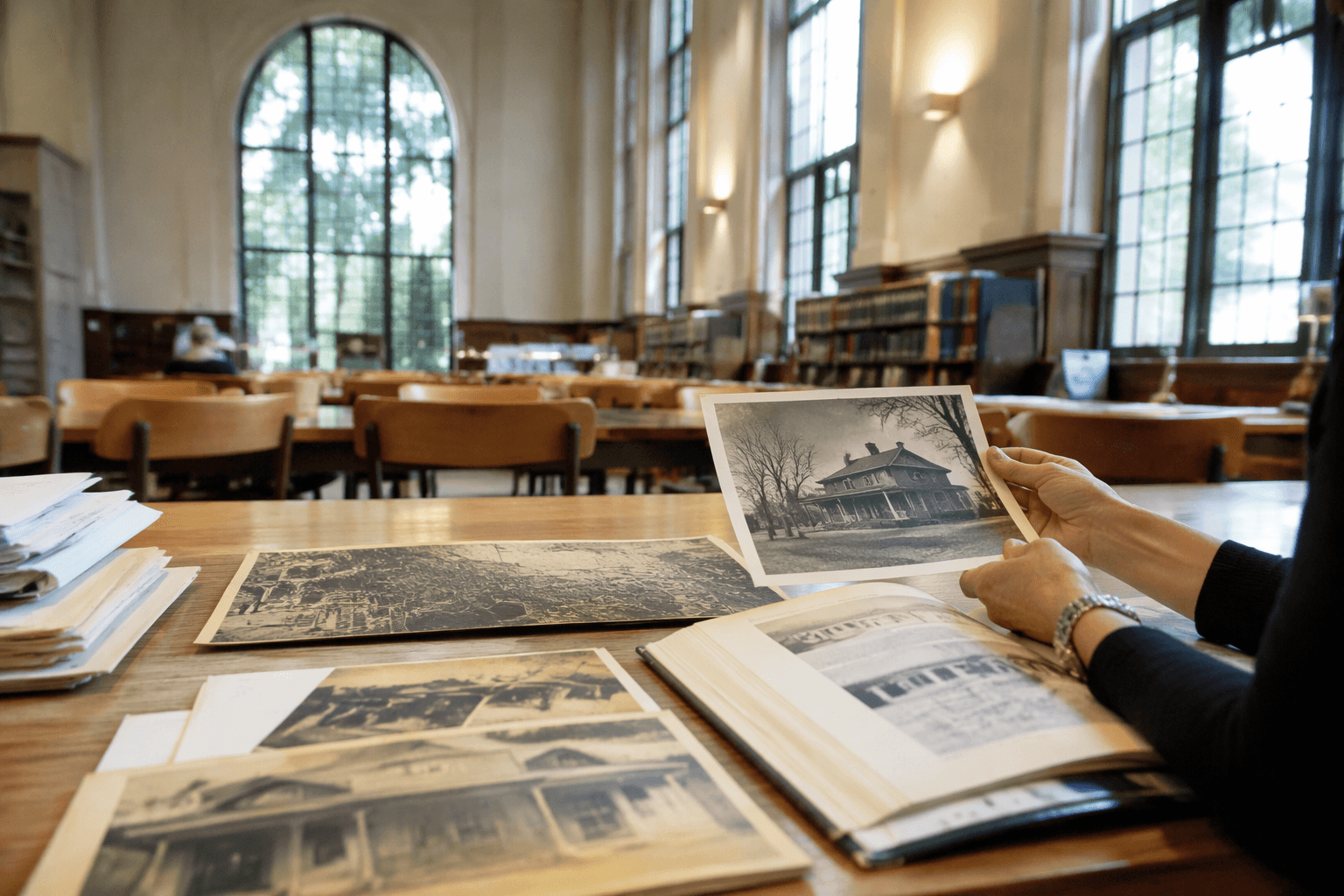
Photographs can reveal additions, porch changes, storefront conversions, or the look of a block before later redevelopment. Newspaper articles can surface sales notices, obituaries, weddings, fire reports, and neighborhood news that place a house in daily life. Maps and architectural drawings can show when a structure first appears in the landscape, while letters and manuscript collections can connect the property to a family, business, or institution.
In Buncombe County, a house history is usually bigger than a deed search. A property might first appear in a historic photograph, a city directory reference, a newspaper notice, or a sketch long before a formal permit file exists.
Why Buncombe records need context
Buncombe County’s record trail has gaps that make surviving materials even more valuable. The county was created in 1791 from Burke and Rutherford counties, and courthouse fires in 1830 and 1865 destroyed many early records, including many early court records. That loss means a researcher often has to reconstruct a property from fragments rather than a neat folder of building papers.
In practice, that means a house history may depend on combining the archive’s holdings with the clues left in newspapers, maps, and photographs. If a home is absent from a permit-era file, it may still appear in an older map, an early twentieth-century yearbook, or a manuscript collection that names the family who lived there.
The archive’s holdings also reach beyond houses. It has yearbooks dating back to the early 1900s, and it began acquiring manuscript collections in 1977, when the unit was known as the Southern Highlands Research Center.
How to read a property like a neighborhood story
The most useful house histories do more than identify when a structure was built. They show who lived there, what was built nearby, and how the neighborhood changed. In Asheville, Black Mountain, Weaverville, Candler, Fairview, Woodfin, and Swannanoa, that can mean tracking a home through ownership changes, street renumbering, infill development, or a shift from residential use to another purpose.
A good search usually moves backward in layers:
1. Start with the current address and street name.
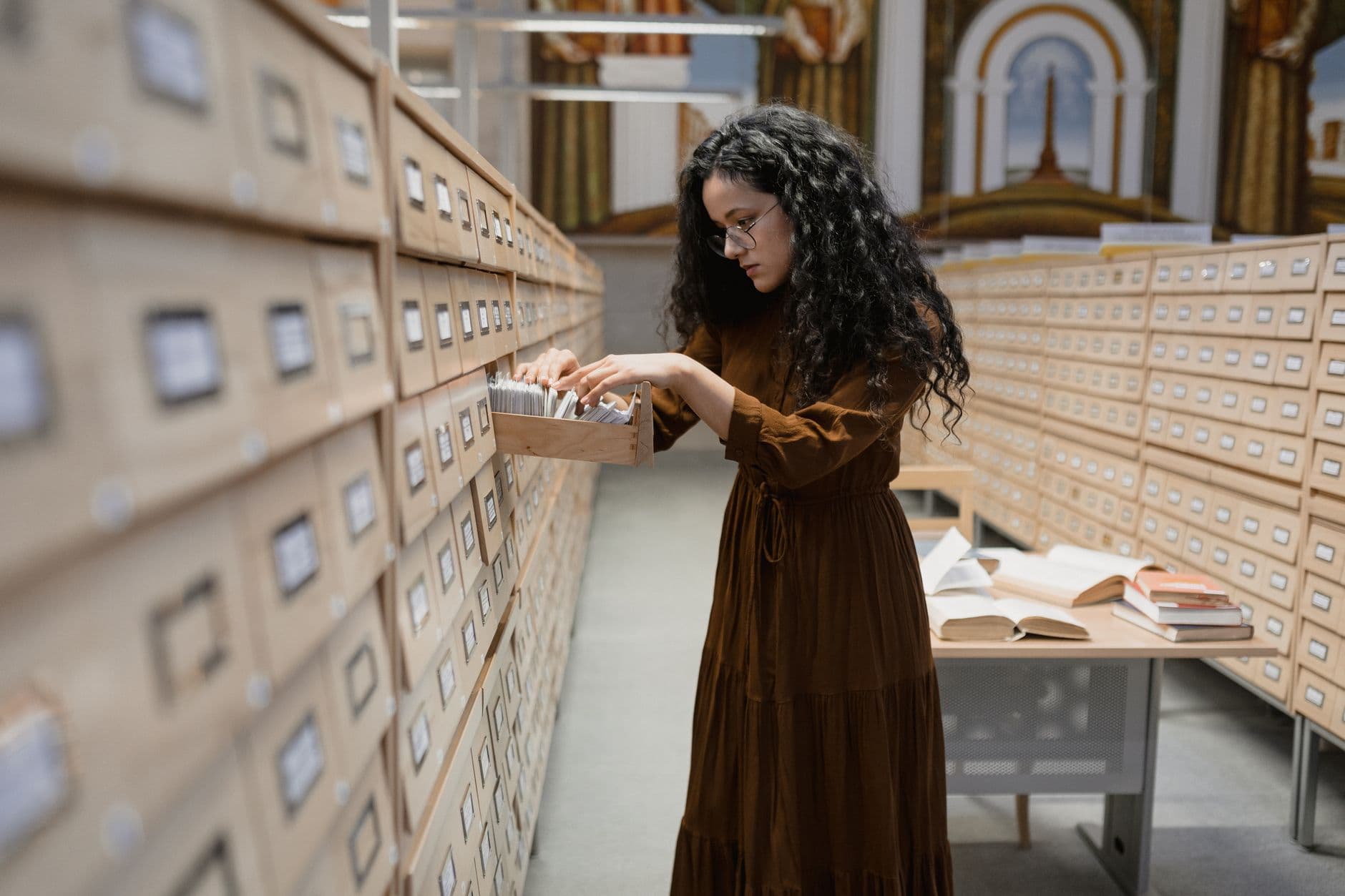
2. Check the “Browse Locations” tab in the Special Collections database.
3. Search the neighborhood name as well as the street, because older references may use a different label.
4. Look for photographs, newspaper mentions, maps, and drawings that show the property before it took its current form.
5. Work backward through earlier addresses, former owners, and nearby landmarks.
That process often answers questions a deed book alone cannot. It can show whether a house once sat beside a store, whether a lot was subdivided, or whether an old home survived while the rest of the block changed around it.
Why the local preservation network matters
Buncombe County Special Collections’ mission is to actively collect, preserve, promote, and provide equal access to the history of Asheville, Buncombe County, and the surrounding area. The library is committed to preservation, digitization, and reducing barriers to public access.
The archive is a public-access archival facility on the lower level of Pack Memorial Library. That location gives residents a practical place to look for records that can shape preservation decisions, genealogical research, neighborhood planning, and local-history writing. A property file can also help explain redevelopment pressure, because a lot changed in Buncombe County long before a new project reached a public hearing.
UNC Asheville’s Ramsey Library maintains a Local History Archives guide for Buncombe County research. The Preservation Society of Asheville & Buncombe County is part of the same preservation network, along with the Historic Resources Commission of Asheville & Buncombe County, which was created in 1979 through a local ordinance adopted by the City of Asheville and Buncombe County.
This article was produced by Prism’s automated news system from verified source data, official records, and press releases, then run through automated quality and moderation checks before publishing. The system is built and supervised by the people who set the standards it runs under. Read our full AI policy.
Did this article answer your question?