How Asheville became an early hemp and CBD hub in Buncombe County
Asheville opened the hemp retail race before the 2018 Farm Bill, and Buncombe County still lives with the crowded, confusing market that followed.

Asheville Dispensary opened in West Asheville in October 2018, and within a year Asheville had 12 dispensaries. The timing mattered: the shop arrived just before the 2018 Farm Bill legalized hemp nationwide on Dec. 20, 2018, giving Buncombe County a head start in a market that was still being defined by state pilot rules and federal uncertainty.
How Asheville got there first
By late 2018, the city’s hemp retail scene was already visible on the street. Citizen Times coverage listed Clover CBD and Franny’s Farmacy among a growing set of storefronts, while a new West Asheville CBD shop on Haywood Road added to a market that was expanding before federal legalization was finalized. Local advocates celebrated the $867 billion farm bill as a major opening, and one retailer described Asheville Dispensary as offering “a space between the alcohol-dominated barroom and the apothecary,” a useful snapshot of how Asheville turned CBD into a neighborhood business category instead of a niche counter sale.
The early map mattered as much as the timing. Merrimon Avenue north of downtown and Haywood Road in West Asheville became the most visible corridors for hemp and CBD retail, with storefronts close enough together that the market felt less like scattered experimentation and more like a district taking shape. That clustering helped normalize hemp products for local shoppers, but it also blurred the line between wellness retail, novelty products, and something closer to cannabis commerce.
The farm side behind the storefronts
The retail boom had a cultivation side rooted in Buncombe County soil. Franny Tacy started planting hemp in 2017 at Franny’s Farm in Leicester, and later coverage described her as North Carolina’s first female hemp grower; by 2018 she had shifted toward cannabinoid production and opened her first Franny’s Farmacy dispensary in downtown Asheville. That move linked the region’s farms to its storefronts and helped turn hemp into a local brand story, not just a commodity crop.
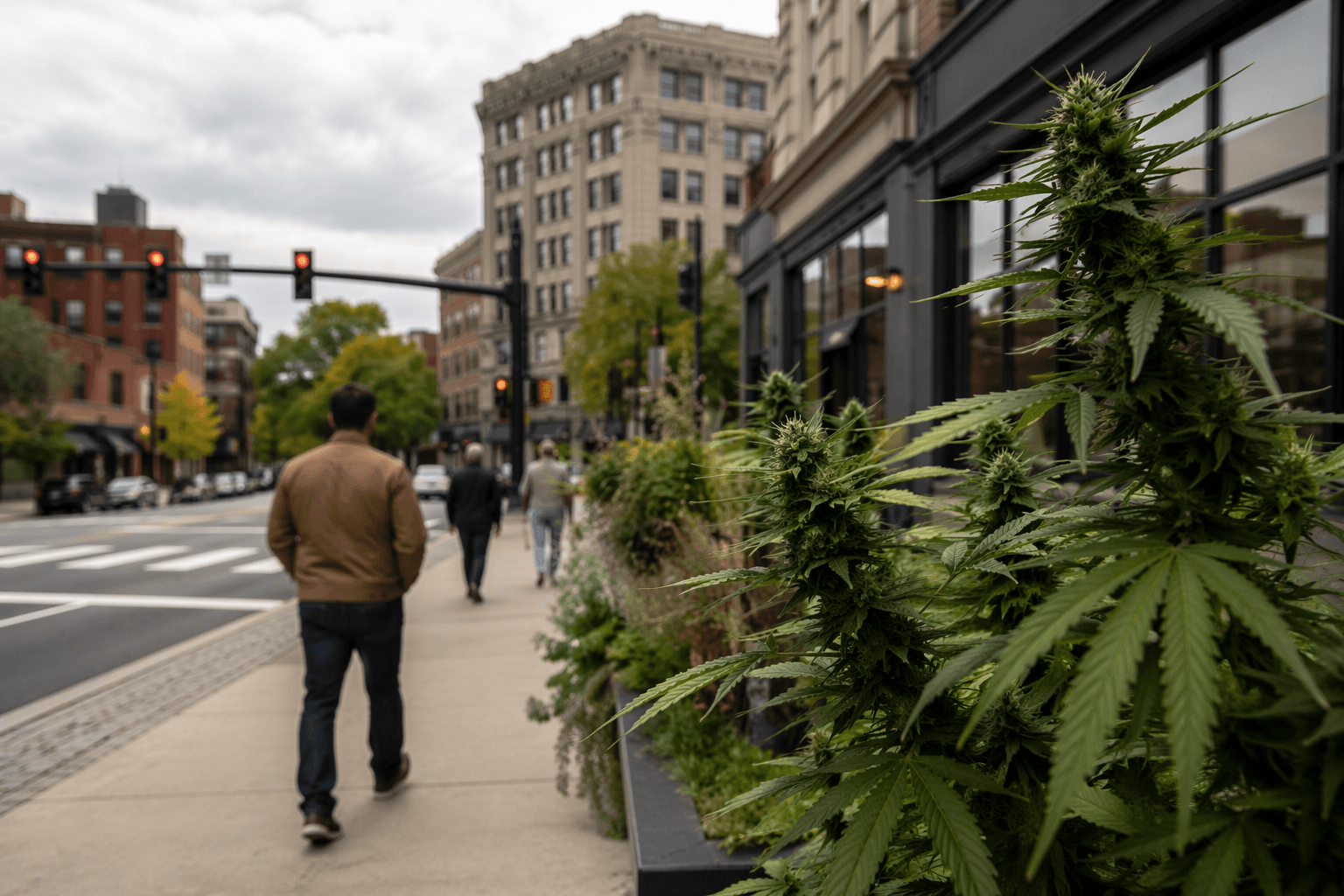
Asheville and Buncombe County were later described as “epicenters” of hemp nationally, with one Asheville cannabis lawyer estimating dozens, perhaps more than 100, hemp outlets in the area. That is a big jump from the handful of storefronts people noticed in 2018, and it shows how quickly a legal opening became a regional business cluster across Western North Carolina.
What changed after 2018
The biggest change is that hemp now sits inside a defined federal regulatory system instead of a legal void. The 2018 Farm Bill removed hemp and hemp seeds from the DEA schedule of controlled substances, USDA built the Domestic Hemp Production Program, and the final rule took effect March 22, 2021; in North Carolina, growers were moved to USDA licensing by Jan. 1, 2022, and the state hemp article later expired on June 30, 2022.
Three changes matter most for Buncombe County shoppers and sellers:
- USDA testing now measures total THC, with 0.3 percent total THC as the acceptable hemp level.
- The FDA says existing food and dietary supplement frameworks are not appropriate for CBD, which leaves hemp-derived foods, drinks, and supplements in a tougher regulatory lane than many consumers realize.
- FDA warning letters still target cannabis-derived products, including CBD and delta-8 THC items, a sign that product safety oversight has become more active even as the market has grown.
Those changes have tightened the rules on paper, but they have not created one clean path for every hemp product sold in Asheville. In practice, the market still moves through overlapping categories, where a product can be legal hemp under one rule, an enforcement problem under another, and a consumer confusion problem almost everywhere in between.
Why the gray zone still matters in Buncombe County
That uncertainty now shapes the local industry’s economics. Recent reporting warned that tighter federal THC rules could wipe out much of the WNC hemp business, while some Asheville CBD and hemp stores have already considered a future move into marijuana dispensaries if the law ever allows it. The tension is visible across the region, from Asheville’s storefronts to the Eastern Band of Cherokee Indians’ medical marijuana dispensary on tribal land about an hour west of the city, which shows how differently cannabis commerce is developing from one jurisdiction to the next.
That is the legacy of Asheville’s early hemp boom: the city helped build the market before Washington finished the rulebook, and Buncombe County is still balancing the upside of being first against the costs of living in a regulatory gray zone.
This article was produced by Prism’s automated news system from verified source data, official records, and press releases, then run through automated quality and moderation checks before publishing. The system is built and supervised by the people who set the standards it runs under. Read our full AI policy.
Know something we missed? Have a correction or additional information?
Submit a Tip