Johnny Cash markers show Kingsland’s lasting ties to the icon
Kingsland can claim Johnny Cash’s 1932 birth, but the bigger story is a four-marker trail that links his birthplace, return visits and Rison family reunions to today’s heritage value.
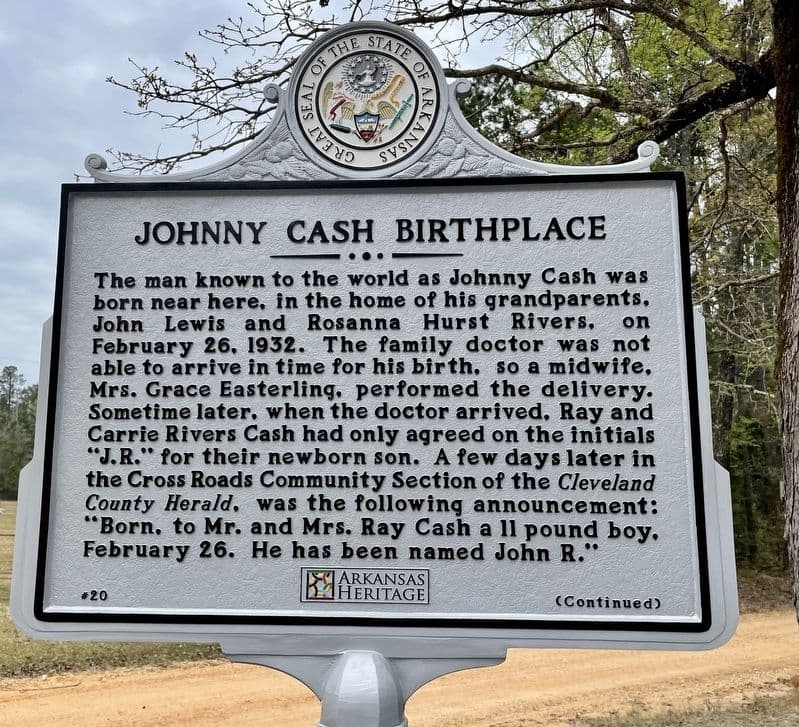
Johnny Cash’s birthplace marker in Kingsland anchors Cleveland County’s clearest link to the music legend, but the story does not stop at a birth certificate. The county has built a small heritage circuit around that fact, one that ties together Kingsland, Rison and the family history that kept bringing Cash back to Cleveland County long after his name became nationally known.
Kingsland’s strongest claim on Cash
Johnny Cash, also known as J. R. Cash, was born on Feb. 26, 1932, in Kingsland in Cleveland County. County tourism materials place that birth in the Cross Roads community north of town and identify his parents as Ray Cash and Carrie Cloveree Rivers; they also note that he was the fourth of seven children. That local origin matters because Kingsland is not a large place, and a University of Arkansas Division of Agriculture community-planning profile put the town’s estimated population at 414 in 2017 along U.S. Highway 79.
That scale helps explain why the birthplace marker carries so much weight here. In a town this small, the marker is not just a sign about a famous person. It becomes a fixed point for local memory, a place where the community can connect a global music career to a specific family, road and neighborhood.
The county’s four-marker Cash story
The Cleveland County Historical Society says it sponsored two of the four new Arkansas historical markers in the county that tell the story of Cash, his family history and his many return visits over the years. The Johnny Cash Official Site says the four-marker series includes a birthplace marker, a marker about return visits, and a courthouse marker about ancestry and family reunions. The same site says the courthouse marker at the Cleveland County Courthouse in Rison is the fourth and final marker in the series.
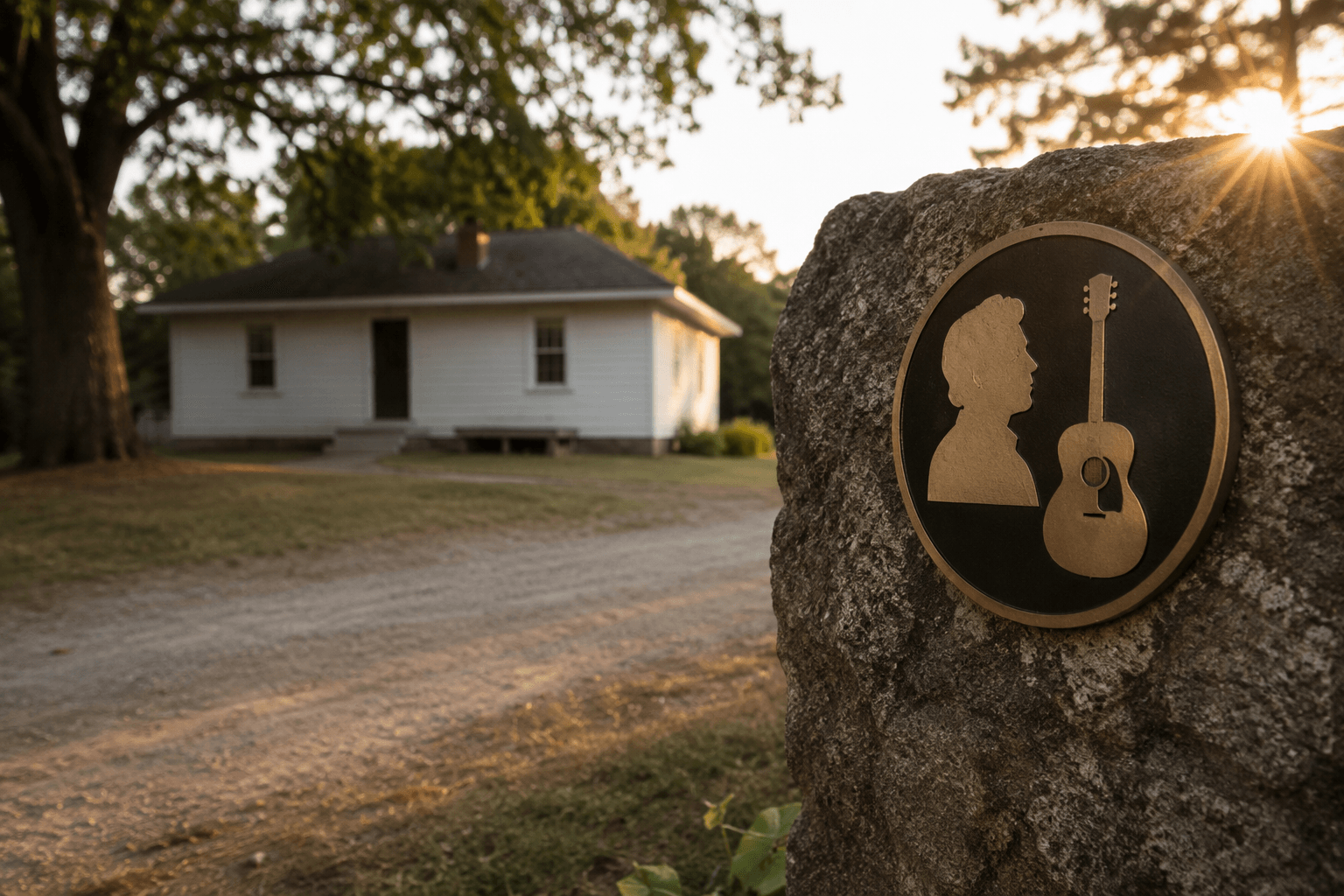
That structure turns the county’s Cash story into more than a single birthplace claim. It shows continuity, with one marker tied to where he began, another to the way he kept coming back, and another to the family gatherings that stitched his personal history to the old Legion Hut across the street from the courthouse. A 2021 Arkansas Heritage post congratulated the Kingsland Heritage Center and Cleveland County government on the new markers, which underscores that the project was a public heritage effort, not just a private tribute.
Why Rison belongs in the story too
Rison enters the Cash story through a clear, dated event. On March 20, 1976, Johnny Cash performed at Wildcat Stadium in Rison for an American Bicentennial concert, a performance that marked the 50th anniversary in 2026. County tourism materials identify the venue as the Bicentennial Concert at Rison Football Field and Wildcat Stadium, tying the county seat directly to one of the signature local moments in Cash’s Arkansas history.
That concert matters because it gives Cleveland County another concrete point of contact with Cash beyond his birth. The county’s Johnny Cash Bicentennial Suit materials say the suit he wore that night later went on display at the inaugural Johnny Cash Heritage Festival in October 2018 and had previously been shown at the Rock and Roll Hall of Fame. For local history, that is a useful example of how an event in Rison moved from a stadium performance to a preserved artifact with a life beyond the county line.
What residents and visitors can still see
The most visible Cash sites are the markers themselves, and that is part of their value. A marker at the birthplace, the marker tied to his return visits, and the courthouse marker in Rison give people a self-guided route through the county’s Cash history. The Cleveland County Courthouse marker is especially important because it ties together family ancestry and reunions, including those held at the old Legion Hut across the street, giving visitors a specific landmark to place on the ground.
Kingsland’s later Cash history also remains part of the public record. A March 31, 1994 ceremony and concert tied to the Kingsland Post Office dedication was Cash’s last visit to town, and the United States Postal Service announced on June 3, 2025, that it would honor him with the dedication of the Kingsland Post Office. That means the town’s Cash connection is not frozen in 1932. It extends through his final return and into a modern postal dedication that keeps the story in public view.
Why the markers matter to Cleveland County now
Cleveland County’s tourism materials also place Cash alongside two other major heritage assets, the birthplace of Paul “Bear” Bryant and the site of the Civil War Battle of Marks’ Mill. Taken together, those sites give the county a compact but unusually deep heritage map, with music history, sports history and Civil War history all within one local frame. Cash’s markers add a cultural draw that is easy to visit, easy to explain and easy to build into school lessons or local driving tours.
For Kingsland, the practical value is straightforward. A town of 414 people on U.S. Highway 79 does not need a museum complex to make its history visible. The markers, the post office dedication and the courthouse site give the community low-cost heritage infrastructure that residents can point to with confidence, and that visitors can find without needing a formal tour. In Cleveland County, Johnny Cash is not only a national name from the past. He is still part of the local map.
This article was produced by Prism’s automated news system from verified source data, official records, and press releases, then run through automated quality and moderation checks before publishing. The system is built and supervised by the people who set the standards it runs under. Read our full AI policy.
Did this article answer your question?