Shelby’s historic Webbley links downtown revival to 19th-century roots
Webbley is Shelby’s 1852 anchor for downtown revival, tying a $3.9 million restoration push to the city’s historic core and its next civic choices.
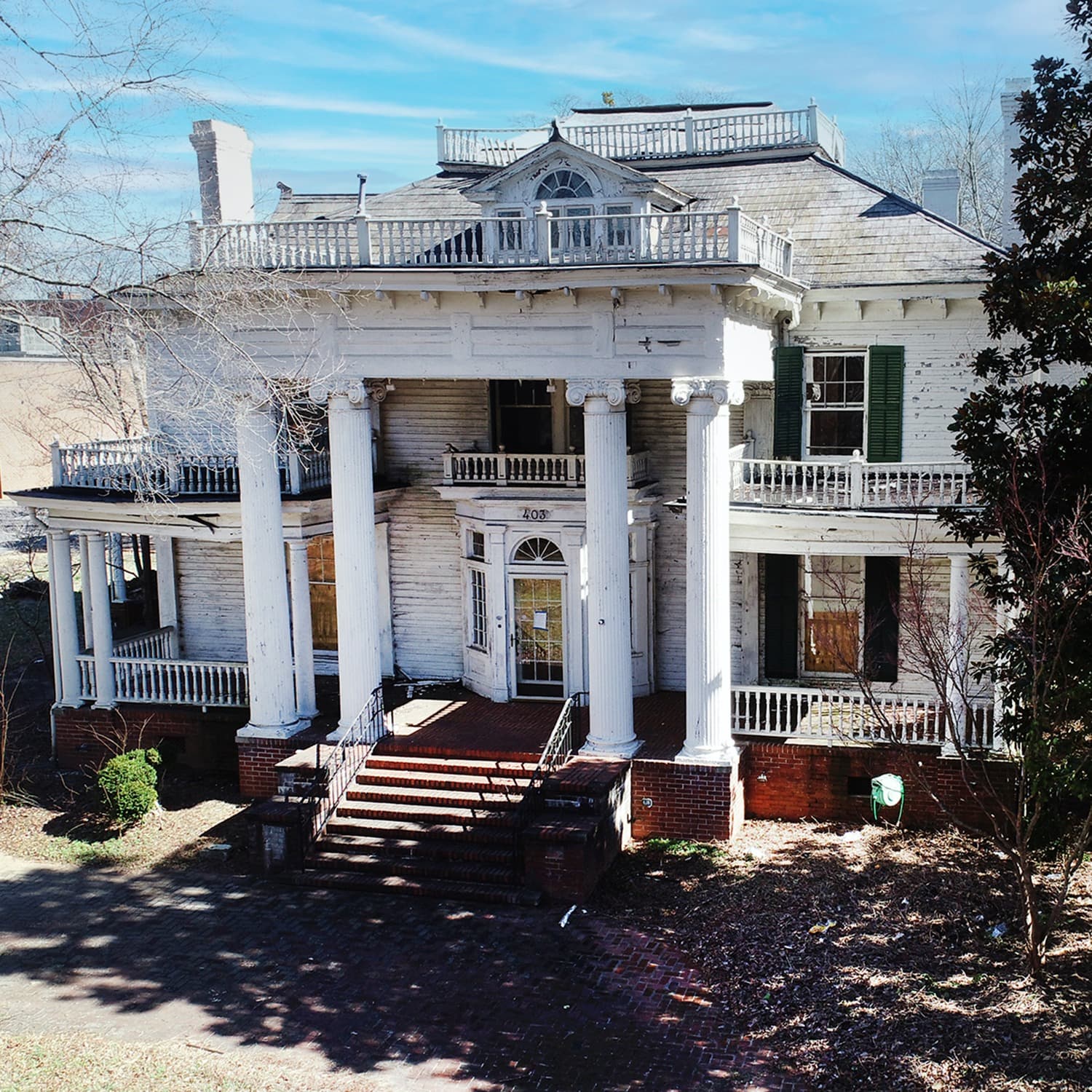
On South Washington Street, Webbley is more than an old house with a local nickname. The 1852 landmark at 403 South Washington Street now sits at the center of a city decision about what kind of Uptown Shelby it wants to build, preserve and promote. With state-backed restoration money in hand and exterior bids under review, the house has become both a historic resource and a downtown planning asset.
The property’s scale helps explain why it matters. Webbley sits on about 2.5 acres in the Historic District of Uptown Shelby, giving it a footprint large enough to read as a statement piece rather than a leftover relic. For residents and local leaders, that kind of prominent parcel is exactly where preservation and redevelopment meet: the house can protect memory while also shaping how people move, linger and invest nearby.
A house with two identities, both rooted in Shelby
The City of Shelby identifies the property simply as Historic Webbley, but its documentary name is the O. Max Gardner House. It was long known locally as the “Governor’s Mansion,” a reminder of how deeply the house has been folded into Shelby’s civic memory. The National Register materials also tie it to Ralph Gardner, listed as the owner of record at 403 South Washington Street when the nomination was prepared.
Its National Register listing, dated September 29, 1980, placed the house within the broader framework of protected historic places in Cleveland County. That listing matters because it moves Webbley beyond nostalgia. It is recognized as a documented part of the county’s built record, one of the clearest physical links to the 19th-century development of Shelby’s central neighborhoods.
For a downtown that is trying to reinforce its identity, that matters in practical terms. Historic places like Webbley give Uptown Shelby a specific visual and architectural anchor, the kind that can support foot traffic, improve the sense of place and strengthen the case for reinvestment around it.
The architecture tells a story of change, not freeze-frame preservation
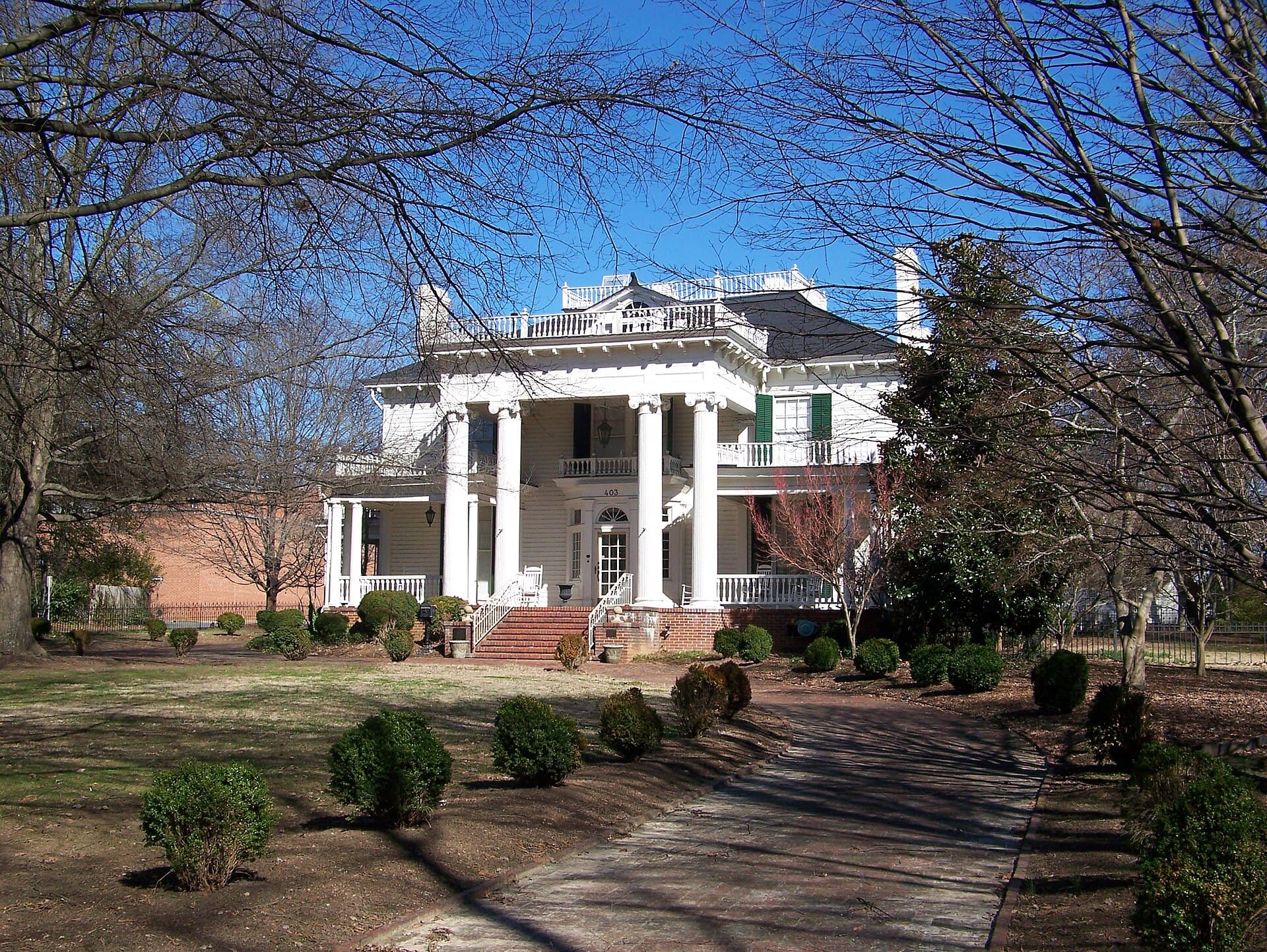
The North Carolina Historic Preservation Office describes Webbley as an early 20th-century overbuilding of a mid-19th-century Italianate dwelling. That is the key to understanding why the house is significant: it did not simply remain fixed in 1852. It evolved as owners updated the structure to fit later tastes, status and household needs, while retaining the older core.
That later redesign gave the house a thoroughgoing Colonial Revival character. The result is a layered building history that reflects a familiar Southern pattern, where older houses are reshaped over time rather than replaced. Webbley is valuable because it shows those shifts in one place, making the house a readable lesson in how local prosperity and architectural fashion changed over generations.
The nomination material adds physical details that still define its presence on the street. Webbley sits back on a wide, deep lot on the east side of South Washington Street, shaded by mature hardwood trees. A semi-circular drive lined with boxwoods approaches the house from the street, and the façade is marked by a full-height, flat-roof portico supported by fluted Ionic columns. Those features give the property the ceremonial look that helped make it a local landmark in the first place.
Why Shelby is treating the site as a civic project
Webbley is not being preserved as a museum piece sealed off from the city around it. In 2024, the City of Shelby said it acquired the property and restoration funding through a $3.9 million state grant requested by Senator Ted Alexander. That is a major public investment for a single historic property, and it signals that city leaders view the house as part of the downtown economic and cultural base, not just an ornamental holdover.
The next step has been concrete: in February 2026, the city said it was accepting bids for exterior restoration work on the historic Webbley. That kind of procurement matters because it turns preservation from a concept into a timetable, a contractor pool and a project scope. The work on the exterior is the visible first test of whether Shelby can preserve the house without losing the character that makes it useful to the city’s broader revitalization effort.
That is where Webbley becomes a downtown decision-making story. A restored landmark can help support adjacent investment, improve the walkable experience around Uptown and reinforce Shelby’s own historical identity. A neglected one can quickly become a burden on the public realm. The city’s current approach shows that local leaders are choosing to treat the house as an economic and civic asset, not simply a sentimental object.
How Webbley fits into Shelby’s historic core
Webbley also makes more sense when read alongside the Central Shelby Historic District. That district includes the public square surrounding the Cleveland County Courthouse, the adjacent central business district, and parts of South Washington and West Marion streets. In other words, Webbley sits within a broader landscape where government, commerce and residential history overlap within a compact downtown grid.
That context is important for readers trying to understand why one historic house can matter so much. The courthouse square draws the civic center of the county, while the nearby streets tell the story of how Shelby’s core expanded around it. Webbley sits inside that pattern, close enough to the courthouse district to be part of the same visual and historic conversation.
The house therefore carries two roles at once. It is a documented 19th-century residence with an evolved 20th-century exterior, and it is a public-facing piece of Shelby’s redevelopment strategy. Those roles are not in conflict. In a city trying to strengthen Uptown Shelby while keeping faith with Cleveland County’s past, Webbley is one of the clearest places where preservation and progress are being made to work together.
This article was produced by Prism’s automated news system from verified source data, official records, and press releases, then run through automated quality and moderation checks before publishing. The system is built and supervised by the people who set the standards it runs under. Read our full AI policy.
Did this article answer your question?