Sunset Cemetery preserves Shelby's history in stone and wrought-iron fences
Sunset Cemetery is Shelby’s oldest civic landscape, where 1841 graves, bank founders and writers still map Cleveland County’s public history.
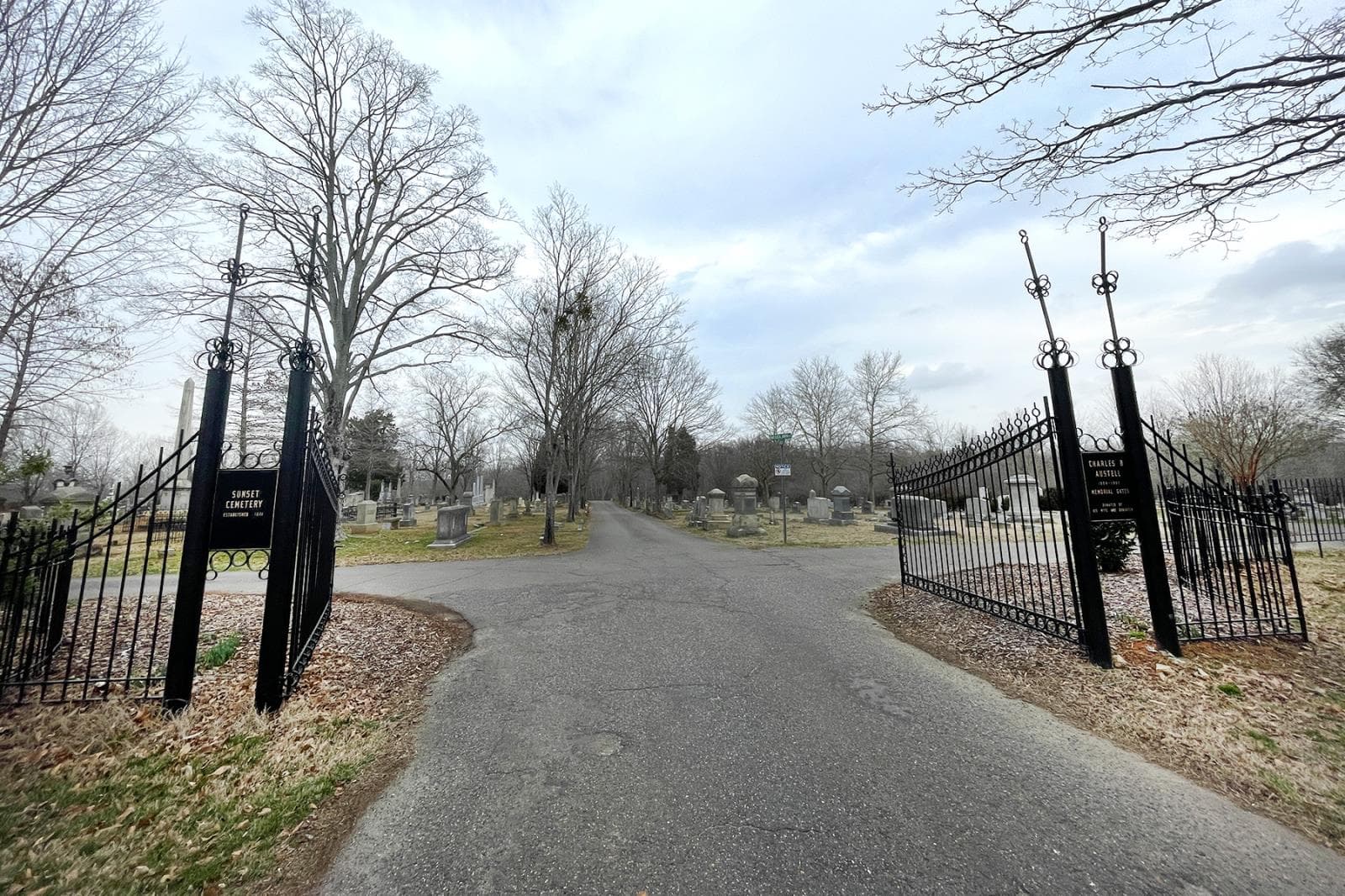
Sunset Cemetery reads like Shelby’s first archive. Organized in 1841, its oldest ground sits in the northwest quadrant of the old section, where grave boxes, marble angels, tall obelisks and family plots enclosed by ornate wrought-iron fences still line tree-shaded lanes designed for carriages.
A cemetery built with the city
The cemetery’s origins reach back to Shelby’s earliest civic formation. A local genealogy history page says the oldest section sits on part of the 40 acres William Forbes deeded to help establish the City of Shelby on June 18, 1841, which gives the place a direct link to the town’s first land pattern and public footprint. The City of Shelby says Sunset has remained the city’s most popular burial ground for more than 160 years, a sign that it has served generation after generation as both a family resting place and a civic record.
An older cemetery survey described Sunset as covering about 10 or 12 acres and counted 1,000 marked graves and 1,000 unmarked graves. That snapshot shows how much memory was already concentrated in a relatively small space, long before online memorial databases started expanding the count. Today, Find a Grave lists more than 10,000 memorials for Sunset Cemetery, while PeopleLegacy lists 8,866 burial records, underscoring how the site has grown into a large digital and physical repository of Cleveland County names.
What to look for on a walk through the old section
The strongest visual draw at Sunset is the mix of funerary art and layout. The city describes the lanes as tree-lined carriage routes, and that detail matters because it explains why the cemetery feels planned rather than improvised. The oldest section is not just crowded with stones; it is arranged like a nineteenth-century landscape, with the northwest quadrant of the old section carrying some of the clearest evidence of that design.
A slow walk reveals the kinds of markers that tell the county’s social history in stone.
- Grave boxes that mark older burial customs.
- Marble angels and tall obelisks that signal the monument style of earlier eras.
- Family plots enclosed by ornate wrought-iron fences, which show how some households claimed space, status and permanence.
- Narrow lanes that still read as carriage paths, tying the cemetery’s form to Shelby’s pre-automobile life.
Those details are not decorative side notes. They are the clues that let visitors see how Shelby developed, how families memorialized themselves, and how burial customs changed across the nineteenth and twentieth centuries.
The names buried here still shape Shelby
Sunset’s relevance goes beyond genealogy because so many of its burials connect directly to public life in Shelby and North Carolina. The city identifies W. J. Cash as buried here, along with Thomas Dixon Jr., Clyde Hoey, O. Max Gardner and Don Gibson. That mix ties the cemetery to literature, state politics and music, giving it unusual range for a single burial ground in Cleveland County.
The city also notes that Thomas Dixon Jr. is buried not more than 50 yards from W. J. Cash, a striking proximity that gives the cemetery interpretive value far beyond a simple list of graves. The two men represent competing strands of Southern thought, and their close placement makes the cemetery a place where interpretation happens on the ground, not in a textbook.
Jesse Jenkins is another important name here. The city identifies him as the founder of Shelby’s first bank, which links the cemetery to the financial life that helped shape the town’s growth. Taken together, the burials show how Sunset records the people who built institutions, made policy, wrote books, performed music and influenced the public life of Shelby and Cleveland County.
How the city and preservation groups keep the site legible
Sunset is still an active municipal responsibility, not a frozen monument. The City of Shelby owns and operates three cemeteries, Sunset, Webb Memorial Lawns and Eastside Cemetery, and the Shelby Parks and Recreation Department maintains them. The city also says cemetery ordinances can be obtained through the Shelby City Park office, which matters for descendants, researchers and anyone trying to understand the rules that keep the grounds usable and respectful.
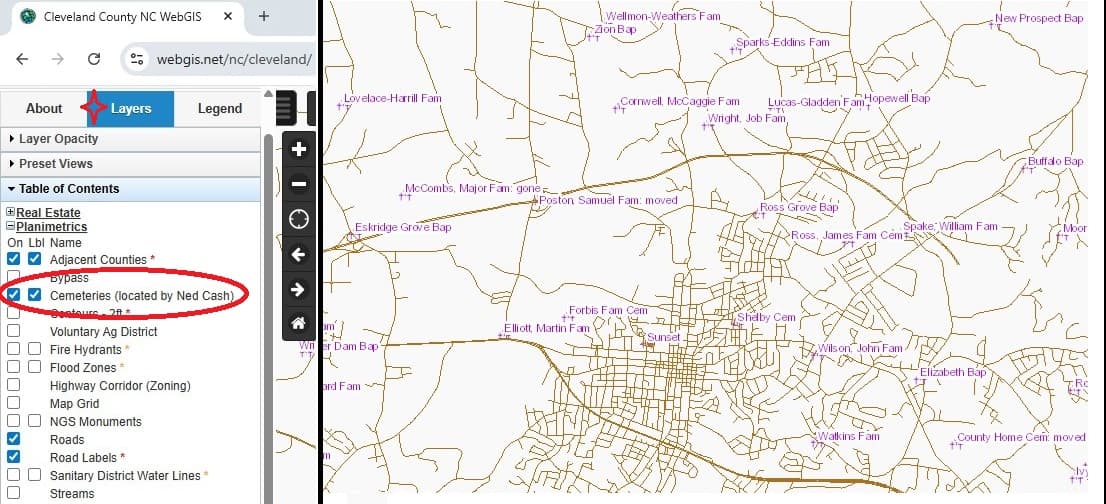
That stewardship fits within a broader state framework. The North Carolina Office of State Archaeology says historic cemeteries are those at least 50 years old, and its Historic Cemetery Program exists to identify, inventory, map, describe and permanently record them. The office was created by the North Carolina General Assembly in 1973 to coordinate and implement a statewide archaeological preservation program, giving places like Sunset a formal preservation context beyond local memory. The North Carolina State Historic Preservation Office also maintains GIS map data and tools that support research and documentation, which helps explain how burial grounds can be studied and protected over time.
Local preservation advocates have treated Sunset as part of Shelby’s larger historic fabric. The Historic Shelby Foundation says it was formed by community leaders after the demolition of Shelby Junior High School, with a mission to protect and restore prominent historical structures throughout Cleveland County. The foundation says it has supported preservation of Sunset Cemetery, placing the burial ground within a broader local effort to keep historic places from slipping out of public view.
The city has also reached out to families directly by holding a public forum asking for documents or records connected to burials at Sunset Cemetery. That kind of public record-building matters because cemeteries do not preserve themselves on stone alone; they depend on deeds, family papers, burial notes and municipal records to keep names attached to the ground. In Shelby, Sunset survives as a working civic site because the city, preservation groups and descendants still have a stake in what the cemetery says about the town’s past.
This article was produced by Prism’s automated news system from verified source data, official records, and press releases, then run through automated quality and moderation checks before publishing. The system is built and supervised by the people who set the standards it runs under. Read our full AI policy.
Did this article answer your question?