Collin County protects hundreds of historic cemeteries, records boundaries
Collin County says it has 193 historic cemeteries, and more than 50 are state-designated sites whose boundaries are recorded in deed files as growth pushes outward.
Collin County says it has 193 historic cemeteries, and more than 50 already carry Texas Historical Commission designation that records their boundaries in county deed records. In a county where McKinney, Plano, Allen, Wylie, Celina, Anna and Farmersville keep expanding, that paper trail can be the difference between a burial ground that stays visible and one that gets absorbed by development.
Why the count matters
The county’s historical commission treats cemetery work as part of a broader preservation mission: identifying, preserving, protecting and interpreting Collin County history. Cemetery counts map older settlement patterns, family networks and land ownership in places that have changed quickly as suburbs moved north and west.
Another county history page puts the number at over 150 cemeteries, while the historical commission page says hundreds of cemeteries exist in the county. The discrepancy shows cemetery documentation is an active process, not a fixed list. Sites get recorded, recognized and sometimes rediscovered as historians, families and landowners compare old records with the landscape that exists now.
What Historic Texas Cemetery designation actually does
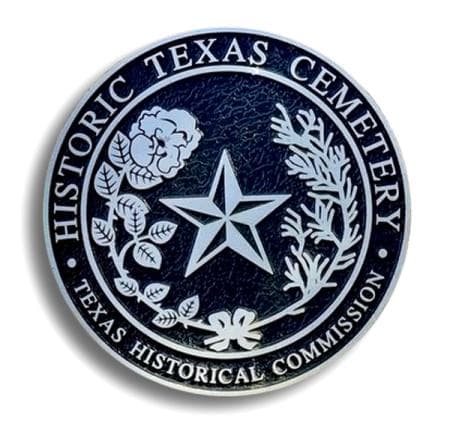
The Texas Historical Commission calls cemeteries “important keys to Texas’ past.” Historic Texas Cemetery designation is a program for cemeteries more than 50 years old, and its purpose is practical as well as symbolic. The designation alerts present and future owners of adjacent land that a cemetery exists there, and it records cemetery boundaries in county deed records.
That boundary record is the part many residents never see, but it is one of the most important protections on paper. When roads, subdivisions and utility corridors expand, the deed record helps a buried site remain on the map even if the surface markers are worn, scattered or partly lost. Rules for cemetery discovery and notice of existence are governed by Texas law, and cemetery laws are enforced by county and municipal law enforcement agencies, not by the commission itself.
The commission’s designation rules are adopted in Texas Administrative Code Title 13, Chapter 22. The application process is built around documentation: researching the cemetery history, locating deed records, taking photographs and sketching the site.
What these cemeteries reveal about Collin County
Cemeteries reveal settlement patterns, historic events, religions, lifestyles and genealogy. Gravemarkers can function like a directory of early residents, and the names they carry can also reflect a community’s ethnic diversity and population.
One historical thread runs through the county’s fraternal and community institutions. The Independent Order of Odd Fellows started cemeteries in Allen, Blue Ridge, Farmersville, Nevada and Princeton between 1900 and 1910. Farmersville’s cemetery still carries the IOOF affiliation.
The county’s cemeteries also connect directly to growth in places that now feel thoroughly suburban. Ross Cemetery in southeast McKinney was recognized as a Historic Texas Cemetery on Oct. 21, 2021.
How to identify a historic cemetery near home
Families trying to understand whether a burial ground near their neighborhood has historic status can start with a few concrete markers. The most likely candidates are sites tied to early families, churches or fraternal groups, especially those more than 50 years old. Names on stones, old family surnames and records connected to the IOOF are all clues that a site may already be part of the county’s historic landscape.
The Texas Historical Commission’s application process gives residents a roadmap for what documentation looks like. A site history, deed records, photographs and a sketch of the cemetery are the basic building blocks. Those materials help confirm where a cemetery sits and how its edges should be understood even before anyone seeks designation.
- Look for older family plots, church cemeteries and IOOF sites tied to early settlement.
- Check deed records and local history files, especially when a property line or new road seems close to a burial ground.
- Photograph visible markers and sketch the site layout if records are thin or the ground is changing.
- If a cemetery is neglected, damaged or threatened, county and municipal law enforcement are the agencies with enforcement authority, while the Texas Historical Commission works with interested citizens, county historical commissions and heritage groups on preservation.
State designation can document and warn, but local action is what can stop harm when a site is at risk.
This article was produced by Prism’s automated news system from verified source data, official records, and press releases, then run through automated quality and moderation checks before publishing. The system is built and supervised by the people who set the standards it runs under. Read our full AI policy.
Did this article answer your question?