Collin County’s Parkhill Prairie protects rare Blackland Prairie habitat
Parkhill Prairie preserves one of Collin County’s last Blackland Prairie remnants, and its 436 acres also help protect drinking water for more than 1 million people.
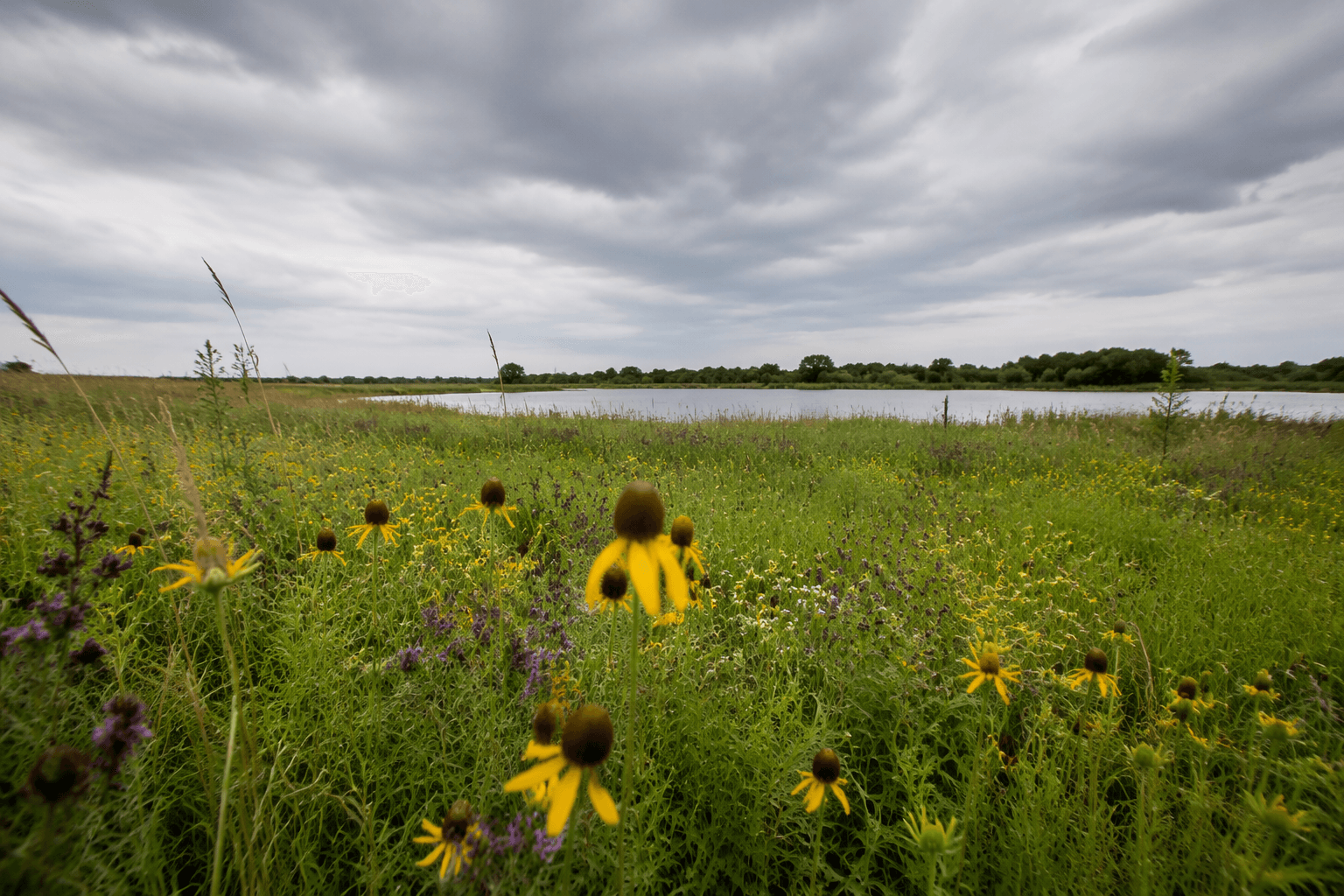
Parkhill Prairie is one of the last places in Collin County where the original Blackland Prairie still shows itself in native grass, soil, and open space. The 436-acre county park is more than a scenic tract: it sits in a watershed that drains into Arnold Creek and lies just upstream of a reservoir supplying drinking water to more than 1 million people.
Why Parkhill Prairie stands out in a fast-growing county
Collin County’s growth makes the prairie’s value easier to see, not harder. One county-related water outlook projects the population could reach 2.4 million by 2060, and Texas Parks and Wildlife Department describes the Blackland Prairie region as a landscape under pressure from urban sprawl and population growth. That turns Parkhill Prairie into a practical local asset, not just a conservation site.
The park preserves what is left of an ecosystem that once covered more than 8.5 million acres before Anglo-European settlement. By the late 19th century, most of that land had been broken and cultivated, largely because the Blackland Prairie’s rich calcareous clay soils were so productive for farming. What survives now exists in fragments, and Collin County’s prairie is one of the few public places in North Texas where that structure remains intact enough to study and experience.
What is protected on the ground
Collin County’s revised exhibit for the site identifies Parkhill Prairie as a rural public park operated under the county’s Parks and Open Spaces program. Within the property are a 52-acre prairie remnant and two 25-acre restoration areas, which means the county is managing both a preserved native core and land being actively rebuilt toward prairie conditions.
That distinction matters. A prairie remnant is not simply grassland left alone. It is a surviving piece of a larger native system, carrying the plant communities, soil relationships, and habitat structure that make Blackland Prairie different from ordinary open fields. The two restoration areas show that the county is trying to reconnect those functions across more of the property, rather than treating the site as passive parkland.
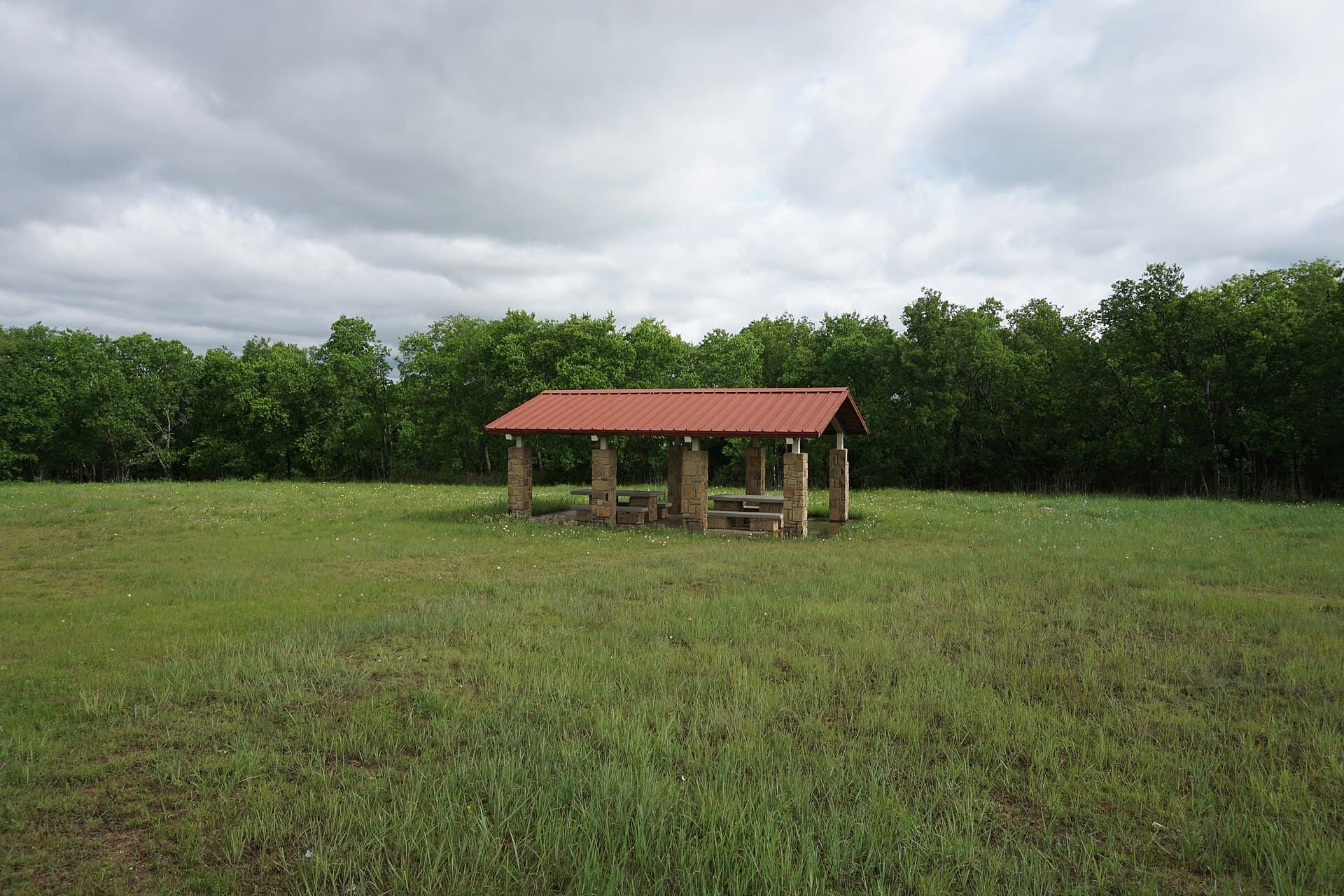
The county’s park system page also lists Parkhill Prairie as part of Collin County Parks and Open Spaces, confirming that it is public land managed for county residents and visitors. That makes it a place where recreation, education, and conservation overlap in the same footprint.
How the prairie protects water and habitat
Parkhill Prairie’s watershed role is as important as its habitat role. Because the site drains into Arnold Creek along the western border, the land’s vegetation and soils influence how rain moves, pools, and filters before reaching downstream water systems. Native prairie cover typically slows runoff, holds soil in place, and reduces the amount of sediment and other material that can wash into creeks and reservoirs.
That function matters in a county where water demand is rising with population. The reservoir downstream of Parkhill Prairie is part of the drinking-water system for more than 1 million people, so land use upstream is not an abstract environmental issue. The prairie helps preserve conditions that support water quality, flood resilience, and groundwater recharge in ways that paved surfaces and heavily altered landscapes do not.
This is one reason native prairie is often treated as infrastructure by land managers. The value is not limited to wildlife or scenery. It includes the ability to absorb storms, protect streams, and keep native soils working in a watershed that serves homes, schools, and businesses across North Texas.
The Nature Conservancy’s role and the next restoration phase
The Nature Conservancy was involved early in Parkhill Prairie’s story, helping with acquisition in the late 1980s and leading grassland restoration on part of the property in the early 1990s. That work helped establish the site as a managed conservation landscape rather than a leftover parcel of undeveloped land.
A 2023 restoration overview from The Nature Conservancy proposes expanding native grassland restoration across about 230 additional acres at Parkhill Prairie. The plan notes that the organization received a substantial Union Pacific Railroad grant for projects in California, Nebraska and Texas, with a significant share intended for the Parkhill Prairie project. In practical terms, the proposal would move more of the site from restored or transitional cover toward native prairie structure, increasing the amount of land that functions like the original ecosystem.
The county’s 2024 revised exhibit repeats the site’s 436-acre size, the 52-acre remnant, and the two 25-acre restoration areas, underscoring how the original land base and the restoration areas fit together. The restoration push is not cosmetic. It is aimed at expanding native habitat and improving ecological resilience on land already tied to water protection and public access.
Why residents use a place like this
Parkhill Prairie gives Collin County something development cannot replace once it is gone: direct contact with native Blackland Prairie. That has practical value for families, schools, and local conservation groups. The site is used in educational restoration work, including discussions of prescribed fire and seed collection, which are core prairie-management tools rather than symbolic gestures.
Those activities matter because prairie ecology depends on processes that most urban residents rarely see. Prescribed fire helps maintain grassland health, controls woody encroachment, and supports native species that evolved with periodic burns. Seed collection and restoration work help expand native plant diversity, which in turn supports pollinators and the broader food web that depends on prairie flowers, grasses, and open habitat.
For school field trips, the value is immediate. Parkhill Prairie offers a living example of what North Texas looked like before widespread conversion. Students can see how land, water, and habitat connect in one place, instead of learning about the Blackland Prairie only from maps or textbooks. For families, it also provides a rare public landscape where outdoor recreation is tied to a specific local history and a working watershed.
A disappearing landscape with local consequences
The Blackland Prairie once stretched across a broad belt of Texas, but today only fragments remain. Parkhill Prairie is one of the few county-owned places where that remnant is protected, restored, and interpreted as part of Collin County’s future rather than its past. In a county headed toward millions more residents, that makes the park valuable on several levels at once: recreation, habitat, flood resilience, water protection, and education.
Parkhill Prairie shows how land preservation can serve everyday needs while also keeping a native ecosystem alive. In a county moving fast, the prairie is one of the clearest reminders that some of the best long-term public benefits come from protecting what was here first.
This article was produced by Prism’s automated news system from verified source data, official records, and press releases, then run through automated quality and moderation checks before publishing. The system is built and supervised by the people who set the standards it runs under. Read our full AI policy.
Did this article answer your question?