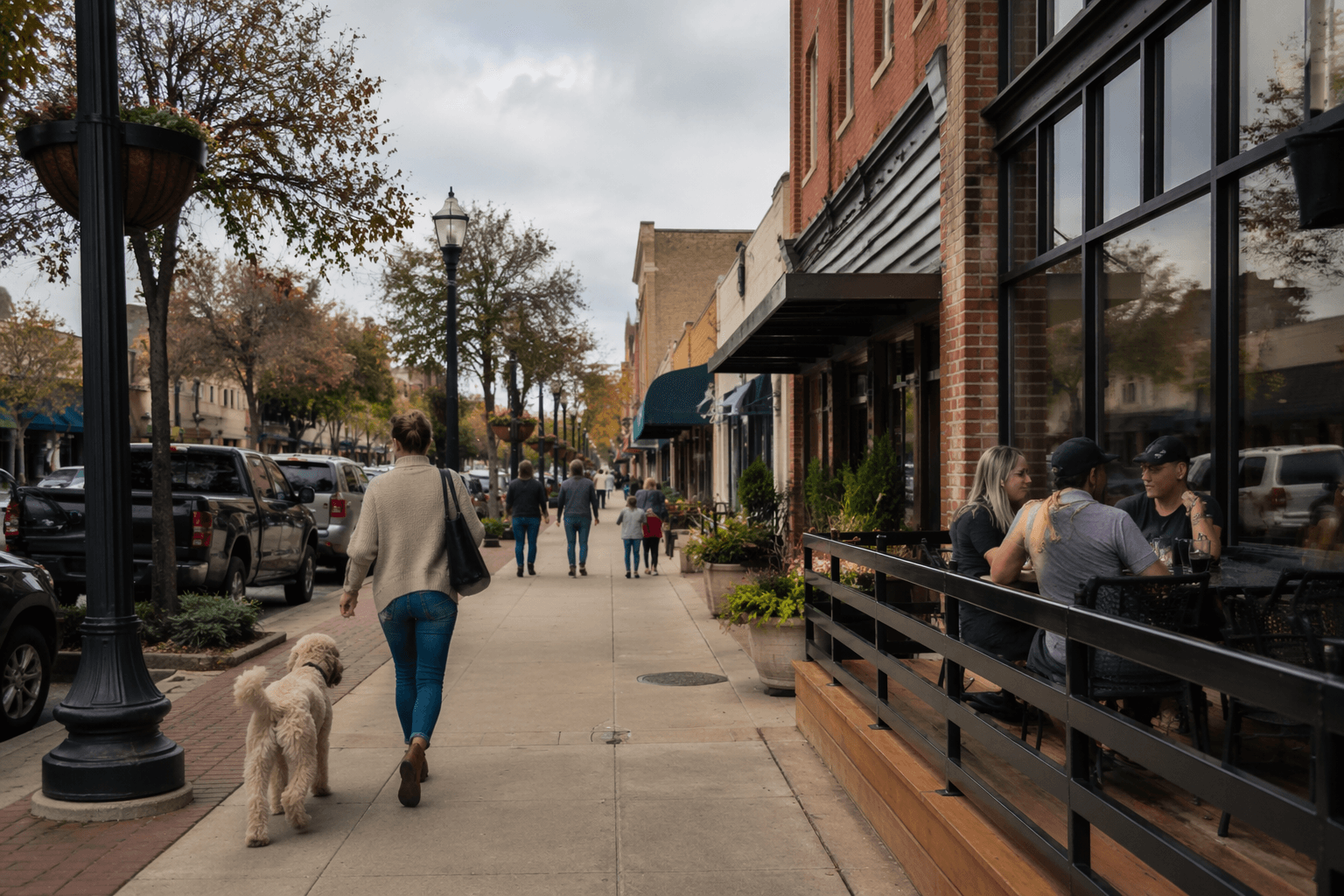
Richardson’s Arabian Village grows as Middle Eastern businesses cluster
Richardson’s South Greenville corridor is becoming a real test case for cultural commerce, not just a restaurant trend, as Middle Eastern businesses cluster and build momentum.
A corridor with a shared identity
Richardson’s Arabian Village is no longer just a collection of storefronts with a familiar theme. It is starting to look like a destination economy in the making, with restaurants, bakeries, retail shops and other businesses clustering around a shared Middle Eastern identity in south Richardson.
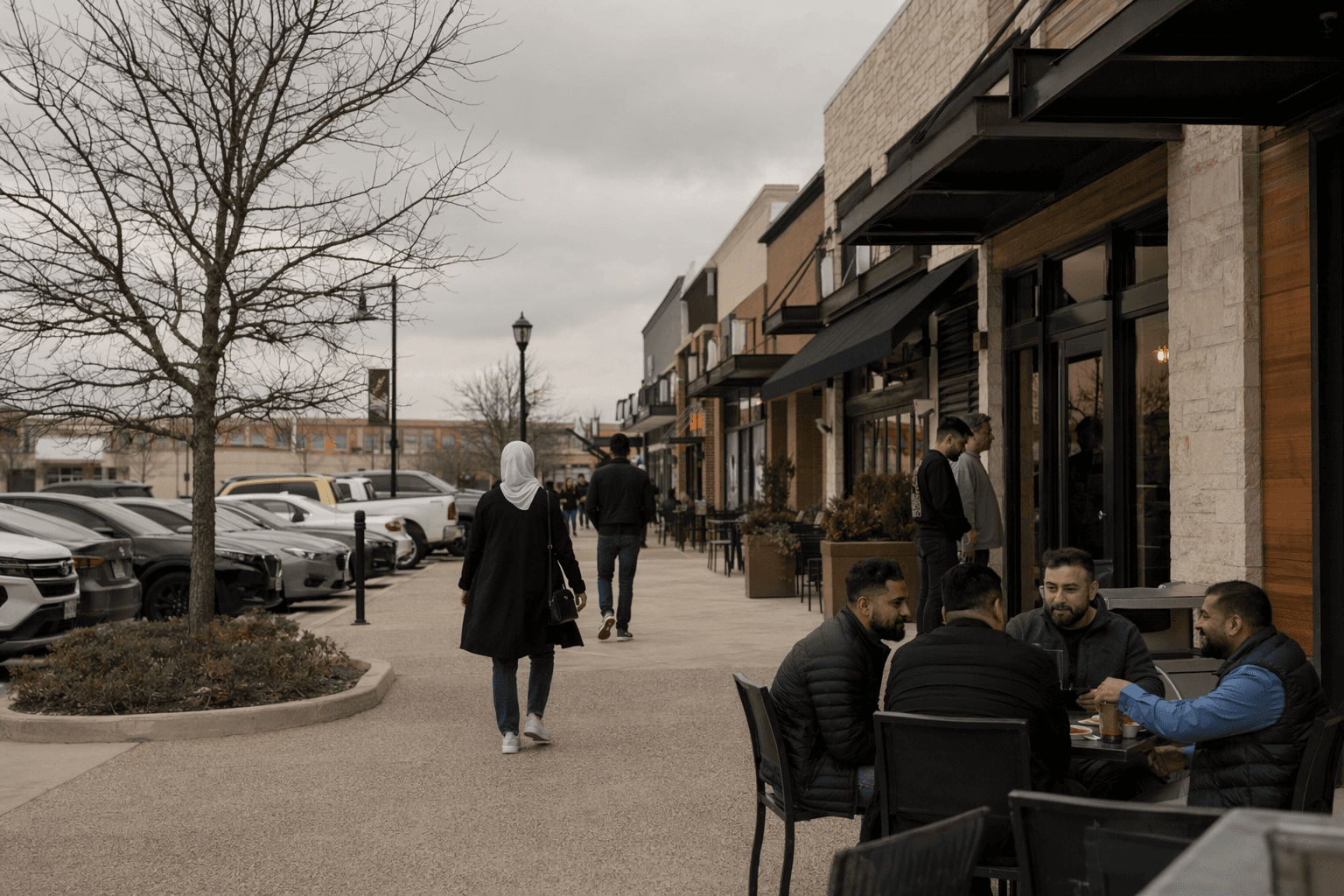
That shift matters because it changes the question from “what opened here?” to “can this district hold together long enough to draw regular traffic from across the Dallas-Fort Worth Metroplex?” The answer will depend on more than food. It will depend on leasing support, visible street-level branding, parking, tenant mix and whether the surrounding centers can keep filling space with businesses that reinforce each other instead of fading after the first wave of interest.
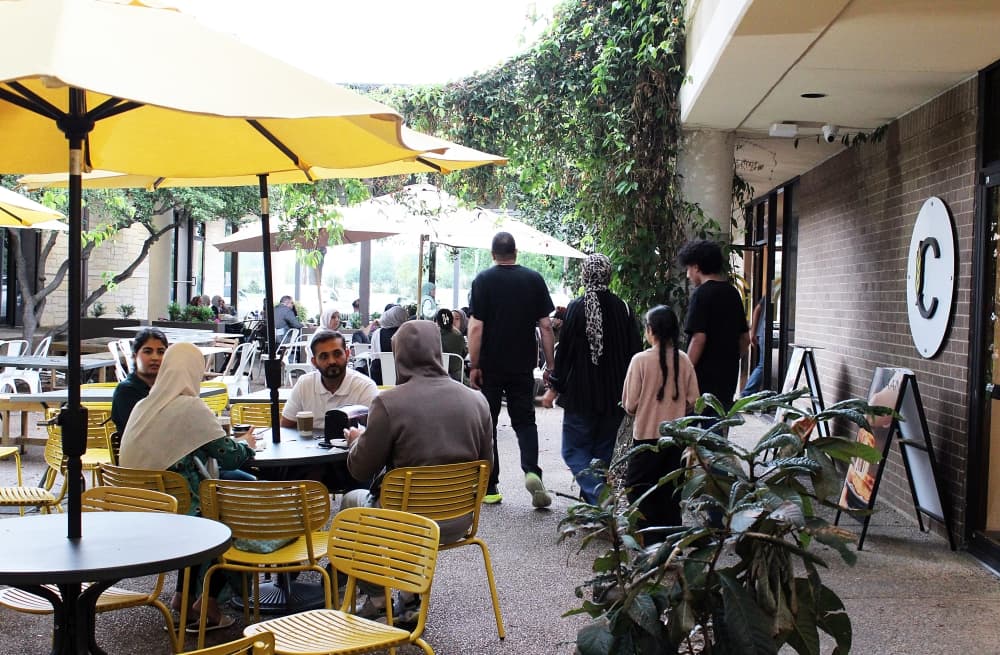
The clearest proof that something bigger is taking shape came in a June 2025 Dallas Observer feature that described The Arabian Village as home to six Middle Eastern businesses clustered around a shared patio. That is not a one-off restaurant strip. It is a built environment where customers can move between concepts, linger longer and treat the center as a place rather than a single stop.
What is opening, and where
Community Impact reported in April 2026 that Richardson had seen a run of Middle Eastern restaurants and cafes open over the previous several months, mostly in the south part of the city. The openings span Palestinian, Yemeni and Syrian cuisine, along with a coffee shop, a nut roastery and even a smashburger spot, showing that the draw is not limited to one cuisine or one customer base.
The geography is important. This is not scattered across the city in a way that dilutes the effect. The activity is concentrating in south Richardson, including spots inside The Arabian Village and Al Ameera Plaza. That kind of clustering can build habits, because diners and shoppers know where to go when they want that mix of food, shopping and cultural familiarity in one trip.
The corridor around S. Greenville Ave. is also seeing continued buildout. Texas Department of Licensing and Regulation filings show a renovation for Sanaa mandi house LLC at 888 S Greenville Ave., Suite 225, with an estimated cost of $70,000 and a completion date of Oct. 1, 2024. A separate filing at the same address shows a 2025 renovation for Cloud Naan in Suite 224, estimated at $150,000 and completed July 10, 2025. Together, those filings point to ongoing investment, turnover and tenant refinement inside the same center.
The developer behind the vision
The cluster did not happen by accident. Developer Adam Shawish has said his long-term aim was to create a center where Middle Eastern businesses could thrive together, and he traces that ambition back to his move to Dallas in 1998, when he saw only a handful of restaurants representing that community.
His first building in The Arabian Village came in 2019, after which he began recruiting tenants and shaping the center into a business district that reflects both entrepreneurship and cultural continuity. That distinction matters. A themed shopping center can be decorative, or it can become a true business ecosystem. Shawish appears to be betting on the latter by building a tenant base that shares a customer pipeline instead of competing in isolation.
That strategy also fits the economics of specialty retail. Independent businesses often need proximity to one another to generate enough foot traffic, especially when they serve niche or culturally specific demand. A successful Middle Eastern cluster can work like a mini district: diners come for one place and discover others nearby, while shoppers and families can bundle multiple stops into one visit.
Why Richardson is positioned for it
Richardson may be unusually well suited to this kind of development because the city already has the demographic and commercial base to support it. The 2020 census counted 119,469 residents in Richardson. U.S. Census Bureau data for 2019 through 2023 shows that 22.8% of residents were foreign-born, 33.7% of residents age 5 and older spoke a language other than English at home, 15.8% were Asian and 17.4% were Hispanic or Latino.
Those numbers do not tell the whole story, but they do help explain why a Middle Eastern commercial cluster can gain traction here. Richardson’s own economic development materials describe the city as a “global community” where cultures converge and businesses thrive. That branding is not just marketing language. It reflects the city’s effort to position itself as a place where international identities can become commercial assets.
City Manager Don Magner’s background also matters. His city bio says he is the fifth city manager since Richardson adopted its council-manager form of government in 1956, and he serves on the North Texas Commission, the Richardson Chamber of Commerce board and the Leadership Richardson advisory board. That kind of civic reach can help a city align redevelopment, business recruitment and branding around the same growth story.
The bigger test: destination or boosterism
There is, however, a real test ahead. A cluster of promising businesses is not the same thing as a durable destination economy. For Richardson to turn this into lasting momentum, the shopping centers around The Arabian Village and Al Ameera Plaza will need more than cultural appeal. They will need coordinated leasing, stable occupancy, visible wayfinding and enough repeat customer traffic to support businesses beyond the novelty phase.
That is where the distinction between boosterism and infrastructure becomes crucial. If the centers keep attracting tenants like the restaurants, cafes, coffee shop, nut roastery and specialty food concepts now filling south Richardson, the district could become a regional draw with its own identity. If not, it risks becoming another well-intentioned strip mall story that never quite turns into a true commercial engine.
The political and civic backdrop also adds weight. Amir Omar became Richardson’s first Muslim mayor in 2025, a milestone that reflects the city’s changing demographics and broader civic representation. In a city that already markets itself as globally connected, the rise of Middle Eastern business corridors gives that identity a visible address.
For Collin County readers, the significance is straightforward: Richardson is trying to prove that cultural commerce can do more than add variety to the dining scene. It can reshape the city’s economic map, define a corridor and create a place where people travel not just to eat, but to spend time, shop and return. If that holds, South Greenville will not be remembered as a passing trend. It will be remembered as the moment Richardson began building a destination around identity as well as retail.
This article was produced by Prism’s automated news system from verified source data, official records, and press releases, then run through automated quality and moderation checks before publishing. The system is built and supervised by the people who set the standards it runs under. Read our full AI policy.
Did this article answer your question?