The source material provided contains only website UI artifacts and metadata with no actual story content about Collin County. Please provide the actual article text or story details so I can write an accurate headline.
Frisco could run out of land for new single-family homes within a decade, a Dallas Business Journal analysis warns, as the city's population surpasses 235,000.
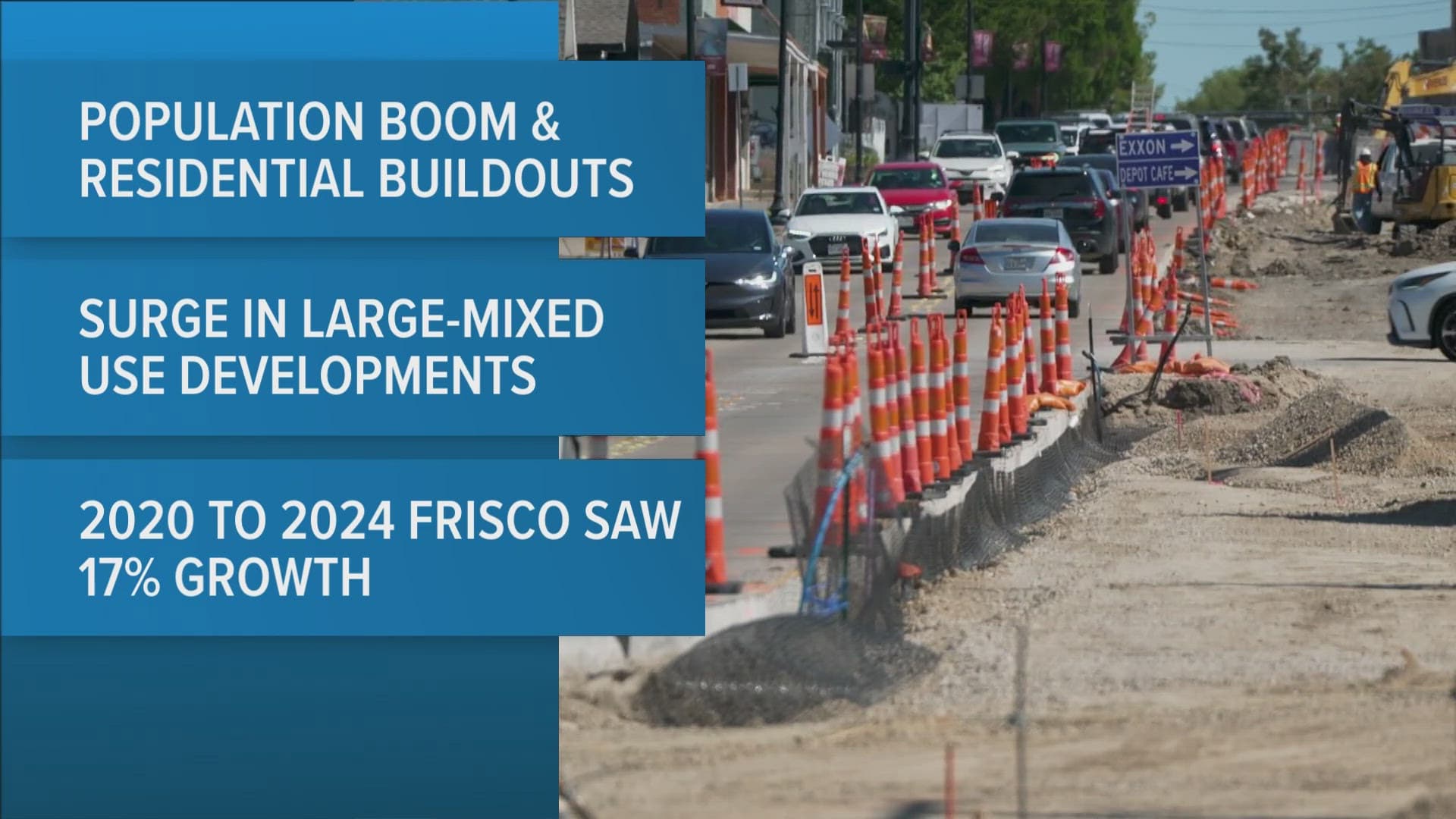
Frisco has added roughly 10,000 residents every year for decades, transforming a small Collin County farming community of about 6,000 people in 1990 into a city of more than 235,000. Now, according to a Dallas Business Journal analysis, that relentless growth is pushing Frisco toward a hard limit: the city could run out of land suitable for new single-family home development within roughly 10 years if current trends continue.
That projection carries significant consequences not just for Frisco but for the broader North Texas housing market, where the suburb 30 miles north of downtown Dallas has long served as a release valve for families priced out of closer-in neighborhoods.
A Growth Story Unlike Almost Any Other
The numbers are difficult to fully absorb. Frisco's population grew more than 17% between 2020 and 2024 alone, surpassing 235,000 according to U.S. Census data. Measured against its starting point, the scale of that expansion is even more striking: from roughly 6,000 residents in 1990 to a mid-sized city in a single generation.
Jason Ford, president of the Frisco Economic Development Corp., described the pace plainly: "the city has historically added about 10,000 residents a year." That kind of sustained absorption has driven permit activity, school construction, road expansion, and retail development at a tempo most American cities never experience.
The speed and scale of that growth has transformed Frisco into a major economic hub, reshaping the rest of North Texas along with it. New development along the Dallas North Tollway corridor through Plano and Frisco has created skylines and economic vibrancy more akin to a major downtown than the quiet suburbs of the past. Office towers, luxury retail, mixed-use blocks, and entertainment venues have clustered along that spine in ways that were unimaginable when Frisco was still a small town on the southern edge of Collin County.
The Land Problem
The Dallas Business Journal analysis frames Frisco's next decade in starkly different terms than its last three. Where the previous 30 years were defined by expansion, the next 10 could be defined by constraint. The analysis projects that Frisco could exhaust its supply of land suitable for new single-family home development within roughly a decade, contingent on current growth trends persisting.
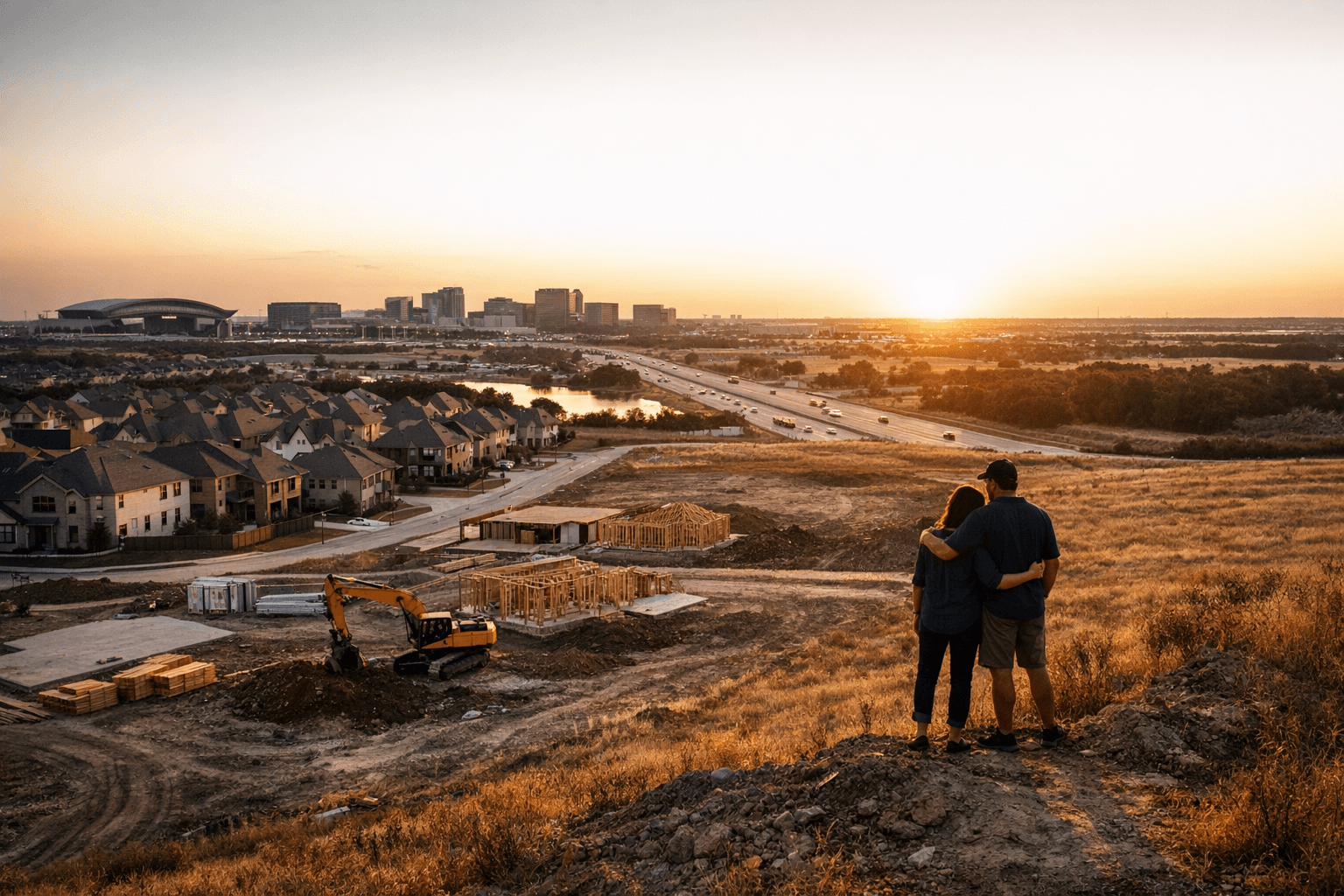
Ford acknowledged that some factors have moderated the pace. Higher mortgage rates and limited lot availability have slowed growth somewhat, he said, but he cautioned against reading that slowdown as permanent. If economic tailwinds pick back up, he said, the city could reach full residential buildout within 10 years.
The land-use picture is already shifting. Large mixed-use developments are now springing up on commercially zoned land throughout the city, a pattern that signals both the creativity of developers working within tighter constraints and the structural pressure on Frisco's remaining undeveloped parcels. That commercial-to-mixed-use conversion may accelerate as single-family lots become scarcer, pushing more density onto land that was originally planned for retail or office use.
What Buildout Means for Collin County
Frisco approaching residential buildout is not merely a local planning story. It has direct implications for housing supply across Collin County and the broader Dallas-Fort Worth metroplex.
For years, Frisco absorbed population pressure that might otherwise have concentrated in older, denser suburbs closer to Dallas. As that capacity shrinks, neighboring cities will face increased demand. Communities along the Dallas North Tollway corridor, including Plano, which has already undergone its own transformation from bedroom suburb to corporate destination, will feel that pressure acutely.
The shift in Frisco's development pattern toward mixed-use and vertical construction also signals what the next chapter of Collin County growth may look like: less sprawl, more density, and increasing competition for the remaining developable land in communities that still have room to expand.
What the Data Does and Doesn't Tell Us
The Dallas Business Journal analysis provides a compelling projection, but several important questions remain open. The methodology underlying the "roughly 10 years" figure, including how the analysis defines "suitable land," what assumptions it makes about annual permit rates and lot yields, and how it models zoning constraints and infill conversion rates, is not detailed in the available excerpts.
Similarly, the analysis does not specify how many acres of developable residential land Frisco currently holds, nor does it account for potential annexation or policy changes that could alter the supply picture. Frisco city planning documents, GIS parcel data, and municipal buildout studies would be necessary to fully validate or stress-test the 10-year projection.
Ford's comment that economic tailwinds "picking back up" could accelerate buildout also points to significant uncertainty in either direction. A prolonged period of elevated mortgage rates could extend the timeline; a surge in demand driven by continued corporate relocations to the Dallas-Fort Worth area could compress it.
The Transformation of the Tollway Corridor
Whatever the precise timeline, the physical transformation of Frisco is already visible and largely irreversible. The Dallas North Tollway, which once ran through open fields north of Plano, now passes through a corridor dense with corporate campuses, mixed-use towers, and high-end residential projects. That built environment reflects the investment decisions of thousands of developers, employers, and families who chose Frisco specifically because undeveloped land was available and affordable.
As that land disappears, Frisco's identity as a place where families can find new construction on a reasonably sized lot will give way to something closer to an established urban core. Whether that transition happens smoothly, or whether it creates affordability pressure, infrastructure strain, and displacement of the kind seen in more mature cities, will depend substantially on decisions made by Collin County and Frisco planners in the years immediately ahead.
The 10-year window flagged by the Dallas Business Journal analysis is not a prediction of decline. Frisco's economic fundamentals remain strong, and the Tollway corridor's emergence as a genuine business district gives the city assets that most suburbs never develop. But the era of essentially unlimited residential expansion is ending, and how Frisco manages that transition will define its next generation as thoroughly as the growth itself defined the last one.
Sources:
Know something we missed? Have a correction or additional information?
Submit a Tip