Cumberland County highlights historic sites across its towns and villages
History here runs from Mauricetown to Greenwich to Bivalve, not one downtown block. A day loop links homes, churches and oyster sheds that still shape Cumberland County's story.
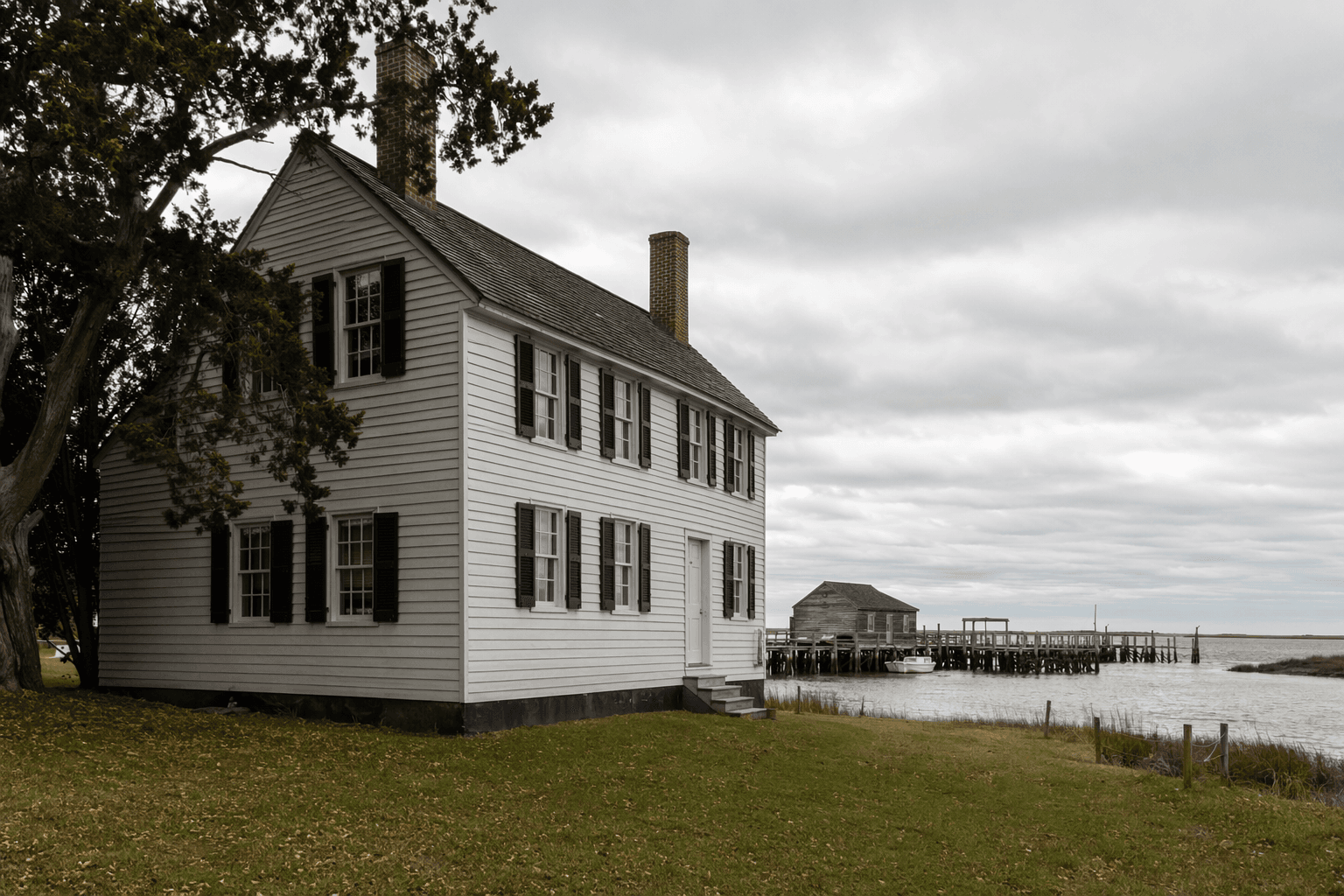
Cumberland County's history is spread across village streets, churchyards and waterfront sheds, not locked into one museum block. Explore Cumberland County says there is "so much more than 300 years of history" to explore, and the county also points to more than 60 cultural organizations ready to help residents follow that trail. The best local history outing is a loop, not a stop: Mauricetown, Greenwich and Bivalve show how home life, Black faith communities and the oyster economy all shaped the county.
A county-wide story, not a single landmark
Explore Cumberland County's Historical Sites & Museums page names the Abraham Hoy House in Mauricetown, Bethel African Methodist Episcopal Church in Greenwich and the Bivalve Shipping Sheds in Bivalve as places to start. Each site captures a different layer of county life, from domestic architecture to African American religious history to the waterfront trade that tied Cumberland County to Delaware Bay commerce. If you want the broadest picture, use those three sites as the backbone of a half-day drive, then widen the route into Bridgeton, Millville and Vineland for additional museums, churches and archives that add more local context.
The county's own framing is useful because it treats heritage as something spread across communities, not concentrated in one marquee destination. That matters in Cumberland County, where a single trip can connect small-town streets, church histories and maritime industry without leaving the county's landscape of villages and riverfronts. The result is a route that shows how the county developed through homes, worship, work and trade.
Mauricetown: a domestic-scale view of the county
The Abraham Hoy House is valuable because it keeps the county's story grounded in a village setting. Mauricetown shows what daily life looked like outside the larger commercial centers, where homes and small-scale neighborhoods preserved the textures of work, kinship and settlement. A stop there pairs naturally with Greenwich and Bivalve because it reminds you that Cumberland County history is not only about institutions and industry, but also about the houses and streets where ordinary life unfolded.
That domestic layer gives the rest of the route more meaning. By beginning in Mauricetown, you see the county as a place built out of neighborhoods first, then linked by faith networks, transportation corridors and waterfront labor. It is a small stop with a wide reach, especially when read alongside the church and shipping sites farther south.
Greenwich: faith, resistance and memory
Bethel African Methodist Episcopal Church in Greenwich brings African American religious history into the center of the county story. Greenwich itself is one of the area's most historically significant communities, and Cumberland County's Greenwich Tea Burning page ties the village to Revolutionary-era significance. The county's own history resources make Greenwich essential for understanding how local resistance, community organization and early American politics intersected in one place.
The Cumberland County Historical Society at 981 Ye Greate St. in Greenwich gives that context a practical home. VisitNJ notes that the society has preserved 18th-century buildings and includes a prehistorical museum, while the society's museum hours are 10 AM to 4 PM. That mix makes Greenwich especially useful for a weekend itinerary: you can move from the church and county history pages into a place that preserves both early structures and deeper layers of local memory.
Bivalve: the waterfront economy that powered the county
The Bivalve Shipping Sheds are the county's clearest reminder that Cumberland County's past also moved through labor, boats and railcars. Explore Cumberland County says the sheds were placed on the State and National Registers of Historic Places in 1996, and the New Jersey Historic Trust identifies the site as the Bivalve Shipping Sheds and Wharves. That designation matters because it marks the sheds not as scenery alone, but as a historic resource tied to the county's working waterfront.
The site once sat inside a larger shellfish economy. An Old Salt Blog post says that by the late 1880s, 90 railcars full of oysters were shipped from Bivalve every week, a striking measure of how much commerce passed through the waterfront. The Bayshore Center at Bivalve's brochure adds a later chapter: in 2001, the center purchased six sheds with funds from the Cumberland County Empowerment Zone, and one shed had been purchased in 1995. The same brochure lists the address as 2800 High Street, Bivalve, Port Norris, New Jersey 08349, which turns a name on a map into a real stop on the ground.
How to make the route work in a day or a weekend
For a same-day loop, start in Mauricetown to ground the trip in neighborhood-scale history, continue to Greenwich for Bethel AME Church and the Cumberland County Historical Society, then finish in Bivalve at the shipping sheds and the Bayshore Center. That order moves from home life to faith and civic memory, then into the industrial shoreline that connected Cumberland County to regional markets. If you have more time, add Bridgeton, Millville and Vineland to the route and use the county's network of more than 60 cultural organizations to fill in the pieces that one drive cannot cover.
This approach works for different kinds of visitors because it is built around actual places with specific stories. Families get a low-cost outing with a clear route, teachers get local-history material tied to named sites, and longtime residents get a way to see how the county's story is distributed across towns instead of concentrated in one marquee stop. Cumberland County's heritage pages make that case plainly: the county's past is wider than one downtown, and its most revealing landmarks are spread across the villages and waterfronts that still define the county today.
This article was produced by Prism’s automated news system from verified source data, official records, and press releases, then run through automated quality and moderation checks before publishing. The system is built and supervised by the people who set the standards it runs under. Read our full AI policy.
Did this article answer your question?