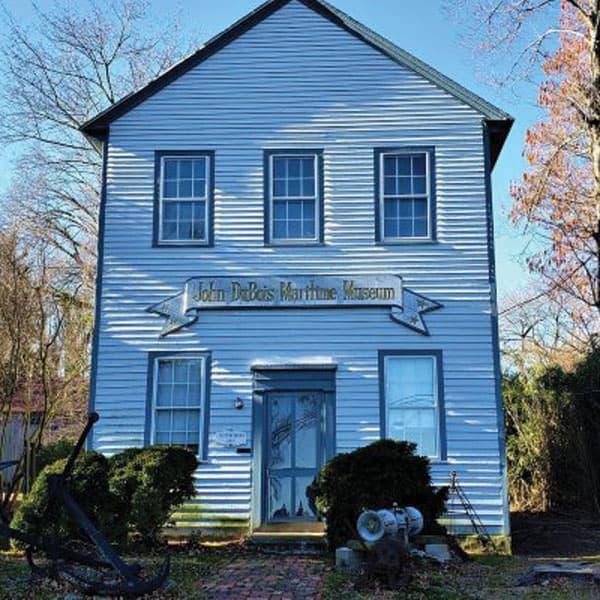
Mauricetown’s maritime past shaped Cumberland County’s historic river village
Mauricetown began as a river landing in 1730, and its historic district still shapes property decisions, tourism, and preservation in Commercial Township.
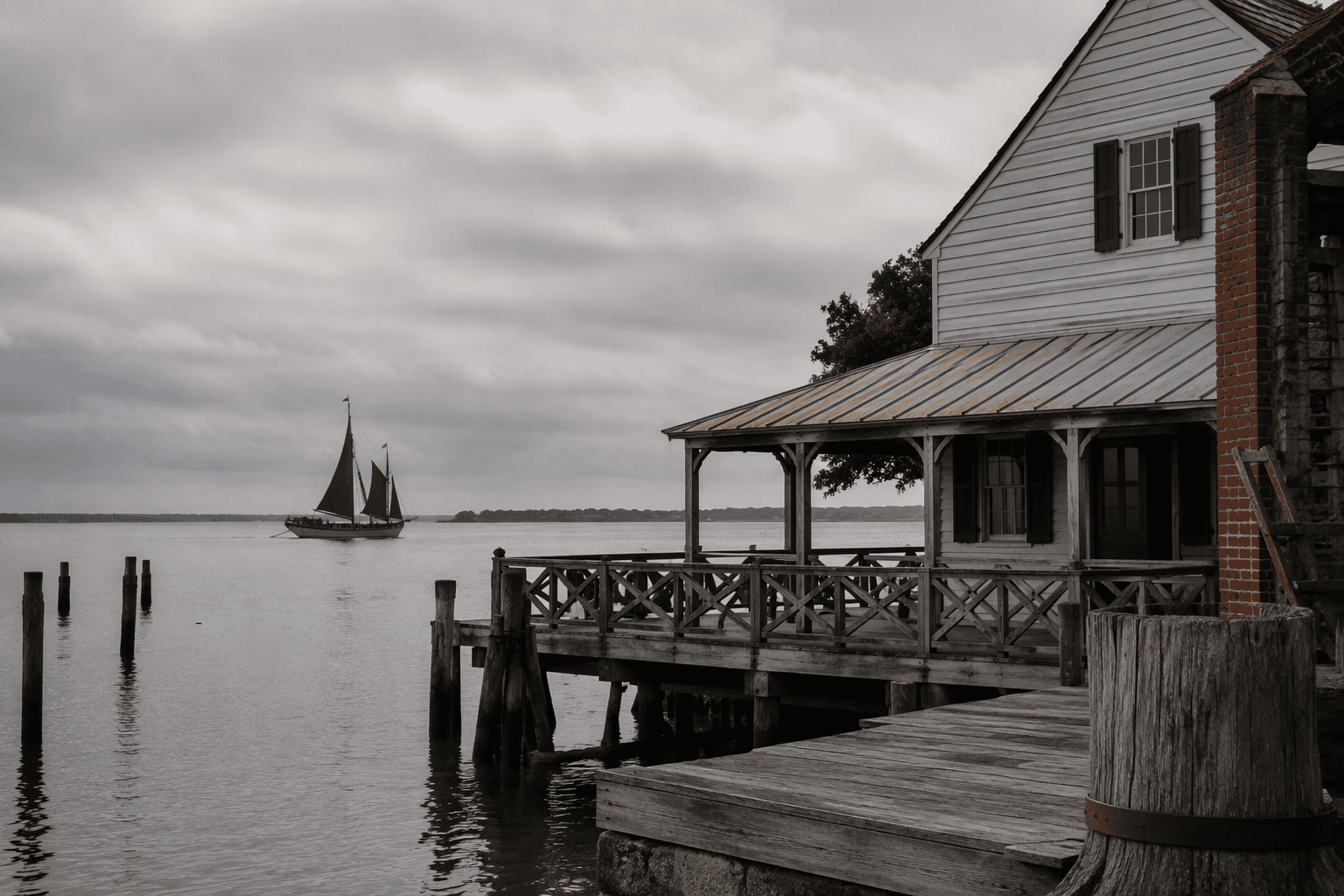
Mauricetown is one of Cumberland County’s clearest examples of how a small river village can carry its past into everyday decisions about homes, streets, and shoreline character. The village began as a Swedish settlement in 1730, grew around a landing that moved farm and forest goods by water, and later became a protected historic district whose old buildings still set the tone for the community.
A village built on river commerce
The Mauricetown Historical Society traces the settlement to the Swedes in 1730, then to Luke Mattox, who owned the village before 1789 and operated a landing there until 1812. That landing was not decorative history. It moved tomatoes, lumber, iron, and cordwood, placing Mauricetown squarely inside the working economy of the Maurice River and the Delaware Bay.
The National Park Service places the district’s historic significance in the period from 1815 AD to 1930 AD and ties it to architecture, commerce, and maritime history. It is listed as NRIS 100002252 in Cumberland County, New Jersey, a designation that matters because it frames Mauricetown as more than a scenic cluster of old houses. It was a river village with a real commercial role, and that role still explains why the built landscape looks the way it does.
Preservation in Mauricetown was organized, not accidental
The village’s historic identity was protected through deliberate local action. The Mauricetown Historical Society says it was formally organized in June 1983, after local citizens had spent the previous three years working to add 36 architecturally significant homes and structures to the Cumberland County Register of Historic Structures and Sites. That effort turned a shared sense of place into formal preservation.
Mauricetown’s listing on the state and federal registers of historic places gives the village a long-term place in New Jersey’s preservation system. The New Jersey Department of Environmental Protection includes Mauricetown in its mapped historic-district data set, and that official status is what gives the district its current weight in property decisions, neighborhood identity, and how new work fits into an old streetscape. In practice, the historic district is not just a label. It is the framework that keeps Mauricetown’s river-era scale from being erased by piecemeal change.
What the streets still show
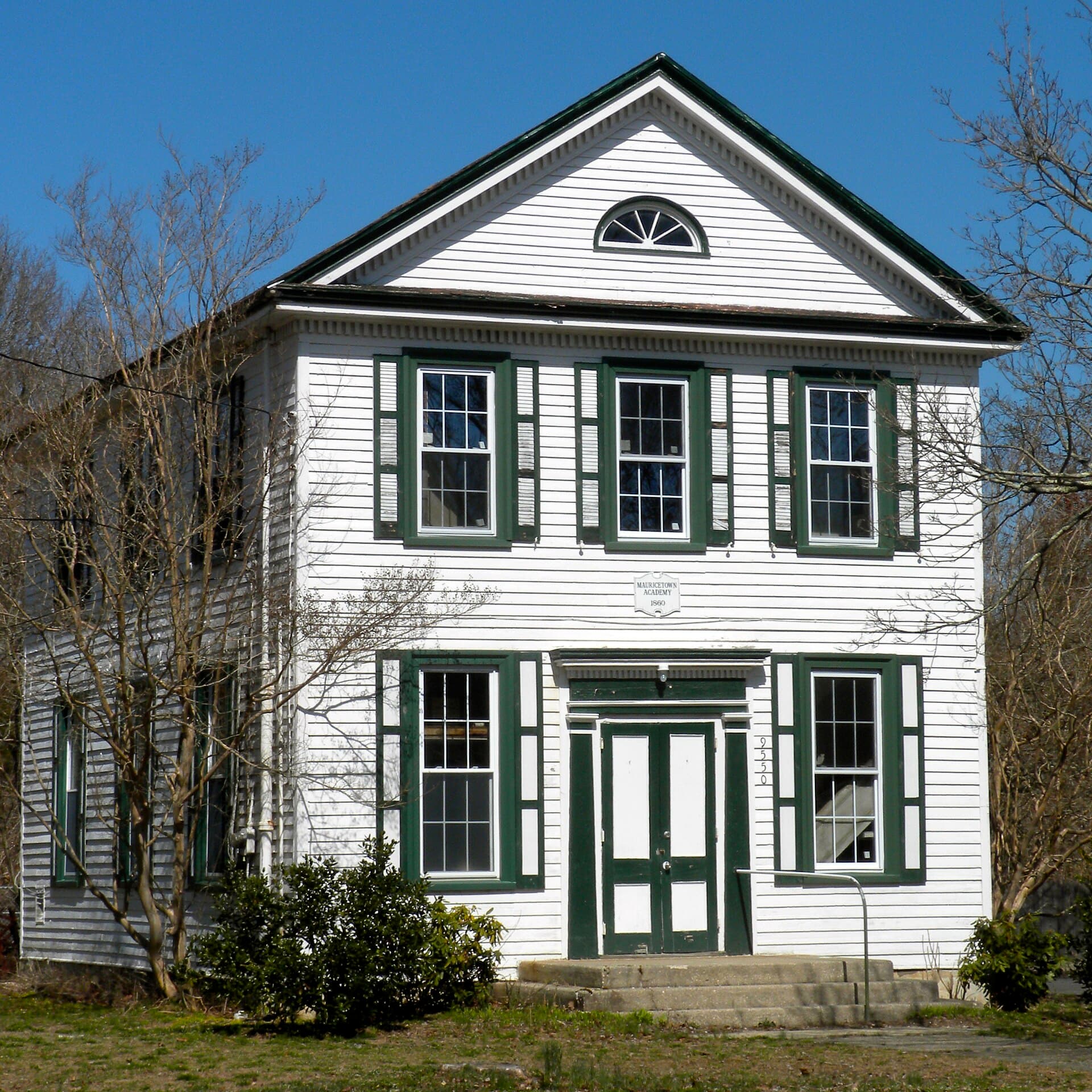
Mauricetown’s built environment tells the story building by building. The Mauricetown Historical Society identifies the Edward Compton House, built in 1864; the Abraham Hoy House, built in 1840; the Cook House, built in 1867; and Mauricetown Academy, a two-room Greek Revival elementary school built in 1860 by local architect Charles Bacon.
The National Park Service metadata also links the district to named builders and architects including Samuel Cobb, Griffith Pritchard, and Flagg Bacon. That matters because it shows the district was shaped by multiple hands over time, not a single preservation moment. The result is a streetscape where residents and visitors can still read 19th-century design choices in rooflines, facades, and schoolhouse form.
Mauricetown Academy is especially revealing. A two-room Greek Revival schoolhouse built in 1860, it reflects a village large enough to support a local institution and ambitious enough to commission a recognizable architectural style. The district’s range of dates, from the 1840 Abraham Hoy House to the 1867 Cook House, shows a community that kept building as the river economy matured.
Tourism now follows preservation
Mauricetown’s heritage is also part of its public life. The Mauricetown Historical Society says the Edward Compton House is open on the first and third Sundays from 1:00 PM to 4:00 PM. During tours, the society also opens the original cookhouse and an 1830s New Jersey stackhouse that was moved to the grounds.
Those openings give visitors a direct view of the village’s layered history, from domestic space to outbuildings and reconstructed grounds. They also turn preservation into an economic asset of a different kind, bringing people into the district because the buildings are authentic and still legible. In a county where heritage tourism competes with other forms of weekend travel, Mauricetown’s value comes from the fact that it is not a museum built from scratch. It is a preserved village with a working historic core.
Commercial Township’s river identity still runs through Mauricetown
Mauricetown cannot be separated from the larger geography of Commercial Township. The township says its fortunes have always been tied to the Maurice River and the Delaware Bay, and Mauricetown sits directly inside that river-and-bay system. That larger setting explains why the village’s preservation matters now: the same water access that supported trade in tomatoes, lumber, iron, and cordwood also created the landscape that residents now work to protect.
That tension between preservation and change is where Mauricetown’s historic-district identity has its sharpest local impact. Older houses, schoolrooms, and former working-waterfront buildings are part of the village’s appeal, but they also define what can and cannot easily be altered without changing the character that makes the place valuable. In Commercial Township, Mauricetown is a reminder that development pressure along a riverfront is never just about land use. It is also about whether the past remains visible enough to anchor the future.
The people attached to the place
The Mauricetown Historical Society keeps the village’s memory tied to named residents and local figures as well. Its notable people page includes Irene Ferguson, Pat Price, Tom Kates, and Henry Reeves. Reeves was born in Buckshutem on April 17, 1912, which links Mauricetown to neighboring localities and to the broader network of families who have carried Cumberland County’s river history forward.
That continuing interest is not limited to local memory. In 2014, University of Delaware students documented historic buildings in Mauricetown, adding academic attention to a village already known for its preservation record. For Cumberland County, that outside interest underscores a simple fact: Mauricetown’s maritime past is not sealed in the past. It still shapes what the village is allowed to become, and what residents choose to keep.
This article was produced by Prism’s automated news system from verified source data, official records, and press releases, then run through automated quality and moderation checks before publishing. The system is built and supervised by the people who set the standards it runs under. Read our full AI policy.
Did this article answer your question?