Dunton Hot Springs turns a ghost town into a luxury retreat
A 19th-century ghost town now operates as a 13-cabin retreat, while nearby Dunton Meadows protects the Dolores headwaters, wildlife, and trail access.

Dunton Hot Springs sits at the center of a rare Dolores County tension: a privately run luxury retreat built inside a restored ghost town, and a nearby headwaters meadow that remains part of the public water and wildlife landscape. The place is not just a novelty from the silver-boom era. It is a working example of how history, high-end tourism, and land stewardship can overlap in the upper Dolores basin.
From mining camp to mountain retreat
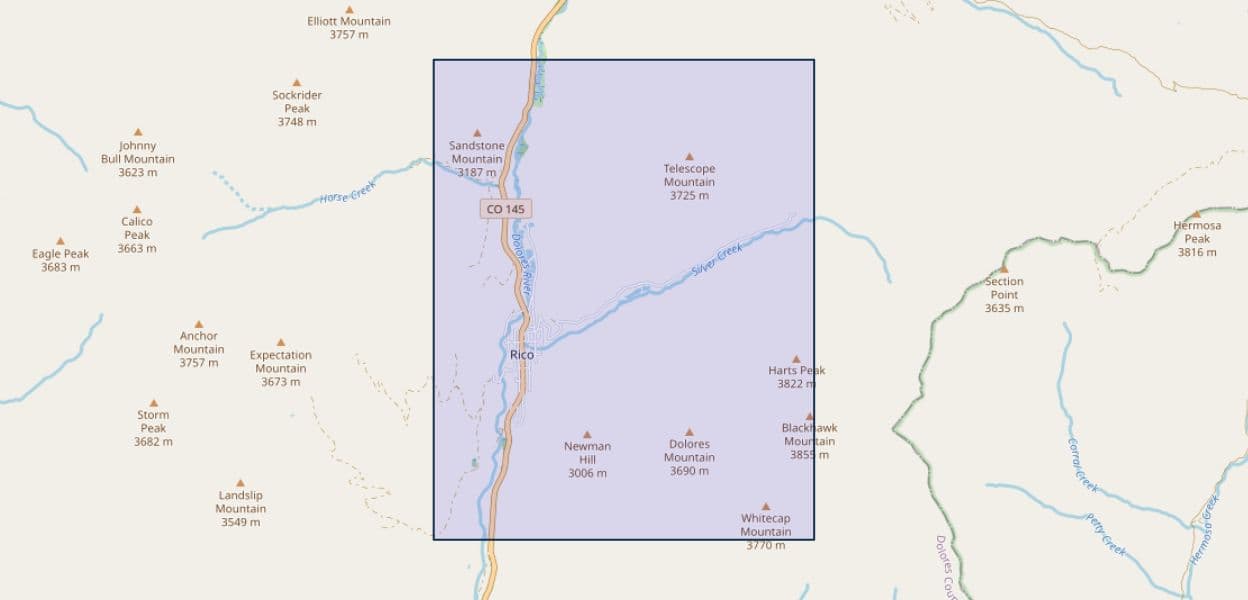
Dunton began in 1885 as a mining camp in the San Juan Mountains, with log structures stretching for about a mile along the West Dolores River. The camp grew out of nearby mineral activity tied to the Emma, Smuggler, and American mines, then faded into ghost-town status as the mining era receded. Its post office operated from August 9, 1892, until November 30, 1954, a small but telling marker of the settlement’s long decline and eventual abandonment.
The town changed hands in 1994, when Bernt Kuhlmann and Christoph Henkel bought the abandoned site. Four years later, in the spring of 1998, Dunton Hot Springs opened to the public as a lifestyle resort. That shift preserved the old bones of the place while changing its use completely, turning a once-isolated mining settlement into a destination built around restoration, comfort, and controlled access.
What the resort is now
Today, Dunton Hot Springs presents itself as an upscale, all-inclusive retreat with 13 luxury cabins that can host up to 44 guests. The format matters: this is not a large resort complex spread across a commercial strip, but a small, carefully curated property where historic exteriors sit alongside high-comfort interiors, food and beverages are included, and the experience is designed around privacy. The whole town can also be rented for weddings, corporate retreats, and other special events, which makes it both a hospitality business and a venue with unusually few guests at any one time.
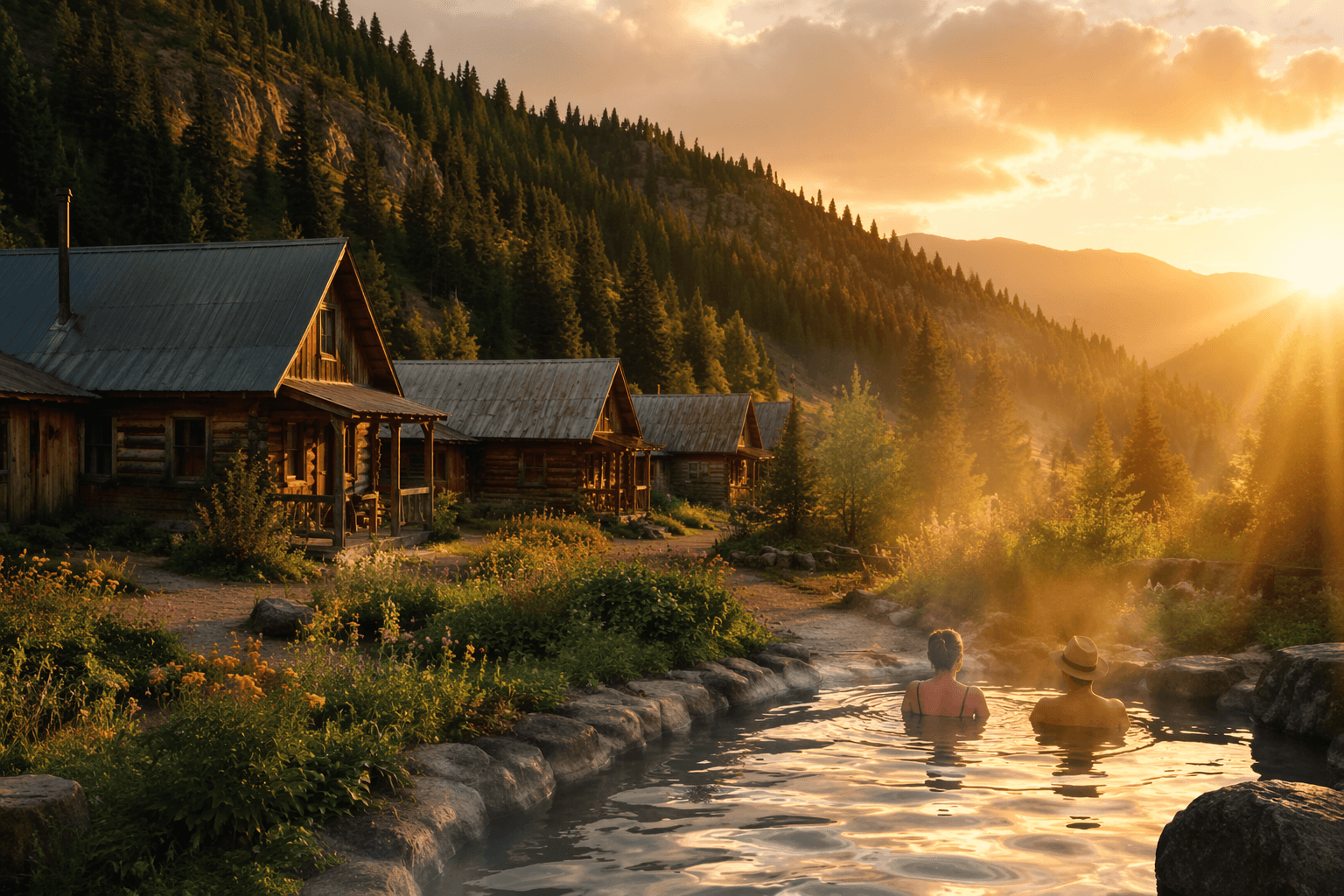
The activity menu reinforces that hybrid identity. Dunton’s offerings include hiking, horseback riding, snowshoeing, and wildlife viewing, along with the hot springs that give the property its name. In travel coverage, the resort has been recognized with Michelin Keys, which places it among the more distinctive luxury stays in the state rather than in the ordinary hotel category. For Dolores County, that combination of historic setting and elite hospitality makes Dunton one of the county’s most unusual tourism assets.
Why the surrounding land matters as much as the resort
The bigger county story is just beyond the cabins. In October 2024, the San Juan National Forest Dolores Ranger District and Western Rivers Conservancy permanently conserved the 160-acre Dunton Meadows property at the headwaters of the Dolores River. The Forest Service described the site as a critical wetland meadow complex, and that wording captures why the land matters beyond its scenic value.
Dunton Meadows sits at roughly 10,000 feet between the East and West forks of the Dolores River. The meadow helps store, cool, filter, and slowly release snowmelt and stormwater into Coal Creek, which makes it more than open space: it is part of the hydrologic machinery that keeps the upper basin functioning. Western Rivers Conservancy said the protection took place in October 2024 and called the meadow a “critically important wetland meadow complex” at the headwaters of the Dolores River. Allen Law of Western Rivers Conservancy also described it as a “vital cold-water savings vault” for fish and wildlife.
That is not abstract conservation language. The protected land is important habitat for Colorado River cutthroat trout, elk, mule deer, black bear, Canada lynx, and other wildlife. It also helps preserve views and access near two well-used routes, the Navajo Lake Trail and the Kilpacker Trail. For a county defined by narrow mountain corridors and sensitive headwaters, that combination of water function, habitat, and trail access is the real public interest story.
How the protection came together
The Dunton Meadows campaign began in 2021, giving the effort a multi-year lead time before the land was finally secured. Western Rivers Conservancy bought the property in May 2023 and later conveyed it to the San Juan National Forest, with Land and Water Conservation Fund support and other funding helping make the transfer possible. That sequence matters because it shows the conservation result was not a single announcement but a staged land deal that moved the property into permanent protection.
The result is a rare alignment in the upper Dolores basin. The meadow remains part of a larger landscape shaped by the same mountains that gave rise to the mining camp, while the conservation outcome keeps the hydrologic and wildlife functions intact. Rather than cutting the headwaters off from public concern, the protection embeds the site more firmly in the county’s broader land and water system.
What the place means for Dolores County
Dunton’s location about 12 miles northwest of Rico by road makes it feel close to the county’s living history and yet physically removed from everyday town life. It is centered along the West Dolores River and tied to the same high-country setting that supports ranching, recreation, and watershed management throughout the basin. The resort’s private, high-end model means the public does not experience the site as a casual roadside stop; it is a destination that must be booked, rented, or planned around.
That is where the county-value tension is clearest. Dunton preserves historic buildings that might otherwise have disappeared, but it does so through a luxury model that limits access and repackages a ghost town as a high-comfort retreat. At the same time, the conservation of Dunton Meadows protects a piece of the landscape that still functions for everyone downstream, from cold-water fish habitat to trail views to the slow release of snowmelt. In Dolores County, Dunton is both a showcase and a reminder: the way land is used now determines whether a historic mountain place stays open, gets enclosed, or keeps serving the watershed that made it worth settling in the first place.
This article was produced by Prism’s automated news system from verified source data, official records, and press releases, then run through automated quality and moderation checks before publishing. The system is built and supervised by the people who set the standards it runs under. Read our full AI policy.
Did this article answer your question?