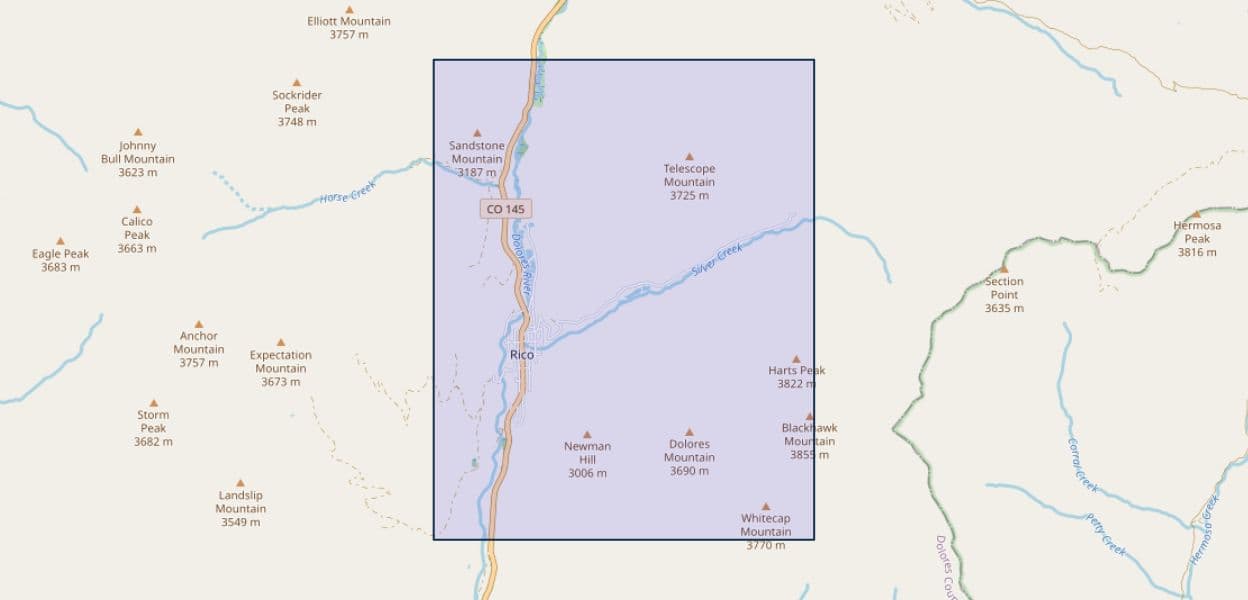
Montezuma Valley irrigation system opened Dolores County to settlement
Water, not chance, opened the Montezuma Valley, and the same irrigation system still decides which Dolores County acres can farm today.
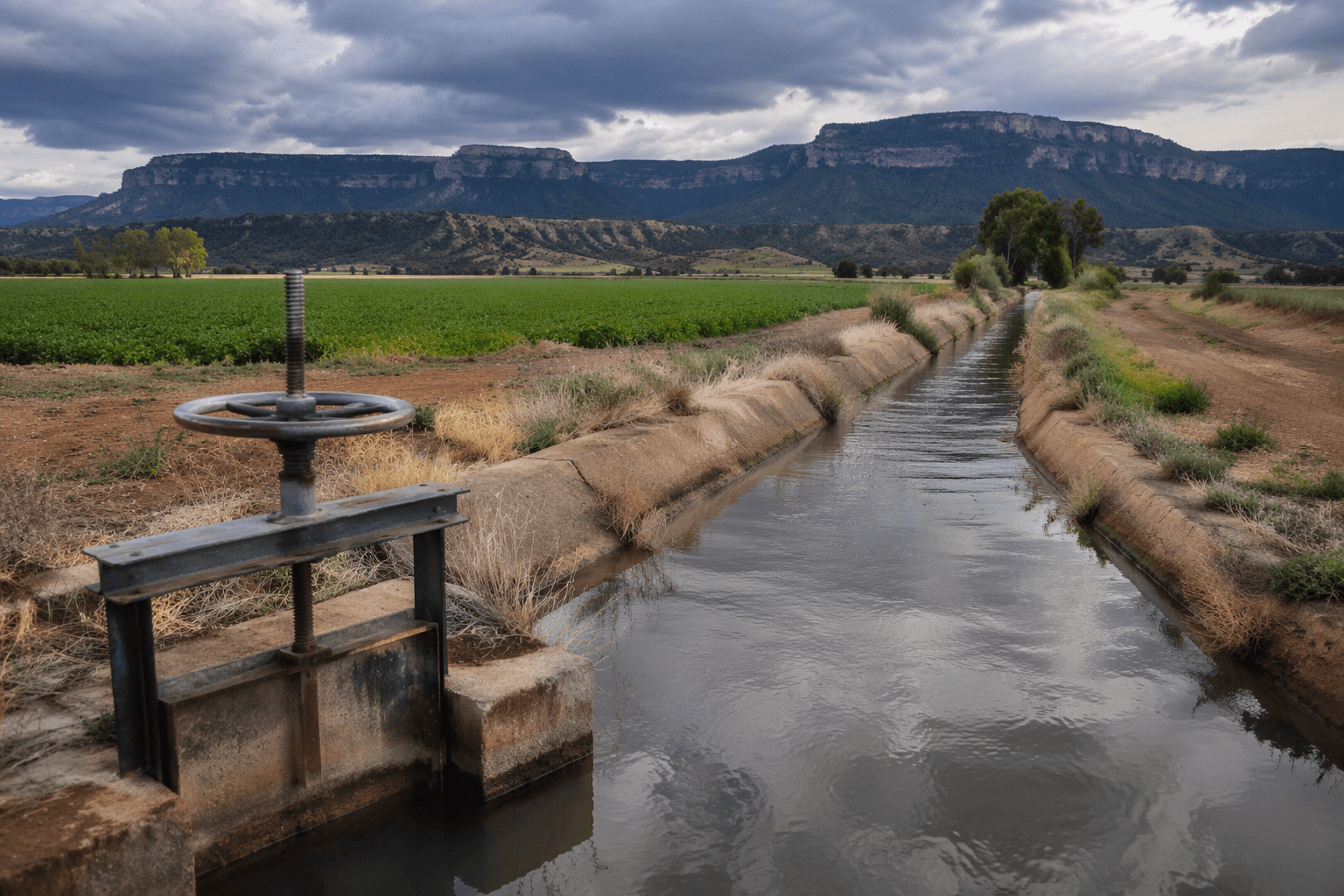
Water is what turned the Montezuma Valley from a dry basin into settlement country. Dolores County now has 264 farms spread across 161,407 acres, but only 5,415 acres are irrigated, so every delivery decision still affects what stays in production, what crops make sense to plant, and how much agricultural value the county can hold onto. That is the real legacy of the irrigation system James W. Hanna organized in the 1880s: it was the infrastructure that made broader settlement possible in a landscape where rain alone could not support growth.
How water crossed the divide
The engineering was as audacious as the geography was unforgiving. Workers began drilling, blasting, and excavating the 5,400-foot Montezuma Valley Water Supply Company tunnel in November 1885, and the system also included a 4,000-foot section known as the “Great Cut,” plus siphons, wooden flumes, headgates, and diversion dams to move Dolores River water across a steep divide. J. M. Mack served as engineer and chief designer, and he was also credited with laying out the Cortez town site in 1886, a reminder that water development and town building were happening as one project, not two separate ones.
That matters because the Montezuma Valley was not simply waiting for a ditch. The arid climate made irrigation an absolute necessity, and the nearby Dolores Valley had the water the Montezuma side lacked. Earlier diversion efforts in the late 1870s had not solved the problem, which is why the Hanna-led project became decisive: it was large enough, technically complex enough, and financially durable enough to carry settlement forward where smaller attempts had failed. The Historic American Engineering Record, preserved through the Library of Congress, identifies the system as the Montezuma Valley Irrigation Company System and places it among the earliest large-scale, privately funded, continuously operating irrigation projects in the Southwest.
What remains on the landscape
The old system is still visible if you know where to look. Colorado Preservation identifies the McElmo Creek Flume as the only surviving flume from the original 104 built on the Montezuma Valley irrigation system, a surviving piece that gives a physical scale to what once was a far larger network of wooden structures moving water to farms and ranches. That one remaining flume is more than a relic: it is evidence of how much labor, timber, and maintenance were required to keep the valley watered year after year.
The archival record also shows that the system’s ownership and control changed as the valley matured. The Library of Congress record ties the project to the Montezuma Water Supply Company, the Cortez Land and Investment Company, and the Colorado Consolidated Land & Water Company, which shows how irrigation in this part of Colorado depended on a chain of corporate reorganizations, not a single first build. By 1920, the Montezuma Valley Irrigation Company was formed to consolidate several systems, rehabilitate them, and keep them operating and maintained, because the original private ditches were already wearing out under the pressure of use and late-season shortages.
The numbers behind today’s farm economy
Dolores County agriculture still reflects that water story in hard numbers. The USDA’s 2022 Census of Agriculture county profile shows 264 farms with 161,407 acres in farms, an average farm size of 611 acres, and only 5,415 irrigated acres, or about 3 percent of all land in farms. Crops accounted for 65 percent of the county’s $7.524 million in market value of agricultural products sold, while livestock, poultry, and products made up the other 35 percent.
The crop mix also shows why water reliability shapes everyday decisions. The county’s top crop acreages included 11,804 acres of wheat for grain, 7,128 acres of safflower, 4,488 acres of forage hay and haylage, and 3,406 acres of dry edible beans. In a county where 158 farms reported sales under $2,500, and total farm production expenses reached $13.257 million against $7.524 million in sales, water is not just a production input. It is the difference between keeping ground in a farm rotation and watching it slide toward less productive use.
Why the modern district still matters
The system did not stop evolving after the first tunnel and flumes. The Dolores Water Conservancy District says its modern project serves roughly 63,000 irrigated acres across the full service area, MVIC classified lands, and the Ute Farm and Ranch Enterprise, and its infrastructure includes 82 miles of pressurized pipe laterals that deliver 55,200 acre-feet to about 27,920 acres in Montezuma and Dolores counties. The district also says it has produced an average of 1,624 acre-feet of municipal water annually since 2000, which shows how the same river system now has to cover farms, towns, and other uses at once.
That pressure is why the district itself exists. Montezuma Valley Irrigation Company was reorganized in 1920, but the shortage that really forced a new public structure was late-season water, and Cortez Bootstraps formed the Dolores Water Conservancy District in November 1961 after following advice from Congressman Wayne Aspinall. The district’s current mission is to conserve and develop the Dolores River for Dolores and Montezuma counties, and its own FAQ says McPhee has historically spilled roughly five years out of ten, a reminder that storage, timing, and delivery remain as important as raw supply.
The Montezuma Valley was settled because engineers found a way to move water across a divide. Dolores County still depends on that same logic, only now the question is not whether settlement is possible but whether enough reliable water can keep farms productive, crop choices viable, and irrigated land economically distinct in a county where so little of the landscape is watered.
This article was produced by Prism’s automated news system from verified source data, official records, and press releases, then run through automated quality and moderation checks before publishing. The system is built and supervised by the people who set the standards it runs under. Read our full AI policy.
Did this article answer your question?