Galloping Goose No. 5 marks Dolores County's railroad legacy
Dolores grew around the Rio Grande Southern, and Galloping Goose No. 5 still turns that railroad past into a living symbol of local pride, tourism and preservation.
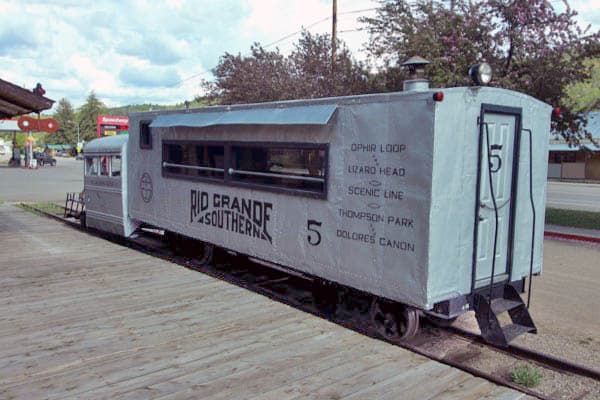
Dolores County’s railroad story is easiest to see on Railroad Avenue, where Galloping Goose No. 5 sits as both artifact and anchor. The railcar points back to the moment Dolores became a Rio Grande Southern town, when the railroad reshaped the local economy, the street grid and the way the community remembers itself.
A rail town built on the Rio Grande Southern
The Rio Grande Southern Railroad was conceived and built in 1890 and 1891 by Otto Mears to move through some of Colorado’s hardest mountain country. The line ran more than 160 miles from Ridgway to Durango, passing through Telluride, Rico, Dolores and Mancos, and it was part of the wider push to unlock mining wealth in the San Juan Mountains. Early traffic came from silver and gold mines near Telluride, Ophir and Rico, which made the railroad a business lifeline as much as a transportation link.
That early promise did not last long. The Silver Panic of 1893 hit the region hard and pushed the line into receivership, but the railroad remained central to western San Juan life for decades. The Rio Grande Southern served Colorado’s western San Juan Mountains from 1890 to 1951, and in Dolores its arrival in 1891 turned the town into a division point for rail operations. One Colorado historical source places Dolores’s railroad facilities in that role from construction in 1891 until abandonment in 1952, which explains why the town’s layout still carries the imprint of a working railroad center.
The rail line mattered for more than freight schedules. It helped tie Dolores County into the larger competitive scramble that defined Colorado’s mountain development, when railroads were essential for moving people, ore and supplies across terrain that otherwise isolated mining camps from markets. In Dolores, that history still shows up in the names of streets, the surviving buildings and the way local preservation groups explain the town’s origin story.
Why Galloping Goose No. 5 became the symbol
Galloping Goose No. 5 is the clearest surviving expression of that era’s practicality and improvisation. The railcar entered service on June 8, 1933, and the Galloping Goose Historical Society says it cost just $2,599 to build. It started with a 1928 Pierce-Arrow limousine body and running gear, a choice that captured the thrift of the railroad’s late years and the ingenuity needed to keep service moving in a lean economy.
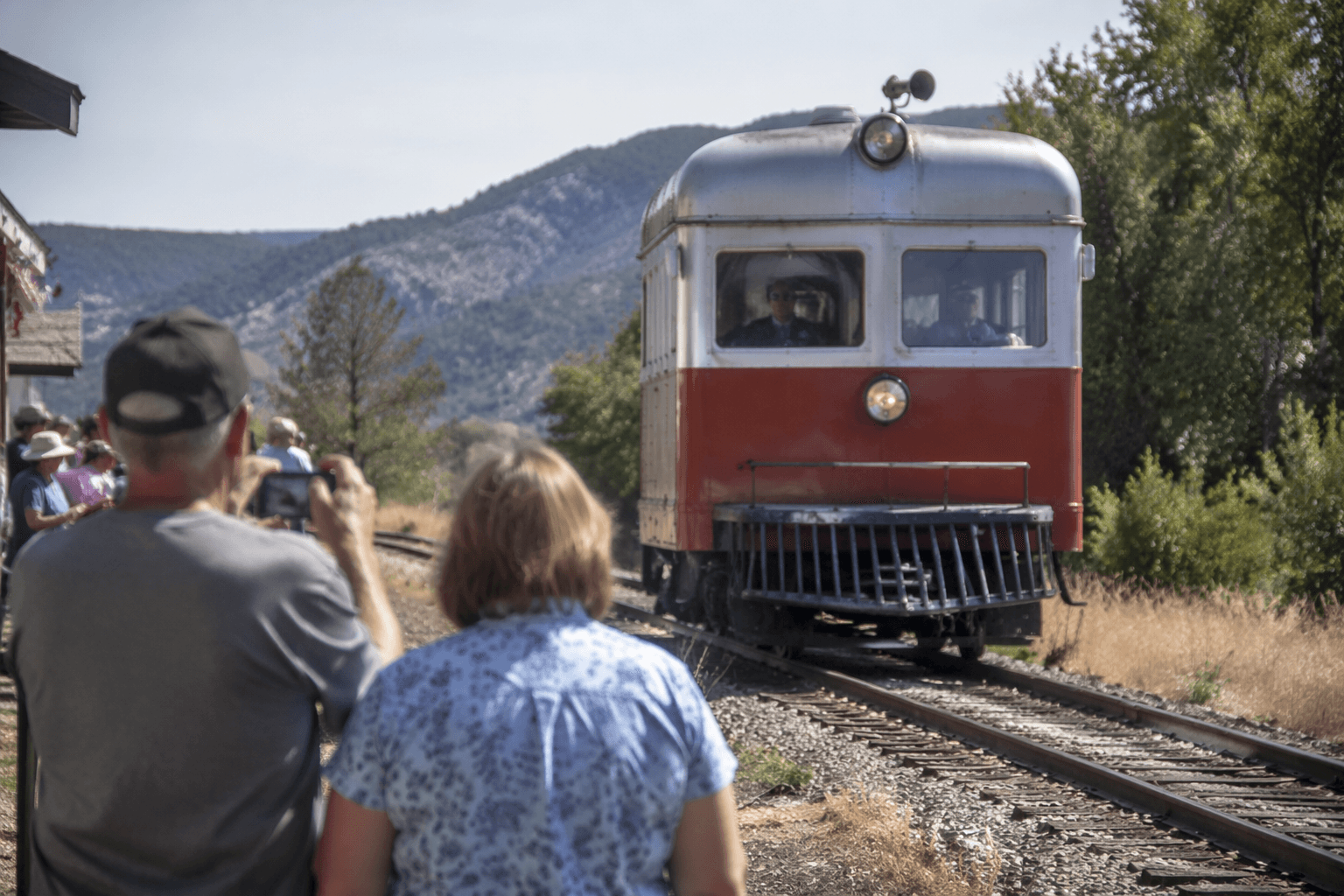
History Colorado describes No. 5 as a gasoline-powered narrow-gauge railroad car constructed in 1933 as a cost-saving alternative to steam passenger trains. That mattered because the Rio Grande Southern was trying to keep operating in the San Juans until 1952, long after the boom years that had justified larger steam operations. No. 5 was not a grand locomotive. It was a practical answer to a stubborn geography and a tighter balance sheet.
The car kept changing with the times. The society says it was rebuilt in 1946 and 1947 with a World War II surplus GMC gas truck engine and a Wayne bus body, then converted again in 1950 to carry 20 additional passengers for sightseeing trips. Those changes tell the story of a railroad squeezing every possible mile from its equipment, then adapting the same machine for a new kind of use as railroading in the region shifted from daily necessity to memory and tourism.
Restoration turned a relic into a working landmark
No. 5 might have faded into static display, but local volunteers made sure it did not. In 1997 and 1998, the Galloping Goose Historical Society completely restored the railcar to operating condition through hundreds of hours of volunteer labor and thousands of dollars in donations. Its first run in almost 47 years came in May 1998 on the Cumbres & Toltec Scenic Railroad, a rare moment when restoration, engineering and public history all met on the same rails.
That restoration gave Dolores something more valuable than a museum piece. It gave the town a living symbol of what the Rio Grande Southern meant, not just to train enthusiasts but to people who grew up with the railroad’s footprint in their streets and stories. The railcar’s survival has also made it easier for Dolores to market its history without turning it into a caricature. The Goose is real, operational history, not a replica.
The railroad’s staying power showed up again in 2015, when Galloping Goose No. 4 and No. 5 operated together at Tacoma during Railfest for the first time since 1952. That detail matters because it shows the Goose story extending far beyond Dolores while still feeding back into local pride. When a railcar from a small Colorado town can draw attention decades after the railroad itself vanished, the preservation work has a public life beyond the museum walls.

Inside the museum on Railroad Avenue
The best place to understand that public life is the Galloping Goose museum at 421 Railroad Avenue in Dolores. The museum centers on Goose No. 5, but it also includes exhibits on the Rio Grande Southern Railroad, a miniature train layout of Dolores in the 1940s, a station agent’s seat and an old-fashioned telegraph. The society describes it as Dolores’s only active museum, which makes it part archive, part welcome center and part civic memory.
In summer, the museum and gift shop are open Monday through Saturday from 10:00 a.m. to 5:00 p.m., with occasional Sunday openings handled by volunteers. Admission is free. That combination of free access, volunteer labor and local curation keeps the railroad story visible to residents and travelers alike, and it helps explain why the Goose has become as much a town emblem as a historical exhibit.
The hotel and the townscape that remain
Dolores’s rail heritage is not confined to the Goose. The Southern Hotel, also known as the Rio Grande Southern Hotel, was built in 1893 with a 1902 addition and is the oldest building in Dolores. Its survival matters because it links the railroad age to the built environment that grew up around it, when hotels, offices and service buildings clustered near rail facilities to serve crews, travelers and commerce.
Taken together, the museum, the hotel and the surviving railcar show how Dolores became modern on railroad terms. The town’s identity was shaped by a line built to chase mining wealth, tested by the Silver Panic, and then reworked for a new century through ingenuity and volunteer preservation. Galloping Goose No. 5 remains resonant because it is not just a machine from the past, but the most visible proof that Dolores still remembers what made it a rail town in the first place.
This article was produced by Prism’s automated news system from verified source data, official records, and press releases, then run through automated quality and moderation checks before publishing. The system is built and supervised by the people who set the standards it runs under. Read our full AI policy.
Did this article answer your question?


