Glade Ranger Station preserves early Forest Service history in Dolores County
Glade Ranger Station shows how a remote ranger outpost helped open Dolores County’s backcountry. Today it sits off Forest Road #514 as a preserved stay where history still shapes access.

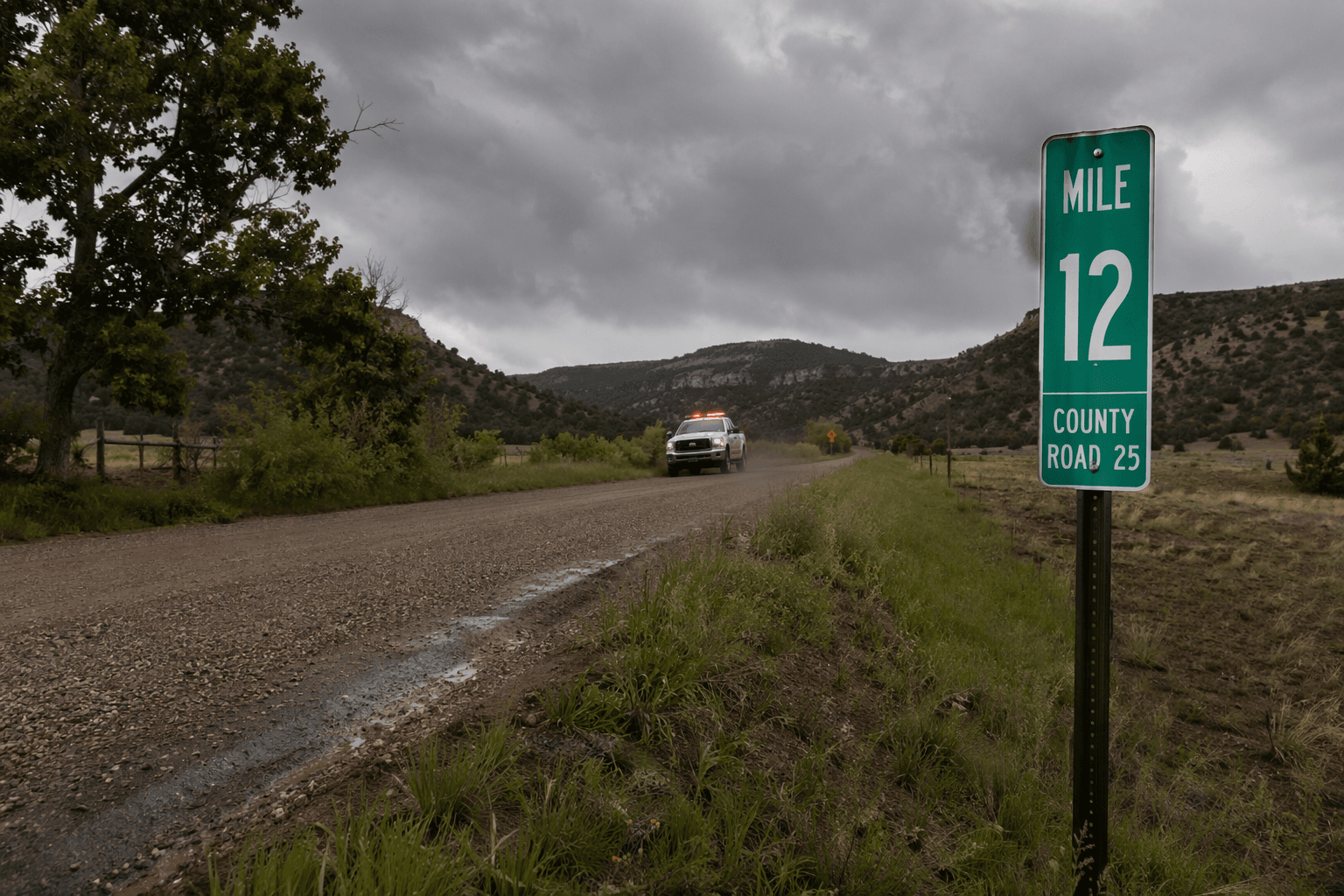
Glade Ranger Station sits far enough off the pavement to feel like a remnant of another county. Reached by about an hour and a half of mostly Forest Service dirt roads from Cortez or Dolores, the site still carries the logic of early federal land management: a ranger lived here, worked here, and traveled out from here to watch the country around him. That history is why the station matters now, not just as a backcountry stay, but as one of Dolores County’s clearest links to the era when roads, cabins, and ranger travel opened public lands to use.
A ranger station that helped open the county
Glade was established in 1905, when a small log cabin was built for the Glade District of the Montezuma National Forest, now part of the Dolores Ranger District of the San Juan National Forest. A wood-frame residence and barn followed in 1916, then came a major Civilian Conservation Corps remodeling in 1935-36 that helped preserve the site for the long haul. History Colorado calls Glade one of the oldest U.S. Forest Service administrative sites in Colorado, and that pre-1910 origin is the reason the station still reads as a working landscape rather than a museum piece.
The San Juan National Forest describes the station as a "virtual time capsule" from the early days of Forest Service administration, when a lone district ranger was effectively guarding National Forest land miles from civilization. That frame matters in Dolores County because the station was not built for scenery alone. It was part of the system that made it possible for the Forest Service to manage remote country, track use, and connect backcountry tracts to the larger public-land network that now defines much of the county’s identity.
Where Glade sits and what the setting tells you
The Glade Ranger Station is identified as State Register property 5DL.1792 and sits along Forest Service Road #514 near Dove Creek. Its elevation is about 8,400 feet, and the nomination describes the surrounding vegetation as predominantly Gambel’s oak and aspen, with serviceberry, sagebrush, rabbit brush, and wild rose. That mix helps explain why the buildings feel tucked into the land rather than imposed on it.

The station’s five wood-frame buildings reflect the Forest Service ideals of simplicity and harmony with nature that shaped early administrative architecture across the West. The site’s preserved appearance is part of its story: the cabin, residence, barn, and related structures still read as a compact outpost, not a modern recreation complex. In a county where public land is central to travel, work, and weekend use, Glade shows the physical form that early stewardship once took.
What visitors can expect today
Glade is now more than a historic site. In spring 2018, the San Juan National Forest selected the Jersey Jim Foundation to operate the Glade Guard Station as a short-term vacation rental, and the foundation holds a permit to offer both Glade Guard Station and Aspen Guard Station for rent. The rentals are seasonal, running from the end of May through the end of October, weather permitting, with reservation details and lottery instructions handled through Recreation.gov.
The Forest Service says the site has full horse amenities, including a corral, piped water, and a barn. Visitors also have access to tent pads, a large firepit area, picnic tables, and a second flushing toilet a short distance above the cabin. Those details make Glade practical for more than a quick photo stop, but the setting still demands planning: there is no cell service at the cabin or for several miles around it, and visitors are expected to bring drinking and cooking water.
That combination of historic cabin and rough-country logistics is what gives the place its character. The drive itself sets the tone, with mostly dirt road access from either Cortez or Dolores, and the site’s remote position makes it feel more like a forest station than a developed campground. For visitors, that means the experience is part travel, part history lesson, and part reminder of how much effort early Forest Service work required.

Why preservation matters to Dolores County
Glade stayed in Forest Service use until the late 1930s. After the Dolores Ranger Station offices and dwellings were built in 1938, Glade District Ranger Clifford C. Chappell moved to Dolores, marking the shift from scattered backcountry administration to more centralized ranger-district operations. That change helps explain why some early stations disappeared while others, like Glade, survived well enough to be preserved.
The site was listed in the Colorado State Register on August 8, 2001, and Living New Deal identifies it as a Civilian Conservation Corps-related New Deal site. Together, those designations place Glade at the intersection of local history, federal conservation policy, and New Deal-era public works. The preservation is not just about keeping old buildings standing. It shows how Dolores County remembers the period when public lands were opened, mapped, managed, and made accessible through a network of ranger cabins, roads, and administrative outposts.
For today’s county, that matters because Glade still connects the same forces that shaped life here in the first place: transportation, land management, recreation, and stewardship. A route that began as a ranger’s working road now brings visitors into a historic landscape, and the station’s survival says Dolores County still values the infrastructure that made its public lands usable without erasing the roughness that defined them.
This article was produced by Prism’s automated news system from verified source data, official records, and press releases, then run through automated quality and moderation checks before publishing. The system is built and supervised by the people who set the standards it runs under. Read our full AI policy.
Did this article answer your question?