Baldwin Woods preserves a rare native forest in Douglas County
Baldwin Woods once stretched across 3,700 acres, and the protected remnant still anchors one of Kansas's highest-quality native hardwood forests. A public trail is finally bringing it closer to view.
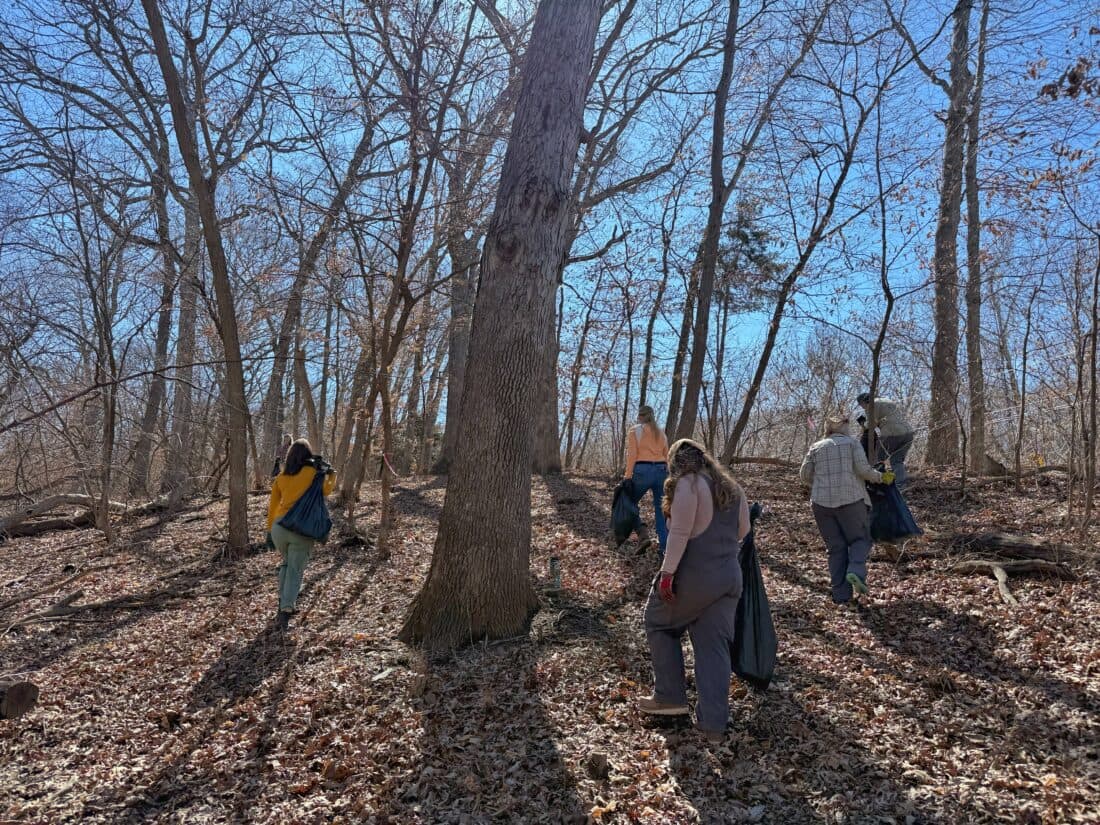
Bald very Woods is one of the few places in Douglas County where the land still reads like the native forest and open savanna that existed before settlement. The Kansas Biological Survey & Center for Ecological Research says the Baldwin Woods area once covered about 3,700 acres, a scale that makes the surviving preserve feel less like a park and more like a fragment of the county’s original landscape. Development has whittled that woodland down over time, which is why what remains now carries so much weight.
A rare forest that still defines the county’s natural history
Baldwin Woods matters because it is not just scenery. It is a surviving piece of a much larger ecological system that once shaped Baldwin City and the surrounding part of Douglas County, Kansas, before roads, farms and suburban growth altered the ground. The KU Field Station describes Baldwin Woods Forest Preserve as protecting one of the highest-quality native hardwood forest stands in Kansas, a standard that places it among the state’s most important native woodland remnants.
That significance is not symbolic. In 1980, part of Baldwin Woods received National Natural Landmark status, and the National Park Service lists it as site BAWO-KS in that program. For local readers, that designation means the woods are recognized nationally for their natural value, not simply admired as a pretty patch of trees on the edge of town. It gives Douglas County something unusual to protect: a nationally noted remnant of the pre-settlement landscape.
What still lives inside Baldwin Woods
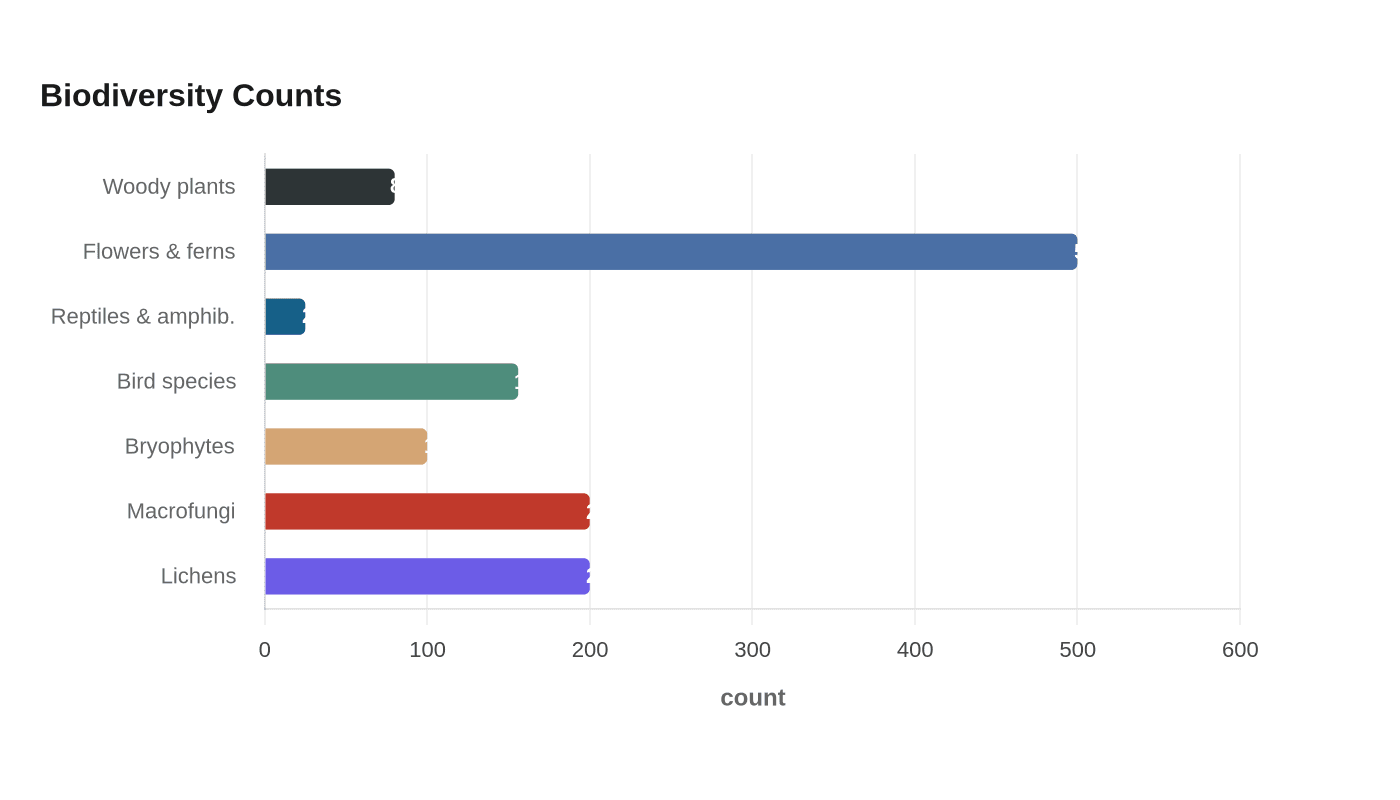
The preserve’s scientific value shows up in its biodiversity. A Kansas Forest Legacy publication says Baldwin Woods has nearly 80 species of woody plants, more than 500 species of flowering plants and ferns, at least 25 species of reptiles and amphibians, 156 recorded bird species, 100 kinds of bryophytes, 200 kinds of macrofungi and 200 kinds of lichens. That range matters because it tells you Baldwin Woods is not a single-species grove or a simplified urban green space. It is a dense, layered habitat where birds, amphibians, fungi and mosses all depend on the same intact woodland structure.
That diversity also gives visitors a concrete way to understand the place. The forest floor, canopy and understory are part of the story, not just the scenery around a trail. When residents walk Baldwin Woods, they are moving through a living archive of Douglas County’s native ecology, with each layer, from bird habitat to fungal networks, helping explain why a contiguous remnant like this is hard to replace once it is lost.
How the preserve grew and why that matters now
The preserve is managed as part of the KU Field Station, which adds another layer to its public value. In 2016, KU News reported that Baldwin Woods Forest Preserve doubled in size after land added as a Forest Legacy project was incorporated, making it the first and only USDA Forest Service Forest Legacy project in Kansas at that time. That expansion was not a cosmetic boundary change. It strengthened the amount of connected habitat on the ground, and connection is what a forest like this needs if it is going to remain ecologically useful over the long term.
A Kansas Forest Legacy publication lists 166 acres protected at Baldwin Woods, a reminder that this is still a finite, carefully managed resource. The preserve’s conservation value lies in its continuity, not in a large buffer of surrounding undeveloped land. As county growth continues, the challenge is to keep the remaining native woodland from being chipped into smaller, less resilient pieces.
What the first public trail changes
Public access is becoming part of the Baldwin Woods story. The first public trail, the Rice Woodland Trail, was announced for opening in 2026, and it was described as running through 80 acres of the 396-acre preserve. The route was planned along watershed boundaries to support future research, which is a notable design choice for a place that has to serve both visitors and scientists.
That kind of trail design suggests careful stewardship rather than simple recreation. A watershed boundary is a natural line, and keeping the trail aligned with it helps limit interference with study areas while still allowing people to enter the woods. For Douglas County, that creates a practical balance: the public gets a way in, and the research value of the preserve is not sacrificed to foot traffic.
What Douglas County stands to lose without protection
Baldwin Woods is valuable because so little of this habitat remains. If the preserve were not protected, the county would lose more than trees. It would lose one of the clearest links to the pre-settlement landscape, a nationally recognized landmark, a research site, and a refuge for a remarkably broad mix of plants, birds and small wildlife. It would also lose a place where residents can see what native woodland looked like before the county was remade by development.
For Douglas County, the real lesson of Baldwin Woods is that conservation is not abstract. It is visible in the mature forest that still stands, in the species counts that document its richness, and in the trail planning that tries to open access without erasing the site’s scientific value. Once that continuity is broken, it cannot be rebuilt on command.
This article was produced by Prism’s automated news system from verified source data, official records, and press releases, then run through automated quality and moderation checks before publishing. The system is built and supervised by the people who set the standards it runs under. Read our full AI policy.
Did this article answer your question?