Douglas County urges residents to use Smart911 and Text-to-911
Douglas County’s emergency alerts work best in layers: Smart911, Text-to-911, sirens and regional notifications each cover a different gap before and during severe weather.

Douglas County renewed its Smart911 contract in 2024, keeping the service in place for at least five more years. It is one part of a layered warning system that works best when residents have already enrolled in Smart911, know when to text 911, and understand that outdoor sirens only cover part of the picture.
Smart911: the details dispatch can see before you can speak
Smart911 is the county’s most practical preparation tool because it puts information in front of dispatchers before an emergency turns chaotic. Douglas County Emergency Communications calls the free national service “100% private and secure.” It lets residents build a safety profile ahead of time so 911 staff can see details the caller may not be able to say out loud.
That can include household information, an address, medical conditions, pets and emergency contacts. In a county that has both city coverage and rural response areas, that kind of detail can shave time off a medical call, a fire response or a crash report, especially when location accuracy matters. Douglas County Emergency Communications was established in 1994, serves citizens across the county including Baldwin, Eudora and Lecompton, and lists itself as the 5th largest PSAP in Kansas.
Douglas County was also the first county in Kansas to offer Smart911. If your household information has changed, update the profile.
Text-to-911: the backup when speaking could make things worse
Douglas County also offers Text-to-911 for moments when a voice call is not safe. The county’s rule is simple: “call if you can, text if you can’t.” It applies in situations where silence is necessary, or when a caller has a speech or hearing barrier and cannot communicate by phone.
Douglas County’s Text-to-911 page listed 71 Kansas Public Safety Answering Points using the statewide call-handling system as able to receive 911 text messages as of November 2, 2017. By 2022, the Douglas County Sheriff’s Office told residents they could text 911 when they were unable to safely make a voice call. That gives people in Lawrence, Baldwin City, Eudora, Lecompton and unincorporated rural Douglas County a backup when talking out loud could put them at risk.
Outdoor sirens and regional alerts cover a different job
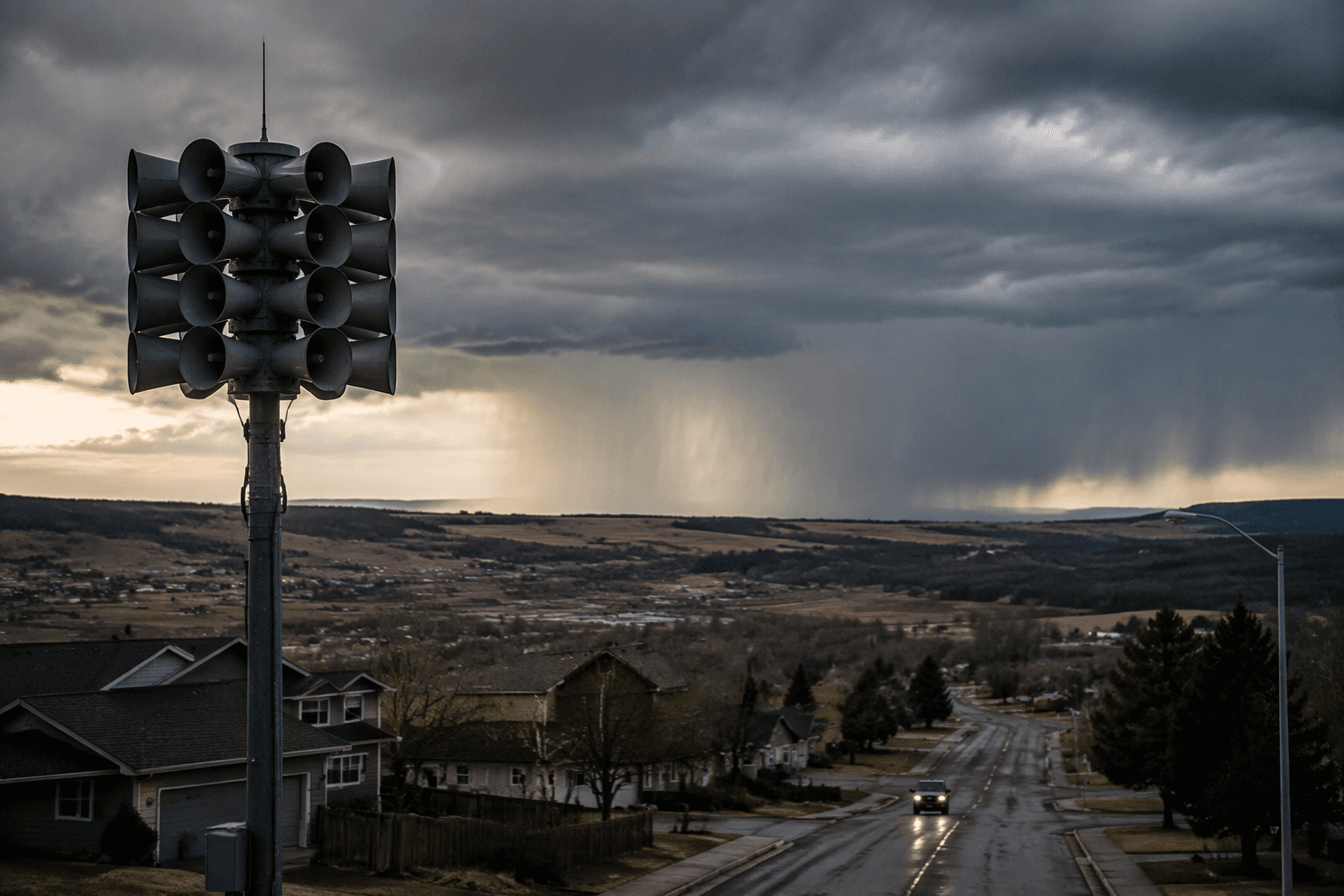
Douglas County’s Outdoor Warning Siren System is meant to alert people who are outside to severe weather. That makes it useful for the person walking downtown, at a park, near campus or working outdoors when weather turns dangerous, but it is not meant to be the county’s only warning method.
Residents can also use the Northeast Kansas Regional Notification System for emergency notifications and alerts.
Douglas County emergency planning has also included periodic readiness work. County severe-weather materials included planned severe-weather training and tornado siren tests during Severe Weather Preparedness Month in 2025.
What to do today
If you live anywhere in Douglas County, the most useful preparation is straightforward:
- Create or update your Smart911 profile now. Add the household details that could help dispatch, including address, medical conditions, pets and emergency contacts.
- Decide now when Text-to-911 is the right tool. Use it when you cannot safely make a voice call, when silence is necessary, or when speech or hearing barriers make talking by phone difficult.
- Register for the county’s regional emergency notifications if you want another direct alert channel beyond sirens and 911 tools.
- Do not treat outdoor sirens as an all-purpose warning system. They are designed for people outside during severe weather, not for every location or every situation.
- Make sure everyone in the household knows the county’s rule: “call if you can, text if you can’t.”
This article was produced by Prism’s automated news system from verified source data, official records, and press releases, then run through automated quality and moderation checks before publishing. The system is built and supervised by the people who set the standards it runs under. Read our full AI policy.
Did this article answer your question?