Prairie Park floating island helps clean Mary's Lake, adds habitat
Mary’s Lake now has a floating wetland that is filtering water, building habitat and giving Prairie Park visitors a visible sign of Lawrence’s conservation work.
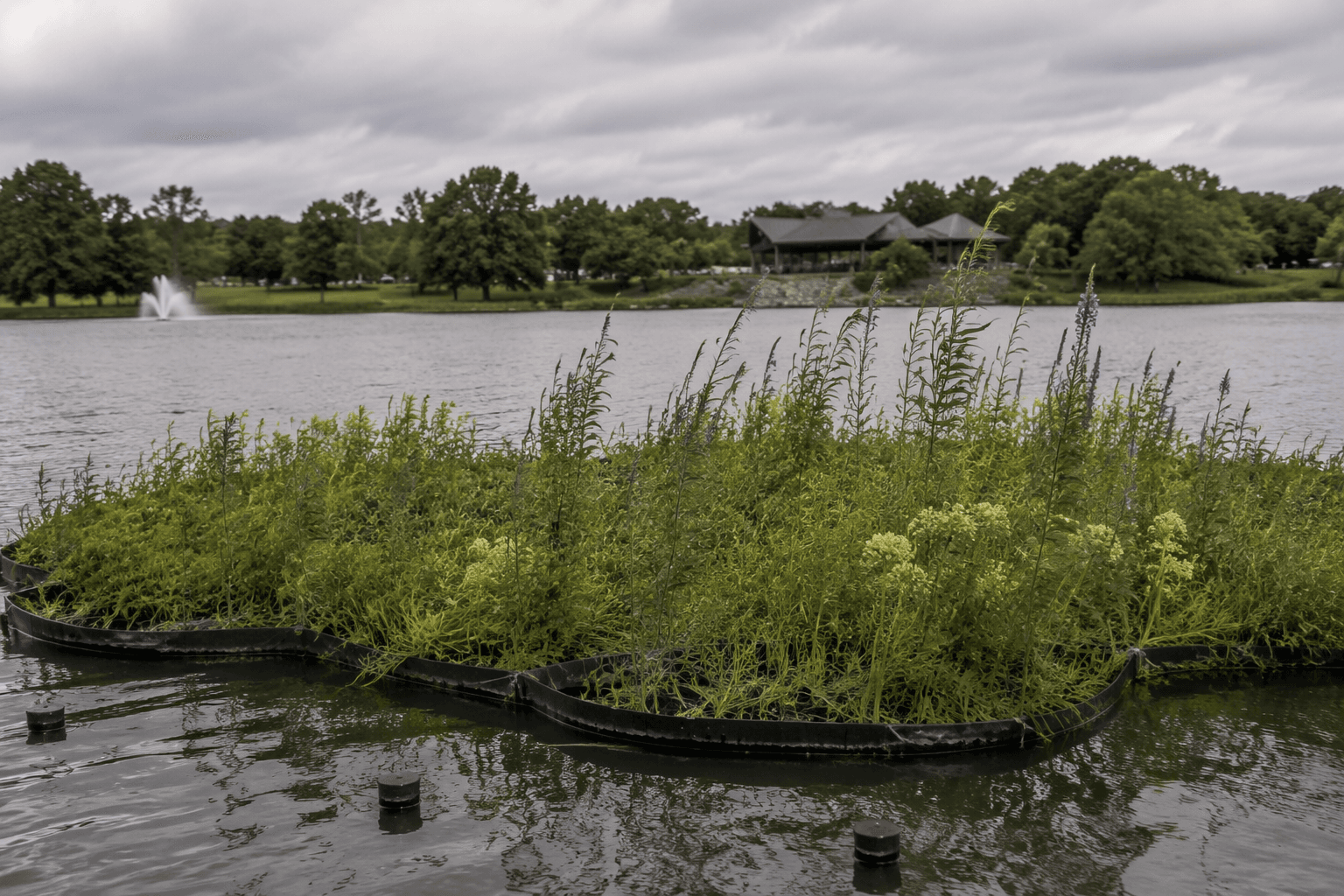
Mary’s Lake at Prairie Park has taken on a new job in Lawrence: a floating wetland island is helping clean the water while giving wildlife a place to gather. Prairie Park Nature Center staff installed the artificial island, and the project is already being shown as a living part of the lake rather than a decorative add-on. A City of Lawrence photo with the story underlines that this is a public park feature with an environmental purpose.
What the floating island is doing at Mary’s Lake
The island is designed to float on the lake while plants grow from its surface and send roots into the water below. That root network is the key to the project’s function, because floating wetlands are used to absorb nutrients from the water and provide shelter for fish, insects, amphibians and birds. In a neighborhood setting like Prairie Park, those two jobs, water cleanup and habitat creation, can happen at the same time.
The Journal-World story described the feature as cleaning the water and hosting wildlife, which is exactly the kind of outcome park users can understand without a technical background. Instead of hiding the work of restoration underground or behind a fence, the island turns the lake itself into a visible example of ecological repair. That matters in a place where families walk the trails, birdwatchers scan the shoreline and nearby residents see the water every day.
How to tell whether it is working
One of the clearest signs so far is plant growth. In a Prairie Park Nature Center Facebook update, staff wrote, “Our floating island has grown quite a bit in just a few months! The plants are thriving.” That kind of visible progress is important because floating wetlands are meant to be judged by what they do, not just by how they look on the day they are installed.
At Mary’s Lake, success will be measured in practical terms: healthier water, living plants that continue to establish themselves and wildlife that uses the island as cover or resting space. The project is also likely to be noticed for what it changes in the daily experience of the park, with a patch of green now visible on the water and a new focal point for people who stop by Prairie Park. For a city park lake, that is a tangible result, not an abstract one.
The city photo credit also matters because it places the project squarely inside Lawrence’s public-space work. Prairie Park Nature Center staff carried out the installation, and the City of Lawrence is presenting the project alongside it, which signals that this is part of the city’s own environmental toolkit. If it continues to thrive, it could become one of the more visible examples of how Lawrence handles small-scale water restoration.
Why floating wetlands matter in neighborhood lakes
Urban and neighborhood lakes often face the same pressures: nutrient loading, algae growth, sediment buildup and limited habitat. A floating wetland island is useful because it tackles several of those problems at once while staying small enough to fit into an existing park lake. That makes it different from a major construction project, and it also makes it easier for park visitors to see the work happening in real time.
The appeal is simple. Native vegetation on the island can help filter water, and the roots create structure that wildlife can use. For Prairie Park, that means the feature is doing double duty as an environmental tool and as a public-facing education piece, giving residents a way to see what habitat restoration looks like without leaving the city.
How Prairie Park fits into a broader trend
Lawrence is not acting alone here. The U.S. Fish & Wildlife Service has a piece titled Floating wetlands: a watery win-win, Yale Environment 360 has examined how floating wetlands are helping to clean up urban waters and a University of Washington review identifies floating wetlands as a studied remediation approach for water and habitat benefits. Those sources place Prairie Park’s island inside a larger body of work that treats floating wetlands as a legitimate restoration method, not a novelty.
A 2024 St. Louis Public Radio story on artificial wetlands made a similar point, noting that mini artificial islands can mimic wetlands and help filter lakes and ponds in Missouri. That regional context matters because the problems these projects address are common across Midwestern cities: runoff, poor water clarity and habitat that has been squeezed out by development. Prairie Park’s floating island shows how one small installation can fit into that broader conservation playbook.
What Lawrence parks officials can learn from it
The most useful thing about the Prairie Park project is how concrete it is. People walking by Mary’s Lake can see the plants growing, the water they sit in and the wildlife they attract, which makes the benefits easy to understand in a way that many environmental projects are not. For parks officials, that visibility can be as valuable as the ecological payoff, because it helps connect daily park use with stewardship.
If the island continues to hold up in Mary’s Lake, Lawrence has a model it could adapt elsewhere in Douglas County. Floating wetlands are relatively modest in scale, but they can make a neighborhood lake feel better maintained, more natural and more alive, all at once. In Prairie Park, that combination is already turning a patch of water into a small, working example of restoration.
This article was produced by Prism’s automated news system from verified source data, official records, and press releases, then run through automated quality and moderation checks before publishing. The system is built and supervised by the people who set the standards it runs under. Read our full AI policy.
Did this article answer your question?