Fresno County growers inspect orchards after storm, guard against crop damage
A helicopter was sent over cherry trees in Biola after Tuesday’s storm as Fresno County growers checked for hidden damage in almonds, grapes and other crops.
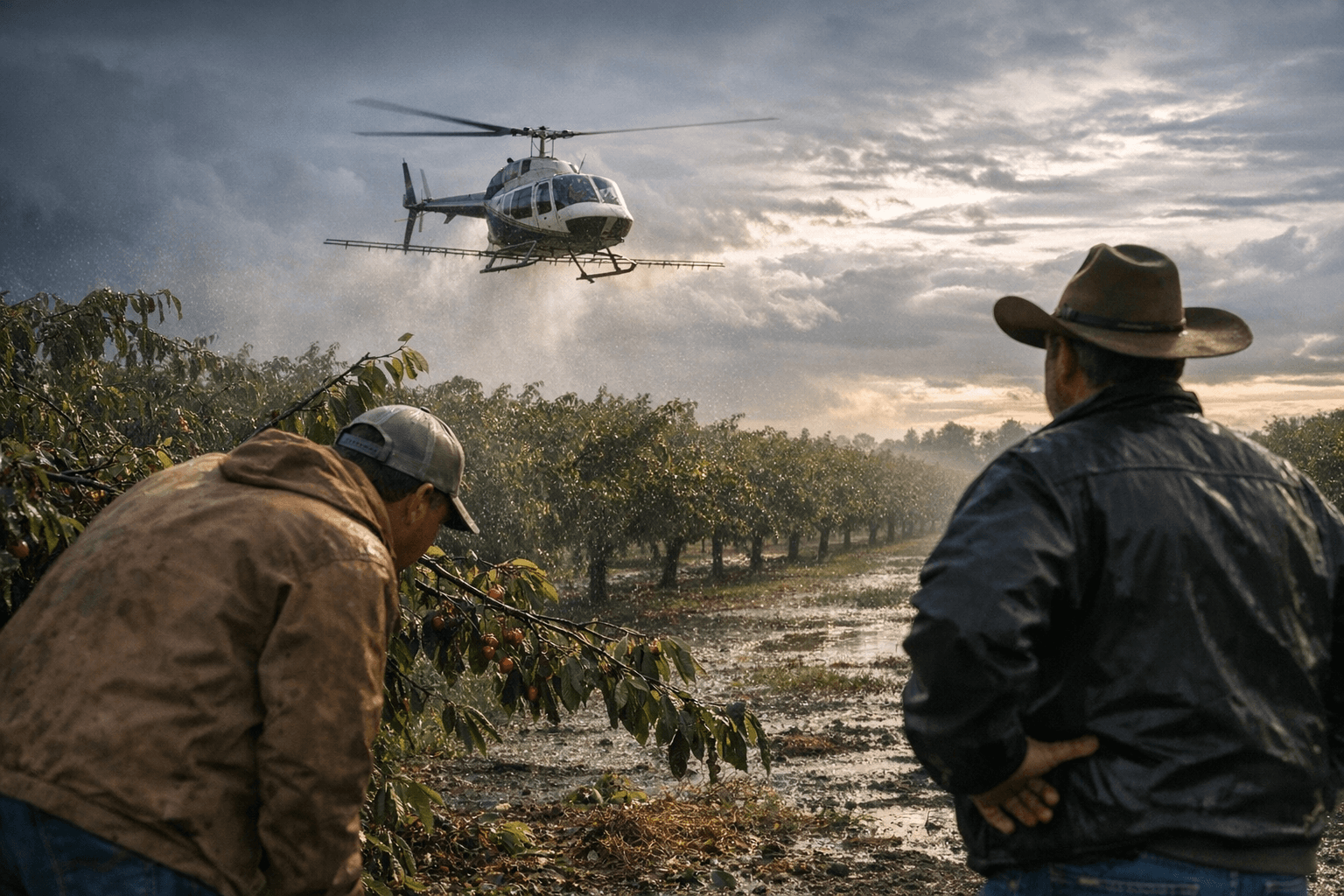
Any hidden loss in Fresno County’s orchards can mean more labor, more spray costs and, if enough fruit is affected, tighter supplies that can work their way toward grocery prices. After Tuesday’s storm, growers were out checking cherry trees in Biola, west of Fresno, while watching almonds, grapes and other crops for damage that was not always obvious from the ground.
Fresno County Farm Bureau CEO Ryan Jacobsen said a helicopter was deployed shortly after the storm passed so crews could assess the cherry trees from the air. That kind of fast look matters because the first 24 to 48 hours often determine whether growers see broken limbs, bruised fruit or the kind of wet conditions that lead to disease problems later. Even orchards that escaped obvious structural damage can still need preventive fungicide treatments if moisture lingers on leaves, fruit or branches.
For grapes, that concern is especially sharp. University of California pest guidance says free moisture from fog, dew or rain can trigger powdery mildew infections after budbreak, and it notes that fungicides are commonly used as protectants. UC guidance also says phomopsis cane and leafspot is most severe in places where spring rains are common after budbreak because moisture is required for infection. For almond growers, the same wet weather that leaves no visible break can still create the kind of fungus pressure that forces extra field passes and more labor.
Jacobsen said farmers have to work with whatever mother nature gives them and then do their best to protect the next season’s harvest. That tradeoff is part of what makes the storm important beyond the farm gate. Fresno County’s 2024 crop and livestock report put the county’s gross production value at $9.03 billion, with 1.88 million acres of productive farmland spread across 3.84 million total acres. County agricultural reporting says growers here produce more than 350 different crops, and almonds and grapes remain central to that economy. Fresno County also regained the No. 1 spot among U.S. farming counties in 2024.
The storm was not entirely negative. The snow that came with it could help summer agriculture by adding moisture, and Jacobsen has said mountain snowpack can reassure farmers because it helps them plan when to begin running water to farms and communities as it melts. That upside does not erase the risk in orchards and fields already stressed by earlier weather swings this year, when rain, wind and hail damaged almond blooms and wheat fields in the Central Valley. For now, growers are waiting for the soil to dry, the fruit set to settle and the true losses to show themselves.
This article was produced by Prism’s automated news system from verified source data, official records, and press releases, then run through automated quality and moderation checks before publishing. The system is built and supervised by the people who set the standards it runs under. Read our full AI policy.
Did this article answer your question?