Oak Grove mansion traces Goochland County history through three building phases
Oak Grove is protected on both historic registers, but its six-acre parcel still depends on Goochland's tax, land-record, and zoning system.
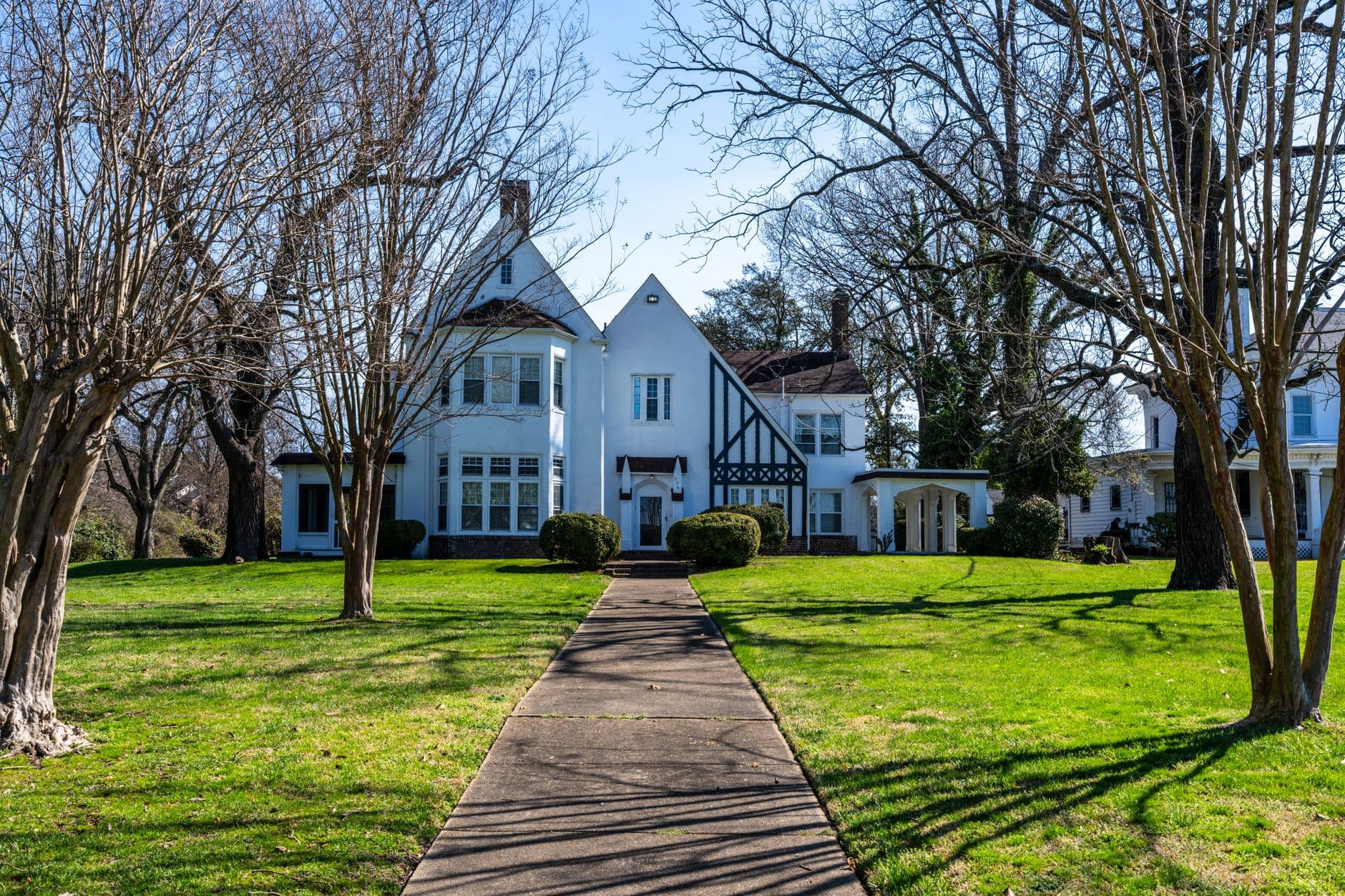
Oak Grove is one of eastern Goochland County’s clearest markers of how a historic property survives in the real world: through documentation, local records, and the rules that still govern the land around it. The six-acre site near Manakin is listed on both the Virginia Landmarks Register and the National Register of Historic Places, but its long-term condition also depends on ownership records, tax treatment, and the development pressures that shape the Manakin-Sabot corridor.
A house built in three chapters
Oak Grove is more than a single-period plantation house. The Virginia Department of Historic Resources describes it as a well-maintained antebellum planter’s dwelling built in three phases, around 1820, around 1850, and completed in 1866. That sequence matters because it turns the house into a readable record of Goochland County history, with one structure carrying the early rural county, the antebellum expansion years, and the post-Civil War moment all at once.
Architecturally, Oak Grove is identified as an I-house with Greek Revival and Gothic Revival elements. That combination gives the property a layered appearance and helps explain why it stands out in a county full of historic sites: the form is familiar, but the details show changing tastes across decades. The 1866 completion date is especially telling, since it places the final phase just after the Civil War, when many Virginia properties were being repaired, adapted, or reworked for a new era.
Why the register listings matter
Oak Grove carries both state and federal recognition. The Virginia Landmarks Register listing date is June 18, 2009, and the National Register of Historic Places listing date is September 16, 2009, under reference number 09000727. The Department of Historic Resources also identifies it as resource 037-0076, a designation that ties the property to a specific county inventory record.
Those listings document significance, but they do not remove the property from the ordinary systems that control land in Goochland County. Oak Grove still sits inside the county’s records framework, where the assessor, the circuit court land recordings, and the parcel viewer are the tools that show who owns a property, what it is assessed for, and how it fits into the county map. In practical terms, that means the historic designation preserves the story of the house, while local records determine how the land around it is administered.
Ownership, taxes and zoning still shape the property
Ownership is a public-record issue in Goochland. The county assessor’s office states that its records are public information, and the circuit court land recordings page encourages property owners to protect themselves through deed-alert tools. The county’s property-record systems also track ownership history, assessed values, deeds, tax information, and encumbrance data, which is exactly where a historic parcel’s present status becomes visible to the public.
Tax policy matters too. Goochland County’s real estate tax rate has remained at $0.53 per $100 of assessed value since 2008. The county also administers a land-use assessment program under Virginia Code Title 58.1-3230 through 3244, which can affect qualifying agricultural and forestry land by basing assessment on use rather than full market value. For a parcel like Oak Grove, that places preservation in the same conversation as valuation, because the financial pressure on a historic property is never just about age or architecture.
Zoning is the other side of that equation. Goochland’s planning and zoning office, its ordinances, and its zoning actions viewer give residents a way to track land-use decisions before they alter a neighborhood or rural corridor. The county has also completed technical zoning work on rural-area standards, showing that eastern Goochland remains an active policy landscape rather than a static historic district frozen in time.
Eastern Goochland’s development backdrop
Oak Grove sits in a part of the county where historic properties and development pressure meet more directly than many residents may realize. A 2023 round of citizen feedback for the Centerville area called for preserving the rural character of property between Oak Grove Estates and Broad Street, a reminder that even nearby land use discussions are already framed by the need to balance growth against the remaining rural fabric.
That tension is not unique to one parcel. Goochland County’s own records show how closely growth policy and historic preservation now overlap, from the technology overlay district and technology zone to the broader zoning standards analysis done for rural areas. In a county where the Department of Historic Resources lists 24 places on the National Register of Historic Places, including one of national significance and nine of statewide significance, Oak Grove is part of a larger preservation system, not an isolated landmark.
A countywide preservation record, anchored in one house
Oak Grove’s documentation fits into a broader county effort to identify and interpret historic resources. A 2003 survey of historic architecture in Goochland County was conducted by Gibson Worsham for the Virginia Department of Historic Resources, Goochland County, and the Goochland County Historical Society. That survey work helps explain why places like Oak Grove are now visible in official inventories rather than left to memory alone.
The house’s value today is not just that it is old, or even that it is listed. It is that the building still tells a precise story through its three construction phases, while the land around it remains subject to the county’s ordinary rules on ownership, taxation, and zoning. In eastern Goochland, that combination is what makes a historic property protected, vulnerable, and policy-relevant all at once.
This article was produced by Prism’s automated news system from verified source data, official records, and press releases, then run through automated quality and moderation checks before publishing. The system is built and supervised by the people who set the standards it runs under. Read our full AI policy.
Did this article answer your question?