Brown Bridge Quiet Area showcases river restoration and wildlife watching
Brown Bridge Quiet Area pairs a restored Boardman River with 6-plus miles of quiet trails, paddling access, and year-round wildlife watching.
Brown Bridge Quiet Area is one of Grand Traverse County’s clearest examples of a public place doing more than one job at once. The city-owned property sits 11 miles southeast of Traverse City, covers about 1,310 acres within the Boardman/Ottaway River Watershed, and combines restored river habitat with low-impact recreation, hunting access, and some of the region’s best wildlife watching.
A restored river lies at the center
Brown Bridge is not just a trail system with water nearby. The Boardman River runs through the property, and the land now holds 2.8 miles of flowing, wild, natural river where Brown Bridge Pond once sat behind Brown Bridge Dam. City materials place the dam’s construction in the early 1920s, with one document citing 1921 for hydropower and another citing 1922, but the public milestone is unmistakable: the dam was removed in 2012 and the river reclaimed its historic channel.
That removal matters because it turned a former impoundment into a living restoration site. The larger Boardman River project is widely described as the largest comprehensive dam-removal effort in Michigan history, with Brown Bridge Dam as the first of three removals on the river. Boardman Dam came out in 2017 and Sabin Dam followed in 2018, completing a sequence that reshaped the corridor from upstream to downstream.
The numbers show the scale of the work. The broader restoration is described as a roughly $20 million effort backed by more than 30 funding sources totaling about $27 million. Regional sources say the project restored more than three river miles of native coldwater fish habitat, more than 250 acres of wetlands, and nearly 60 acres of upland habitat. In a county where river access is part of daily life, Brown Bridge shows what ecological recovery looks like when it is built to last.
What you can do there now
The Quiet Area is designed for quiet use, not heavy development, and the city says that purpose is written into the rules that preserve the property’s natural, scenic, and wild character. Grand Traverse Conservation District describes it as one of its largest natural areas, with more than 6 miles of trails, paddling access on the Boardman, and scenic river overlooks.
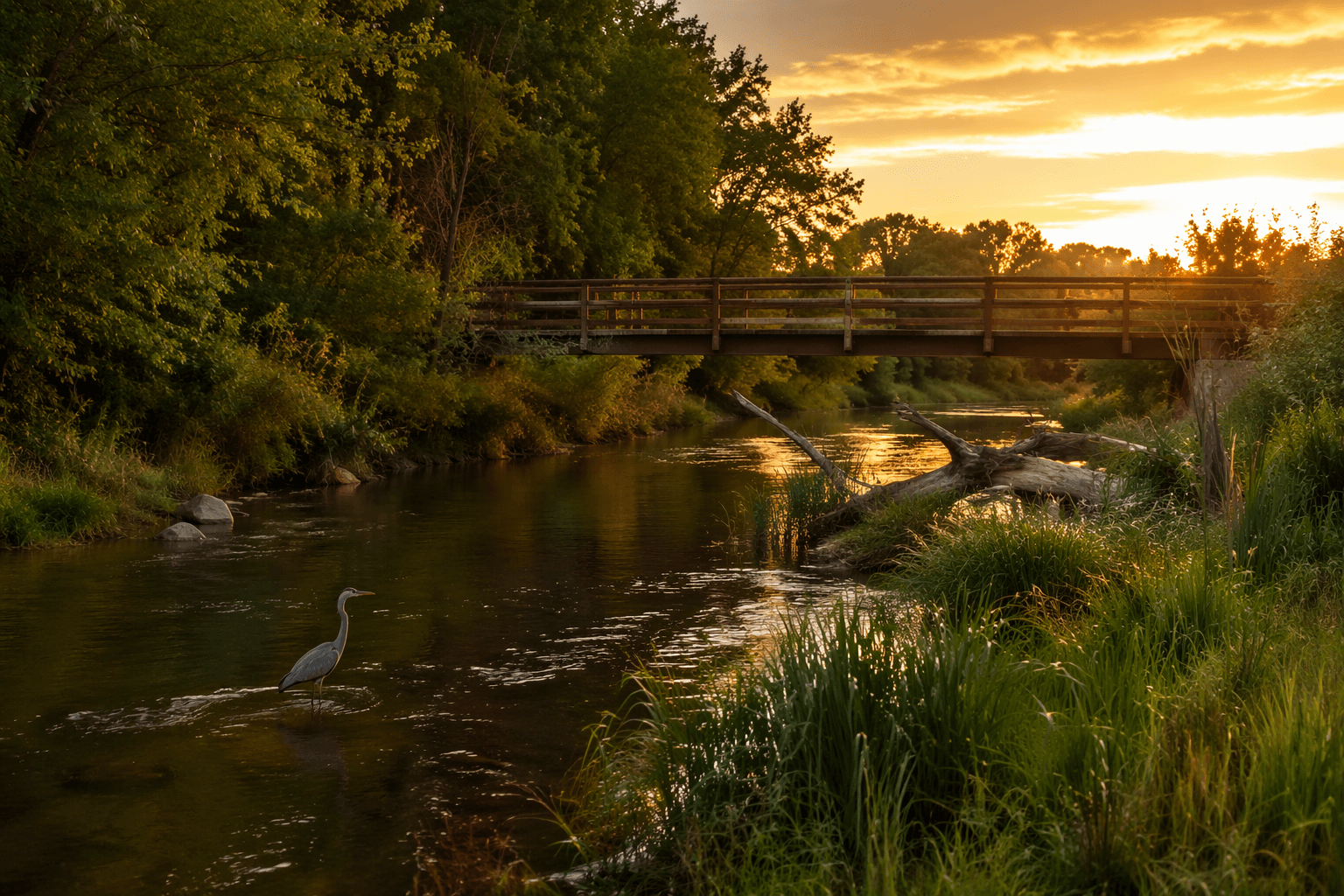
That makes Brown Bridge useful in every season. In warm months, hikers come for the shaded loops, river views, fishing, paddling, and bird watching. In colder weather, the same landscape supports snowshoeing and cross-country skiing when conditions allow. The site also accommodates leashed dogs, which adds to its appeal as a practical local outing rather than a one-note destination.
Wildlife is one of the Quiet Area’s defining features. Visitors may see loon, bald eagle, osprey, pileated woodpecker, white-tailed deer, black bear, bobcat, and river otter, and the site has earned a reputation as a birding hotspot through eBird records. That combination of habitat and access is part of what separates Brown Bridge from more crowded public spaces: the place is built around observation, not spectacle.
The hunting area is part of the landscape too
The 70-acre Grasshopper Creek Permit Hunting Area on the eastern end makes the property even more clearly a managed multi-use landscape. Hunting is handled through the city’s permit system, with a $10 application fee per hunter per week and a seven-day permit window that begins on Friday and ends on Thursday.
That system fits the broader management approach. The city’s rules aim to keep the site open for public use while limiting impacts that would alter the quiet character of the land. This is not an all-purpose recreation complex; it is a carefully controlled public asset where recreation, habitat, and seasonal hunting share the same watershed.
The framework has deep roots. The City Commission established the area as a natural area for quiet recreation in 1977 and again in 1991. The original Brown Bridge management plan was first adopted in 1993, the rules were updated in 2018, and the latest management plan revision is dated January 2023. Brown Bridge has stayed recognizable because the city has treated protection and access as the same project.
Restoration did not end when the dam came out
The removal of Brown Bridge Dam opened up the river, but the post-dam landscape still needed active stewardship. A 2013 floristic-quality assessment by Michigan State University documented 26 invasive species in the Quiet Area before dam removal, including 12 of the region’s top invasive threats. The creation of the regional Invasive Species Network led to comprehensive invasive-plant surveys in the area, turning the site into a case study in what long-term restoration demands after the heavy equipment leaves.
That work continues on the ground. A Chronolog monitoring page notes that more than 20,000 native seedlings and tree species have been installed in the newly exposed bottomlands. The result is a landscape that looks natural to visitors but remains the product of years of planting, monitoring, and habitat repair.
There is also a practical payoff that has changed how people use the river. The 2021 annual report summary says dam removal increased public interest in paddling the Boardman, a reminder that restoration can create new recreation even as it protects habitat. Brown Bridge is now part of that shift, giving residents a place where the river is more accessible because it has been made healthier.
Why the place keeps expanding in county planning
Brown Bridge remains politically active because the land around the restored river is still considered worth protecting. In 2023, the city pursued acquisition of a 528-acre adjacent parcel priced at $3,098,445, won a $2,352,200 grant from the Michigan Natural Resources Trust Fund, and sought voter approval to use Brown Bridge Trust Fund principal for the remaining match. City officials framed the purchase as a last chance to preserve contiguous open space along the Boardman/Ottaway River corridor for current and future residents.
That expansion underscores the larger lesson of Brown Bridge Quiet Area. It is not simply preserved land and it is not only a scenic destination. It is a public asset that now delivers three concrete returns to Grand Traverse County: a restored river corridor, car-free trail access, and quiet recreation that includes wildlife watching, paddling, and carefully managed hunting.
This article was produced by Prism’s automated news system from verified source data, official records, and press releases, then run through automated quality and moderation checks before publishing. The system is built and supervised by the people who set the standards it runs under. Read our full AI policy.
Did this article answer your question?