Rights of nature forum coming to Traverse City this week
A Traverse City forum will ask whether the Boardman-Ottaway River, wetlands and other natural areas could someday have legal standing in court. The discussion comes as tribal rights-of-nature efforts gain traction in northern Michigan.
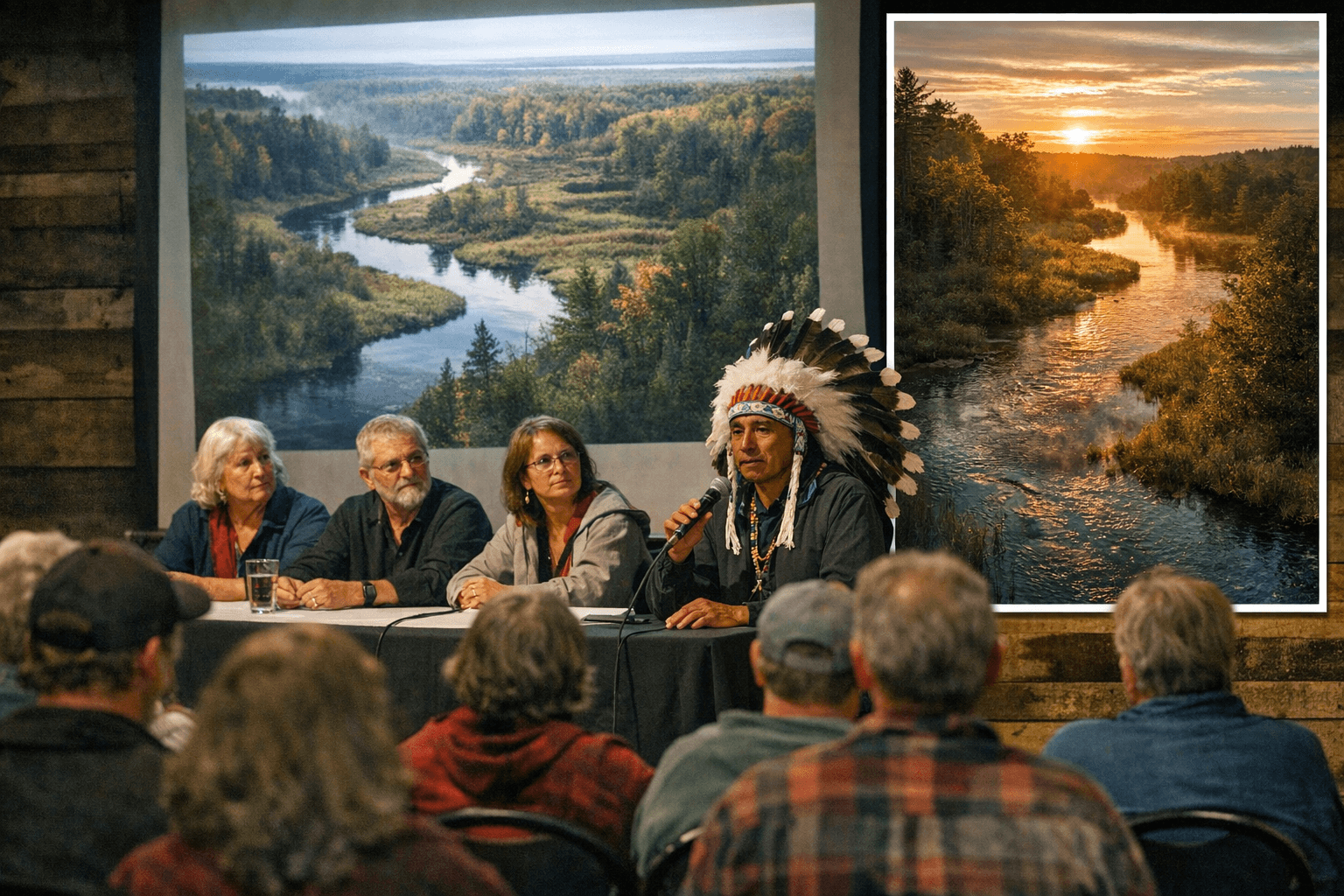
A legal framework that could let rivers, forests and other ecosystems speak in court is moving onto the stage in Traverse City, with the Boardman-Ottaway River and local watershed fights squarely in view.
The International Affairs Forum at Northwestern Michigan College will host “Rights of Nature: Global Movement, Indigenous Values” on Wednesday, April 15, at Dennos Museum Center’s Milliken Auditorium. The event begins with a reception at 6 p.m. and the program starts at 7 p.m. It will be available both in person and by livestream.
The forum will feature Frank Bibeau, a tribal attorney and director of the Center for Democratic and Environmental Rights’ Tribal Rights of Nature Program, along with Hugo Echeverría, an Ecuador-based environmental lawyer and member of the United Nations Harmony with Nature expert network, who will join virtually. Nick Reo of Simon Fraser University will moderate.
Organizers say the conversation is rooted in Indigenous principles and has direct relevance for northern Michigan, where watershed stewardship has become an increasingly visible issue. NMC has pointed to the rewilding of the Boardman-Ottaway River as one local example of the kind of habitat and water protection that overlaps with the rights-of-nature movement.
The practical question at the center of the discussion is straightforward: what changes if nature can be legally represented? Advocates say the model would allow water, land, plants and animals to have legal standing in disputes over environmental harm, giving courts another way to weigh pollution, habitat loss or development pressure.
The movement already has tribal precedent. The White Earth Band of Ojibwe recognized the rights of manoomin, or wild rice, in 2018. Three years later, manoomin and the White Earth Band filed what is described as the first rights-of-nature enforcement case in a tribal court.
In Grand Traverse County, the idea is no longer abstract. A 2024 report said the Grand Traverse Band of Ottawa and Chippewa Indians could become the first tribal nation in Michigan to formally grant legal rights to nature. If adopted, that resolution would extend legal standing to non-human life, including water, land, plants and animals.
The event is being supported by grant funding from the Grand Traverse Band of Ottawa and Chippewa Indians and underwriting from the Grand Traverse Regional Community Foundation. It also carries a local sense of continuity for those who followed the work of Holly T. Bird, the Traverse City attorney and Indigenous activist who died in 2025 after years of environmental justice advocacy in the region.
This article was produced by Prism’s automated news system from verified source data, official records, and press releases, then run through automated quality and moderation checks before publishing. The system is built and supervised by the people who set the standards it runs under. Read our full AI policy.
Did this article answer your question?


