Traverse City shifts water line work to more downtown streets in May
Fifth, Eighth and nearby downtown blocks will see lane shifts, sidewalk closures and detours as Traverse City replaces older water lines tied to lead risk.

Downtown drivers, walkers and business owners will feel the next phase of Traverse City’s water-line project the week of May 18, when work shifts to the 500 block of Fifth Street, the 200 block of East Eighth Street and nearby downtown blocks. Crews expect lane shifts, lane closures, sidewalk closures, dust and noise, with intermittent disruption for pedestrians, bicyclists and vehicles as the city keeps replacing private galvanized service lines that were once connected to lead.
The work zone also includes the 200 block of East Tenth Street, the 100 block of East Fifteenth Street, the 1300 block of South Union Street and the 1300 block of Cass Street. City officials say signs will direct traffic through the area and that access to homes and businesses will remain available, but alternate routes are being recommended to ease congestion and protect worker safety. For a downtown that depends on curb access, delivery windows and short-term parking turnover, the disruption will reach far beyond the trench itself.
This is not a patch job on one break in the street. Traverse City says the project is aimed at older galvanized water services that the city must replace under Michigan’s 2017 Lead and Copper Rule if a galvanized line “is or ever was” connected to a lead gooseneck. The city says those goosenecks are 3-foot lead transition pipes installed before the mid-1940s, and it says it has no known fully lead service lines.
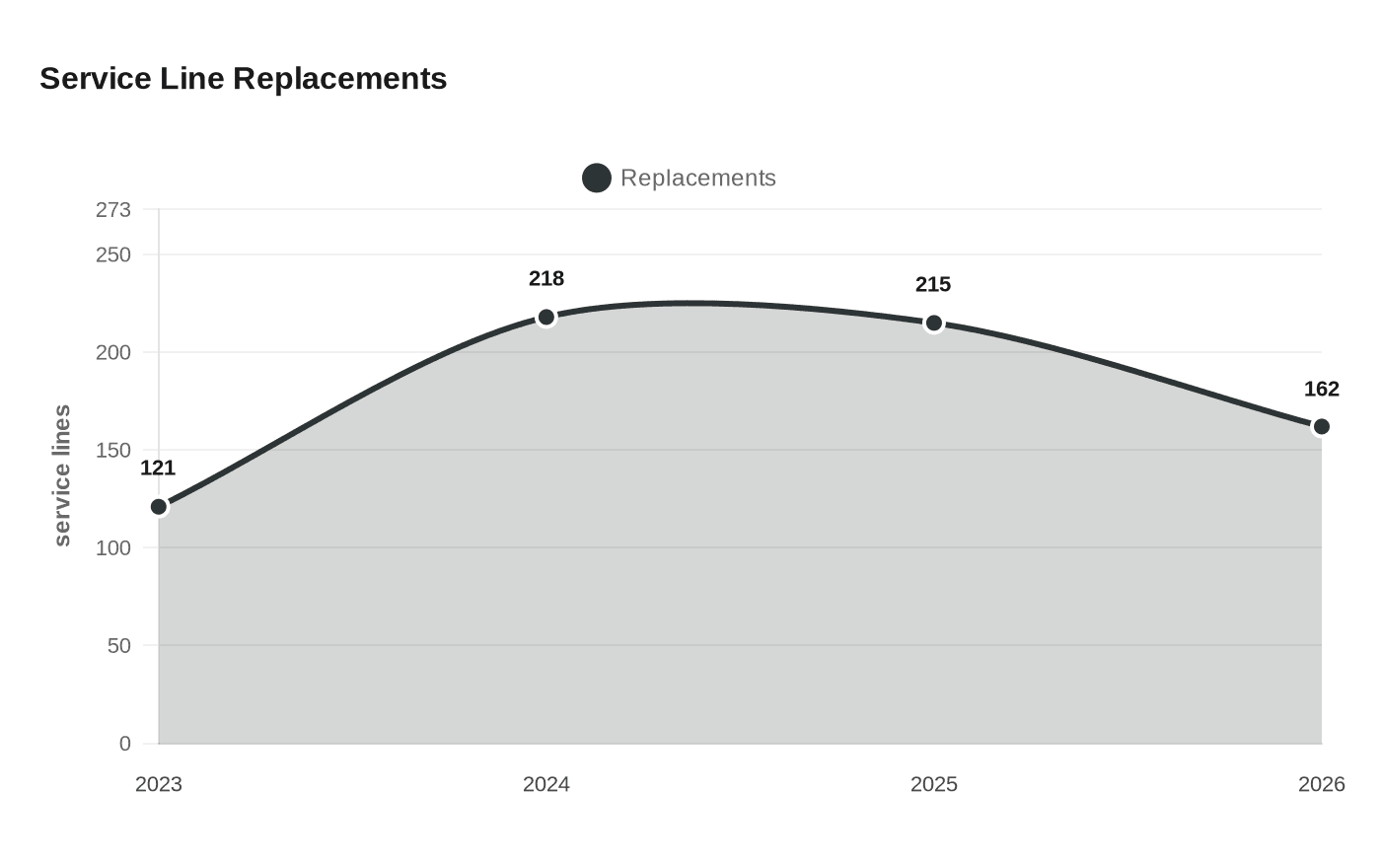
The scale is already large. Traverse City says about 750 galvanized water service lines meet replacement criteria, and 554 service lines will have been replaced once the current program is finished. The city reports 121 replacements in 2023, 218 in 2024, 215 in 2025 and 162 planned for 2026. Officials have tied the work to a broader five-year water-systems investment totaling $48 million.
Funding has come from state water programs and grants. Traverse City says it received a $3,510,500 DWSRF loan and a $1,504,500 DWI grant in 2022, along with a separate $2 million grant from the Michigan Department of Great Lakes and Energy. The city says the project is part of a multi-year effort that should run into fall 2026, leaving downtown residents and businesses with months of construction before the payoff arrives in a stronger, cleaner and more reliable water network.
Know something we missed? Have a correction or additional information?
Submit a Tip