Guilford County farmers welcome rain after record dry spring
Rain has eased a punishing dry spell, but Guilford County growers are still weighing irrigation costs, delayed planting and uncertain summer harvests.
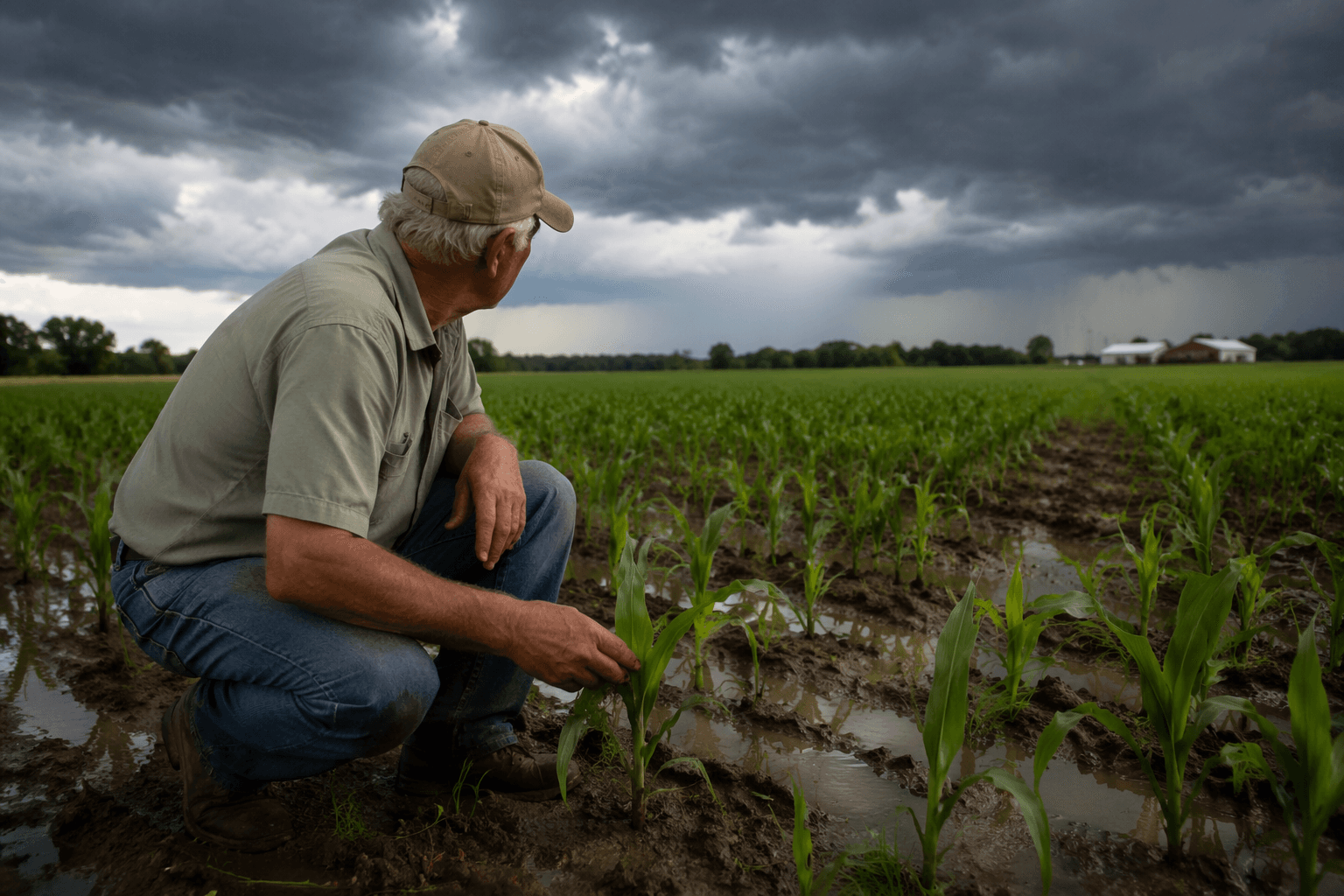
A few wet days are changing the math on Guilford County farms
For growers in High Point and across Guilford County, the first meaningful rain in weeks is doing more than softening the soil. It is slowing the pace of water loss, easing pressure on irrigation systems and giving strawberries, berries and field crops a better chance to hold together through the summer market season.
The stakes were high before the rain arrived. Drought.gov says 100% of Guilford County’s population, 488,406 people, is affected by drought. The county logged the 5th driest April on record and the 3rd driest January-April stretch in 132 years, a run of dryness that helps explain why even a light shower has felt like a turning point for farm families.
What the rain changes first: costs, not just comfort
On farms, rain is not only about soil moisture. It also determines how much money goes into pumps, fuel, labor and water management just to keep crops alive long enough to harvest. At Ingram’s Family Farms, Rhonda Ingram said the farm has enough irrigation to keep strawberries going, but that protection is not universal. Blackberries, blueberries and muscadines are much harder to manage when rain disappears for weeks, because they cannot be successfully irrigated in the same way.
That difference matters in a county where small fruit is part of the local food economy. NC State Extension lists blackberries, blueberries, muscadine grapes and strawberries among North Carolina’s major fruit crops, which means this dry spring has touched a sector that supports roadside stands, pick-your-own operations and farmers market tables from Greensboro to High Point. When rain is scarce, the cost is not just in water bills. It also shows up in fruit size, ripening consistency and how much product a farm can reliably bring to market.
The dry spell hit planting decisions too
The pain extended beyond fruit. In Guilford County, an earlier report on Rudd Farm showed how fast dry weather can change the rhythm of spring work. Sweet corn planting was delayed, the farm’s pond was dropping, and the farm said it was losing about an inch of water every day without rain. Matt Rudd said the ground was so dry that the farm had to irrigate before planting.
That kind of pre-planting watering is a warning sign for the season ahead. It means farmers are not just keeping crops alive after they emerge, they are paying to prepare ground that should have been workable on its own. It also suggests that a few light showers may not erase the damage already done to timelines, especially for crops that need steady moisture to establish roots and move into summer heat.
Why some crops recover faster than others
The rain will not affect every crop equally. Strawberries can be buffered by irrigation, and Ingram said that system has helped her farm keep them going. But blackberries, blueberries and muscadines are more exposed because they are less easily protected when weather stays dry for long stretches. Tomatoes and corn have also been under pressure at other farms, adding to the sense that this spring squeezed both specialty fruit growers and row-crop producers.
That uneven vulnerability is why local shoppers may see the effects in different ways over the next several weeks. Some stands may still have berries and strawberries, but volumes could be tighter than in a wetter year. Other crops may come later than usual, or in smaller quantities, if growers had to spend extra time and money on irrigation just to bridge the dry period. The rain offers relief, but it does not instantly restore the growing season to normal.
The broader drought picture is still serious
Even as isolated showers brought some relief, state officials were still treating the situation as severe. The North Carolina Drought Management Advisory Council updated its advisory on May 19, 2026, and urged water users in D4 areas to follow their Water Shortage Response Plan. That is a reminder that local rain is only part of the equation. A farm can get a brief break while the larger drought pattern remains in place across the region.
NC Agriculture’s Crop Progress and Condition reports are designed to track the same set of pressures farmers are dealing with now, including planting progress, crop development, harvesting progress, precipitation and drought information. That matters because the current spring has not just been dry, it has been unusually dry by historic standards. In April 2026, one Triad farmer said he had never seen a spring quite this dry, a sentiment that fits the scale of the county’s drought figures and the stress shown at farms like Rudd Farm.
What to expect at stands and markets
The most immediate business impact of the rain will be felt in what farmers can keep alive, how much they must spend to do it and how quickly they can recover field conditions. For growers serving High Point, Greensboro and the rest of Guilford County, that means the next few weeks will be about stability, not a sudden rebound.
- Strawberry operations with irrigation may see the quickest benefit, because the crop already has a water system behind it.
- Blackberry, blueberry and muscadine growers are likely to remain more exposed, since rainfall is more valuable to those crops than stopgap irrigation.
- Corn and tomato plantings may still lag if earlier dryness forced delays or stressed young plants.
- Market shoppers may notice uneven supply before they see full recovery, especially if summer heat returns before the soil fully recharges.
The rain is welcome because it interrupts a pattern that had already started to threaten yields, timing and cash flow. It is not enough to make the season secure on its own, but it does buy growers something they have been short of for much of the spring: time. For Guilford County farms, that can be the difference between carrying a crop into summer and watching a dry year become a lost one.
This article was produced by Prism’s automated news system from verified source data, official records, and press releases, then run through automated quality and moderation checks before publishing. The system is built and supervised by the people who set the standards it runs under. Read our full AI policy.
Did this article answer your question?