Guilford County Holds Tier 2 Status in NC Economic Distress Rankings
Guilford County slipped to 49th in NC's economic distress rankings, but a $4 billion JetZero investment and 16,000 new Triad jobs suggest the tier label may lag reality.
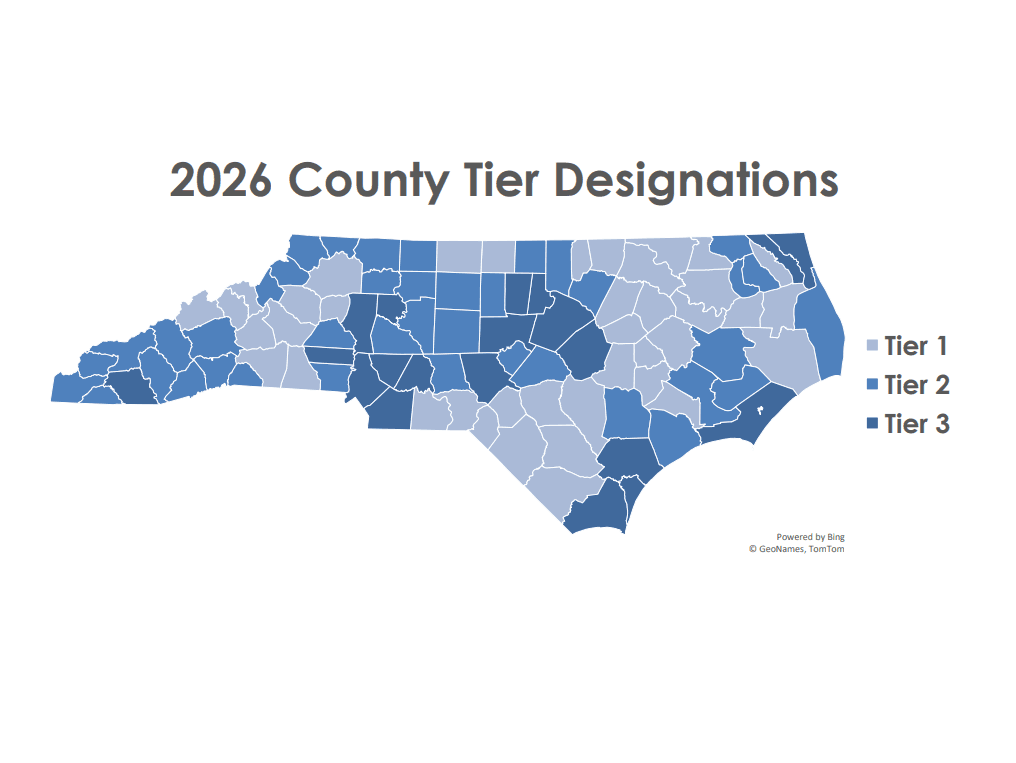
Guilford County dropped five spots in North Carolina's annual economic distress rankings, falling to 49th overall among the state's 100 counties for 2025, down from 44th in 2024. The county retains its Tier 2 designation, placing it in the middle band of a three-tier system that directly determines eligibility for state business incentives.
The N.C. Department of Commerce released the 2025 rankings in December 2024, as mandated under state law G.S. 143B-437.07. Each county is evaluated on four variables: unemployment rate, median household income, population growth, and assessed property value per capita. The 40 most economically distressed counties earn Tier 1 status and the most generous state incentive support; the next 40 are Tier 2; and the 20 healthiest counties are Tier 3, qualifying for the least assistance.
Forsyth County also holds Tier 2 but slipped to 37th overall in 2025 from 33rd the year before. More striking for the broader region: Davie County's drop from Tier 3 to Tier 2 leaves the entire 14-county Triad and northwest North Carolina without a single top-20 economic county in 2025, a notable shift for a region of approximately 1.7 million residents.

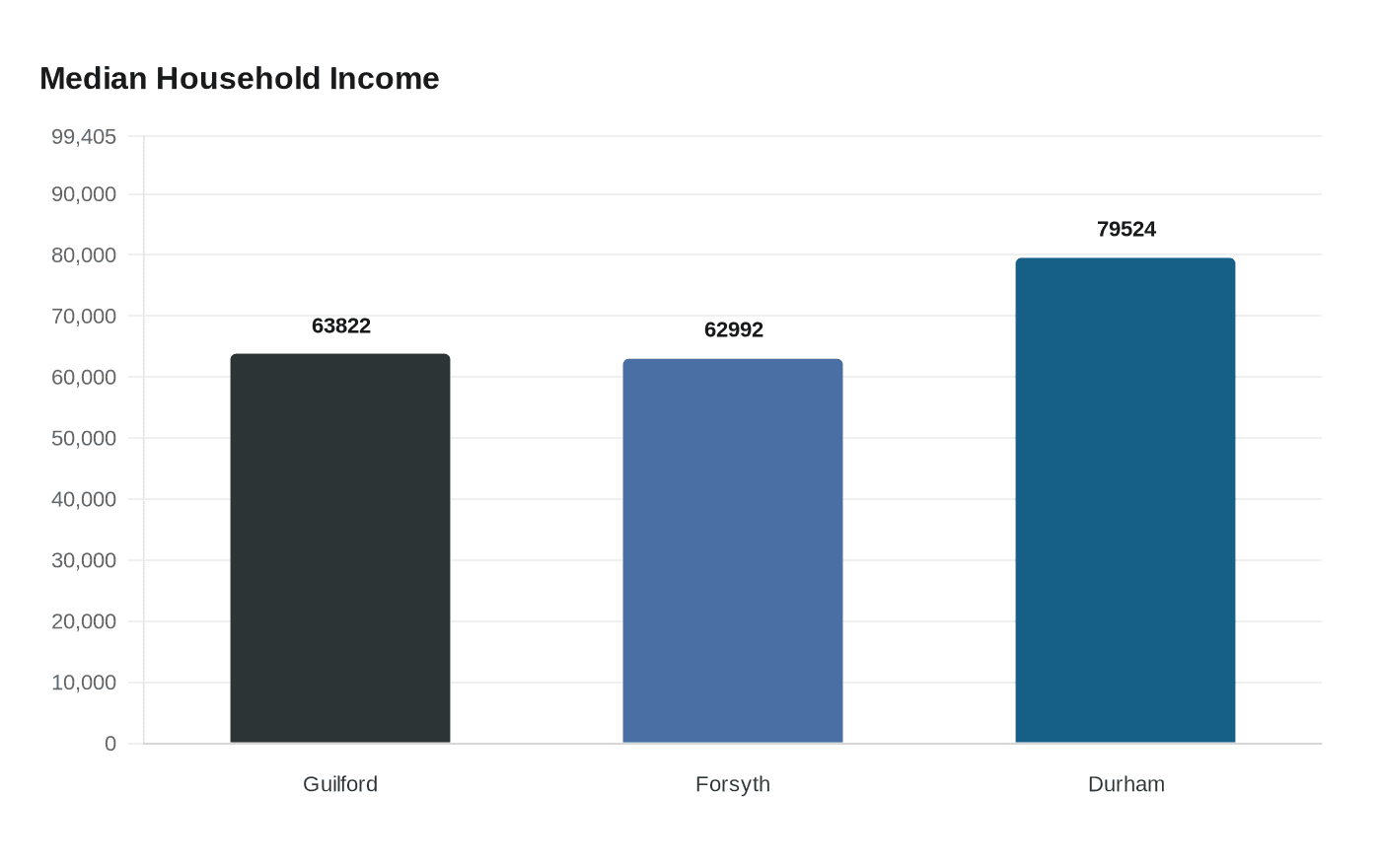
On median household income, Guilford County led the Triad in 2023 at $63,822, ranking 27th statewide. Forsyth followed at $62,992, ranked 31st. Both figures fall well below Durham County's $79,524 and Mecklenburg County's 7th-place statewide finish, a gap that captures the persistent income divide between the Piedmont Triad and the Triangle and Charlotte metros.
Triad economic officials and economists have pushed back on a purely negative reading of the Tier 2 label, advocating a glass-half-full perspective on the region's middle placement. The designation does carry practical weight: Guilford and its Triad neighbors qualify for moderate state incentive packages but not the maximum assistance reserved for Tier 1 counties, a structure that some researchers argue works against mid-sized metro economies competing for large employers.
The investment numbers, however, tell a different story about regional momentum. JetZero selected Greensboro's Piedmont Triad International Airport for its first commercial airplane manufacturing plant, projecting a $4 billion investment in Guilford County and roughly 14,500 jobs. IQE, Inc., a global semiconductor manufacturer, announced 109 new jobs and a $305 million investment in Guilford County. Across the broader Triad in 2025, companies announced more than 16,000 planned jobs. Boom Supersonic and Topgolf had already signaled confidence in the region with expansion announcements in 2023.
The UNC Kenan Institute of Private Enterprise estimated the Piedmont Triad's economy grew 1.7% in 2024, ranking it sixth-fastest among North Carolina metro economies and placing its GDP at approximately $90 billion. Guilford County's seven colleges and universities and a population exceeding 540,000 anchor what the Greensboro Chamber of Commerce markets as a formidable regional workforce, one that manufacturers like JetZero are counting on to staff facilities still under development. Whether the tier rankings will catch up to that activity is a question the 2026 Commerce assessment will begin to answer.
This article was produced by Prism’s automated news system from verified source data, official records, and press releases, then run through automated quality and moderation checks before publishing. The system is built and supervised by the people who set the standards it runs under. Read our full AI policy.
Did this article answer your question?

