Guilford County issues immediate burn ban for Code Orange air quality
Guilford County halted all open burning Wednesday as Code Orange ozone pushed air quality into the unhealthy range for sensitive groups. The ban cut off yard debris fires, land-clearing burns and other cleanup plans countywide.
Guilford County shut down open burning immediately on Wednesday, May 20, forcing homeowners, landscapers and small businesses to stop brush fires, yard debris burns and land-clearing fires across the county.
The Guilford County Fire Marshal’s Office said the restriction lasted until Wednesday at midnight, which meant no open burning anywhere in Guilford County for the rest of the day and into the evening. That override mattered because county rules normally allow some yard-waste burning only with a valid, signed permit from the Guilford County Fire Marshal’s Office or the county’s open burning official.
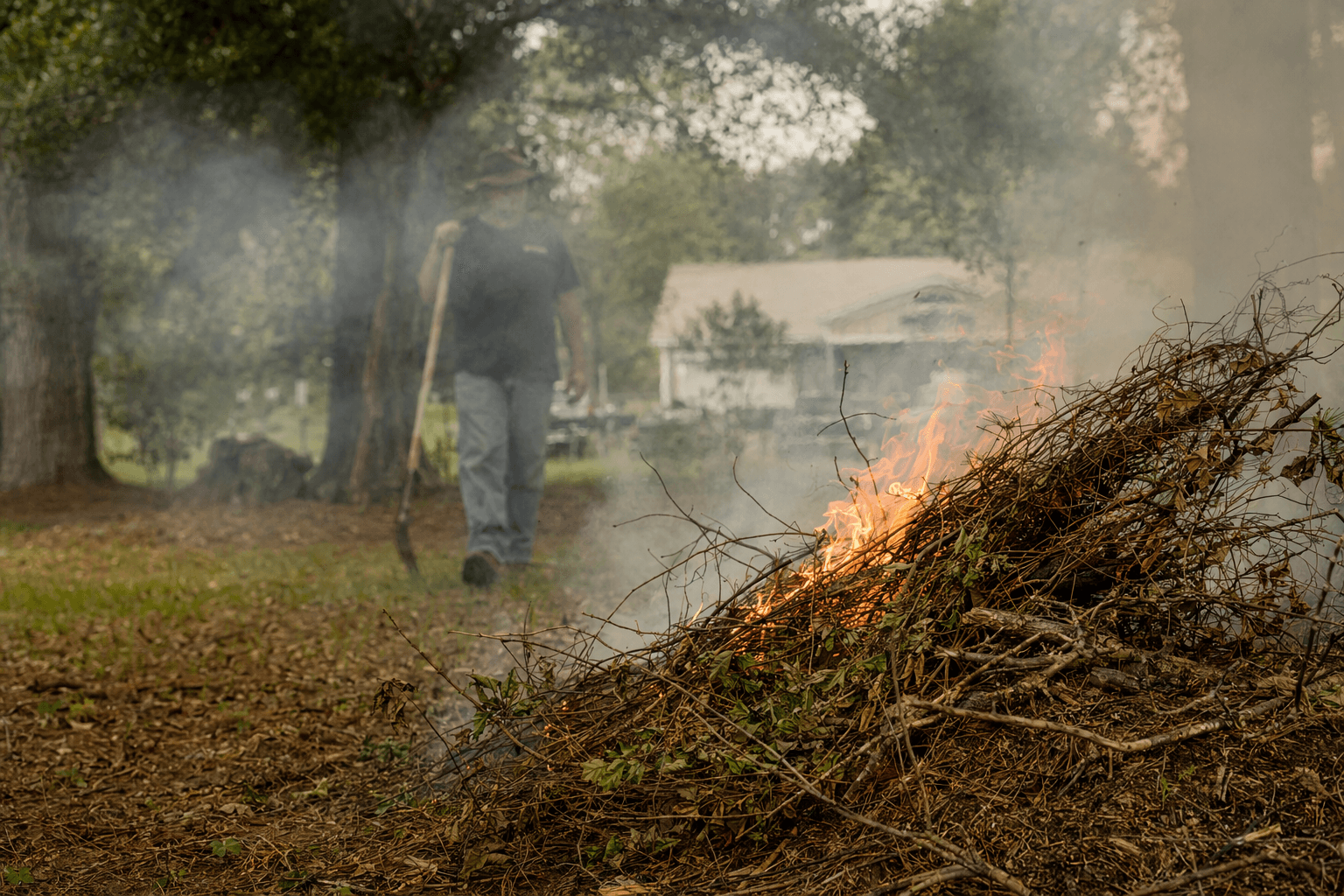
Under the county’s own guidance, though, a burn ban changes everything: anything at all is prohibited when there is a burn ban or when the Air Quality Forecast is Code Orange, Red or Purple. The county also says yard-waste burning normally is limited to 8:00 a.m. to 6:00 p.m., must be attended, and no new material can be added after 6:00 p.m. None of that applied during the ban.
The practical effect reached well beyond people burning a pile of leaves. Landscapers and contractors had to delay outdoor cleanup or move debris by truck instead of fire, and anyone planning an outdoor event with a fire feature had to scrap those plans. For Guilford households, the ban was a reminder that ordinary spring yard work can turn into a compliance issue with little notice.
The restriction came as air quality across North Carolina worsened because of ground-level ozone pollution. The North Carolina Division of Air Quality uses the AQI color-code system in all 100 counties, and from March 1 through Oct. 31 the daily forecasts include ozone. Code Orange, or Unhealthy for Sensitive Groups, means people in sensitive groups should reduce prolonged or heavy exertion outdoors.
That warning covered children, teens, older adults and people with heart or lung disease, along with people spending long stretches active outside. The North Carolina Department of Environmental Quality says older adults and people with lung disease or heart disease are among those most vulnerable to poor air quality. It also says ground-level ozone and particle pollution are the most common air pollutants in North Carolina.
Nearby counties including Forsyth, Alamance, Davidson, Randolph, Rockingham, Caswell, Davie and Stokes were dealing with the same air-quality problem. The local response also followed a separate statewide pattern: the N.C. Forest Service lifted an open-burning ban on May 8 for Guilford and 18 other counties after rain eased fire danger, after that statewide ban had begun March 28 because of hazardous forest fire conditions. The new Guilford restriction was a different order, tied not to wildfire danger but to the air people were breathing.
Know something we missed? Have a correction or additional information?
Submit a Tip