Nearly 200 calls logged at Sheriff Rogers' residence amid tax tensions
Nearly 200 calls were logged at Sheriff Danny H. Rogers' home, putting deputy time, taxpayer cost and county transparency under a microscope.
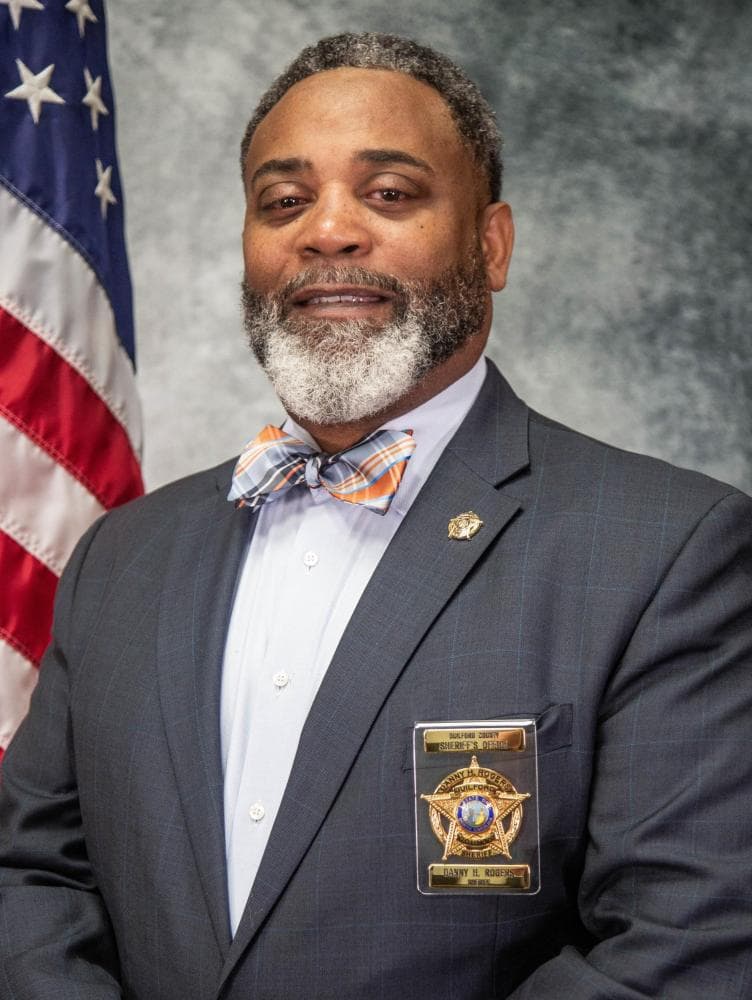
Nearly 200 calls were logged at Sheriff Danny H. Rogers’ residence, and the number has quickly become a test of how Guilford County applies scrutiny to its most powerful law-enforcement official. The question now is not just why the home drew so many calls, but whether the sheriff’s office, and county leaders who fund it, are being held to the same standards expected of any resident or lower-level employee.
Rogers is Guilford County’s elected sheriff. His office is headquartered at 401 W. Sycamore St. in Greensboro, where the Sheriff’s Office lists its main phone number as 336-641-3694 and names N. Z. Wiseman as chief deputy. That official structure is now at the center of a debate over public resources, because every call to a private residence can require a county response, even when the complaint or concern is personal rather than operational.
The timing has sharpened the political edge. Guilford County commissioners approved a balanced $833.7 million budget for fiscal year 2024-2025 on June 20, 2024, and the tax and spending fight has not gone away. County government also circulated a 2026 budget town hall and community resource fair pre-event survey for fiscal year 2025-26 input, while public criticism of property tax reappraisals and tax increases continued to simmer. In that same climate, Rhino Times coverage said commissioners were finally ready to address sheriff’s deputy pay, and another March 2026 item said taxpayers sent a loud and clear message to commissioners.
That broader backdrop matters because the sheriff’s office is not just another county department. Rogers won a second term, and his name remains tied to both public safety decisions and the county’s budget choices. When nearly 200 calls are attached to his home, the issue becomes more than a neighborhood nuisance. It turns into a question of transparency: how many deputies were pulled in, how much county time was consumed, and whether those responses were handled with the same documentation and scrutiny that an ordinary resident would face.
For Guilford County taxpayers, the unresolved tension is straightforward. The county asks residents to absorb higher costs and defend every line of spending, while its top law-enforcement officer now faces the same public accounting test his own department applies elsewhere.
This article was produced by Prism’s automated news system from verified source data, official records, and press releases, then run through automated quality and moderation checks before publishing. The system is built and supervised by the people who set the standards it runs under. Read our full AI policy.
Did this article answer your question?