Harris County constables push for more funding, cite new state laws
A new state law gave Harris County constables more freedom to strike their own patrol contracts, raising the stakes in a fight over taxpayer dollars and county control.

Homeowner associations, school districts and municipal utility districts in Harris County could start striking law-enforcement contracts with sheriffs and constables without waiting for commissioners court approval, a shift that sharpened the fight over who controls county policing money. The county’s eight elected constables, whose offices employ nearly 1,800 deputy constables, used the new authority to press for more funding and more independence from the Harris County Commissioners Court.
Gov. Greg Abbott signed House Bill 26 and House Bill 192 on Aug. 27, 2025, after adding both measures to the second special session agenda. HB 26 let Harris County sheriffs and constables contract directly with HOAs, school districts, municipal utility districts and similar entities. HB 192 went further by requiring voter approval if the county tried to reallocate certain unspent law-enforcement funds. The laws took effect Dec. 4, 2025.
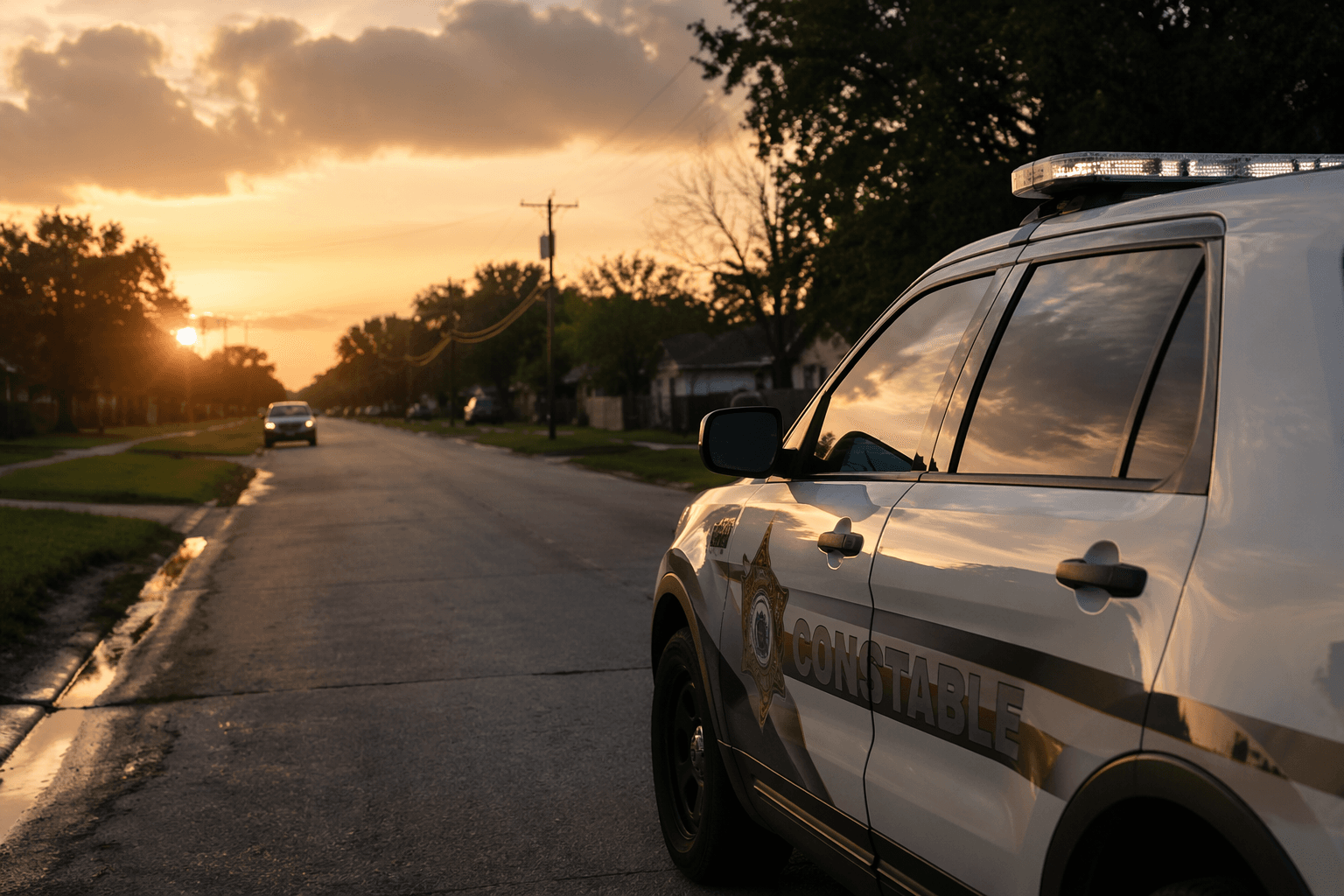
Supporters said the changes protected law enforcement and preserved a popular deputy contract program that puts more patrols in neighborhoods willing to pay for them. Critics argued the bills weakened county checks and balances and could raise costs for taxpayers by reducing the county’s control over where public safety dollars go.
The dispute landed as Harris County finalized an $8.3 billion fiscal 2026 budget, announced Sept. 24, 2025, that raised deputies’ and constables’ salaries to match Houston Police Department pay. County leaders said the parity move was meant to improve retention and ease staffing shortages while still protecting flood maintenance, community health and other core services. For residents, the question was not just how much more the county would spend, but whether those dollars would buy better coverage, steadier staffing or simply more layers of law enforcement competing for the same tax base.
Harris County’s constables already operate on a scale far beyond their counterparts in most Texas counties. Their offices have become a politically powerful force, especially in areas where contract patrols shape daily police coverage, from Cypress to North Harris County and other communities that rely on deputy patrols. Texas constables trace their roots to the Republic of Texas era and older English legal traditions, but in Harris County the office has grown into one of the county’s most influential law-enforcement players, with the latest state laws giving it even more leverage in the budget fight.
This article was produced by Prism’s automated news system from verified source data, official records, and press releases, then run through automated quality and moderation checks before publishing. The system is built and supervised by the people who set the standards it runs under. Read our full AI policy.
Did this article answer your question?