Hernando County plans South Brooksville redevelopment around historic railroad legacy
South Brooksville’s CRA could steer tax-backed improvements near the 1885 depot, but residents will judge it by safer streets, repaired properties and real neighborhood gains.
South Brooksville is where Hernando County’s redevelopment talk meets a concrete test: whether public investment can improve a historic Black community’s streets, properties and daily life, or simply preserve a symbol at the 1885 train depot. The county has framed the area as a tight-knit historical community in east-central Hernando County, and it says the neighborhood was traditionally a low-density residential, industrial and manufacturing district crossed by a north-to-south railroad line.
A neighborhood shaped by the railroad
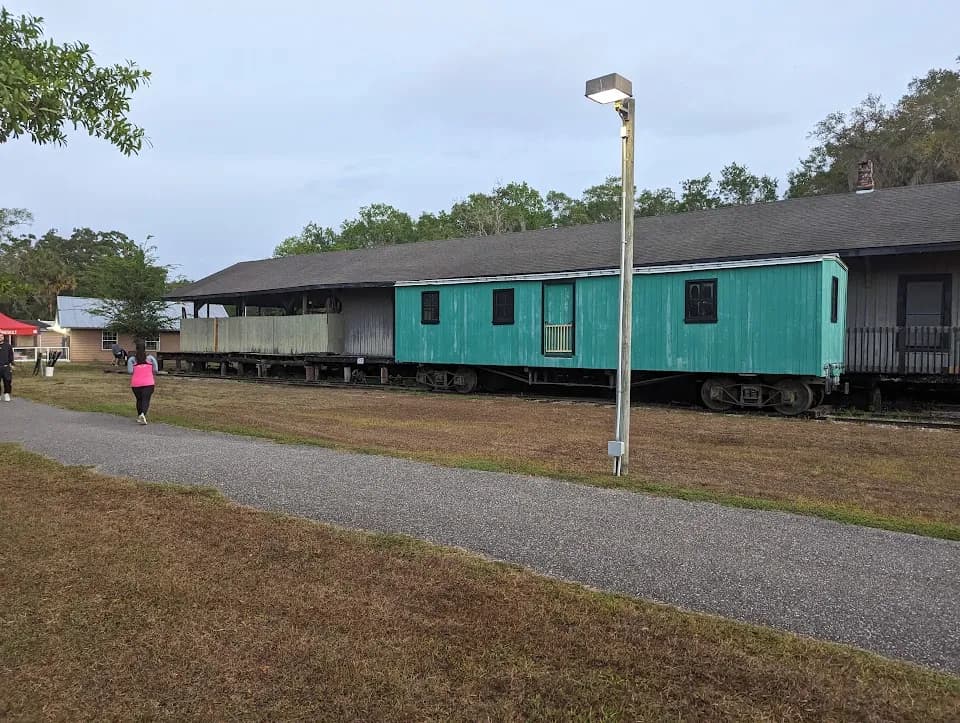
The 1885 Train Depot sits at the center of that history. Hernando County says the depot was built in 1885 by the Florida Southern Railroad and has remained in the same location ever since, while the old rail bed now carries the Good Neighbor Trail through the Rails to Trails program. The historic marker dedicated at 70 Russell Street in Brooksville on Nov. 5, 2022 adds a sharper picture of the town it served: Brooksville had a population of 500 in 1885, and residents still depended on horse-drawn wagons and stagecoaches to move goods and passengers.
That context matters because South Brooksville was not simply built around the railroad. The county says it was the first mixed residential multi-family neighborhood laid out in the original Spring Hill Master Plan, which makes the area a visible measure of how Hernando County handles growth, preservation and displacement pressure at the same time. A place with that history raises a basic public question: when the county invests here, does the money help the people who already live nearby, or mostly polish a landmark for future plans?
The 1885 Train Depot Museum gives the county a ready-made case study. The Hernando Historical Museum Association says it has operated the museum since at least 1991, and that the site includes original depot spaces, a restored 1925 American LaFrance fire engine and a restored wooden rail car once used to cook meals for railroad crews. The museum association also says the depot connects to the main line at Croom, formerly Pemberton Ferry, reinforcing how the site once functioned as part of a working regional rail system rather than a stand-alone attraction.
What the CRA is supposed to change
Hernando County describes community redevelopment as a planning tool for neighborhoods with blighted or underutilized buildings and properties. The county says the goal is to improve places through job creation, expanded business opportunities, housing for families most in need, infrastructure improvements and cleanup of environmentally threatened areas.
For South Brooksville, the county’s own redevelopment page says the plan is supposed to reflect the vision of community residents, nonprofit partners and local businesses. The targeted implementation and financial plan is expected to address aging infrastructure, affordable housing, business engagement, community wellness, community identity and culture, pedestrian-bicycle-transit mobility, homelessness and social services, crime and safety, and resident engagement. That list shows what residents are likely to watch most closely: whether the CRA delivers visible repairs, safer routes and better-maintained properties, not just a broader promise of future growth.
The tax issue is built into the legal structure. A July 18, 2024 steering-committee agenda shows the county reviewing Florida Statutes 163.335 through 163.358, including the redevelopment trust-fund provision in 163.353 and the creation of a redevelopment agency in 163.356. The same agenda shows the group discussing the consultant’s scope of services, while using Sunshine Law and Robert’s Rules as its meeting structure. In practical terms, that means redevelopment money and authority are being organized through a formal public process, not a loose advisory conversation.
How the South Brooksville committee took shape
The South Brooksville CRA Steering Committee was created in April 2024. The county’s records show its first meeting on May 10, 2024 at Red Mule Pub, 108 S. Broad Street in Brooksville, where the first item under discussion was a list of citizen applicants. The county also identified Commissioner Steve Champion and City Council Member Casey Thieryung as the government appointees on the committee.
That early setup matters because the steering committee is where neighborhood concerns can either be translated into a workable plan or diluted into broad language. A June 6, 2024 meeting record shows the committee continuing to handle the basic civic groundwork, and later agendas show the process moving forward rather than stalling. By Oct. 2, 2025, the agenda included a project-status review and a presentation from Inspire Placemaking Collaborative summarizing workshop input. By Feb. 5, 2026, committee materials showed the group reviewing a draft community redevelopment plan.
Those milestones suggest a process that has already passed the listening stage and entered the drafting stage. The open question for residents is whether the draft will answer the everyday conditions that shape South Brooksville now: aging infrastructure, vacant or underused lots, mobility barriers and the condition of nearby blocks.
Where residents should look for real change
The county’s planning department is part of the equation because it works with zoning, code enforcement and TheBus. That connection is important in a CRA built around pedestrian-bicycle-transit mobility, because street condition, code enforcement and transit access often determine whether redevelopment reaches the people who live there now or only raises the value of nearby land.
The county commission is the chief legislative body in Hernando County, and its meetings are held at the Government Center at 20 North Main Street in Brooksville. That is the point where a CRA plan stops being a steering-committee concept and becomes a public decision with budget consequences. If South Brooksville’s redevelopment is going to mean more than a plan on paper, the commission will have to translate the trust-fund structure into repairs, maintenance and services that can be seen block by block.
The depot offers the clearest standard for judging the effort. A restored museum and trail connection show preservation value; safer streets, better property conditions and stronger neighborhood services would show resident value. South Brooksville’s redevelopment will be measured by whether those two things line up.
This article was produced by Prism’s automated news system from verified source data, official records, and press releases, then run through automated quality and moderation checks before publishing. The system is built and supervised by the people who set the standards it runs under. Read our full AI policy.
Did this article answer your question?