Camp Lordsburg held thousands of wartime detainees in one desert site
Just outside Lordsburg, Camp Lordsburg held thousands of wartime detainees. Only a few traces remain, but the desert site still shapes Hidalgo County’s memory.
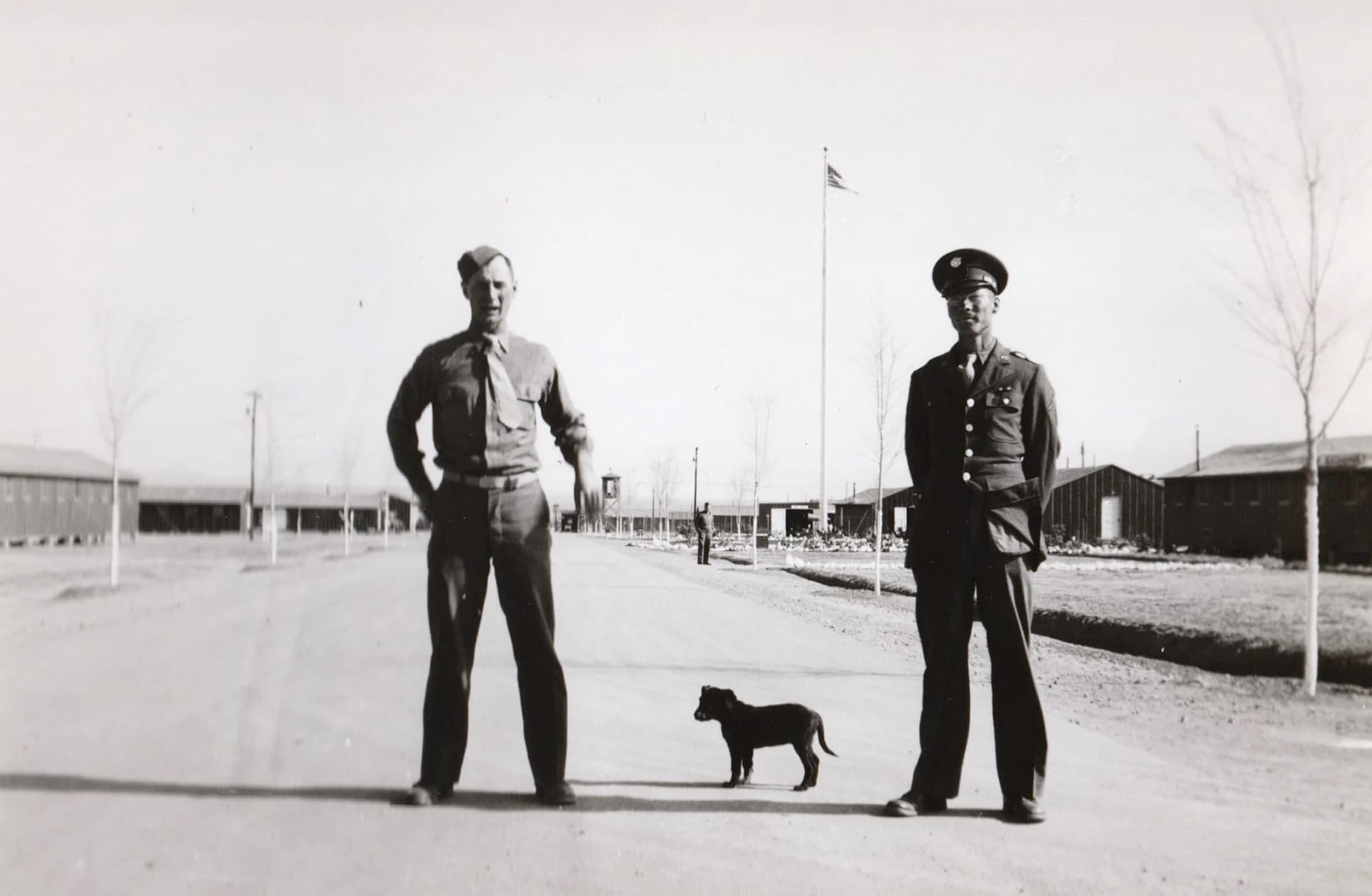
Camp Lordsburg sits in one of the most overlooked corners of Hidalgo County, yet it carried a burden far larger than its footprint. Built after Pearl Harbor on the desert edge outside Lordsburg, the site became a wartime holding ground for Japanese resident aliens first, then Italian and German prisoners of war, turning one remote place into a prison, a military cantonment, and a record of how federal policy reached deep into the Bootheel.
A desert camp built for war
The Army chose the Lordsburg area because isolation itself was part of the design. The Bootheel’s distance from major population centers made it a logical place for a military cantonment, and the camp was laid out from the ground up for detention. Densho identifies Camp Lordsburg as a 1,300-acre U.S. Army internment camp near Lordsburg that opened on June 15, 1942, and became the largest Army-run internment camp for Japanese Americans in the continental United States.
That scale matters because Camp Lordsburg was not a temporary holding pen or a small auxiliary site. It was built to function as a controlled wartime world of its own, with fencing, guard structures, barracks, and support buildings arranged to manage a large detained population far from the communities that lived nearest to it.
Who was confined there
The people brought to Camp Lordsburg changed as the war did. The camp initially held Japanese resident aliens, then later received Italian prisoners of war and German prisoners of war. Across those wartime phases, the population swelled into the thousands, making the site one of the most consequential detention centers in southern New Mexico.
That succession of groups is part of what gives Camp Lordsburg its historical weight in Hidalgo County. It tied local desert land to the federal government’s broader wartime detention system, where civil liberties, military policy, and foreign conflict collided in a place many residents still know only by name, if at all. For Japanese Americans in particular, the camp belongs to the national story of forced removal and incarceration that followed the attack on Pearl Harbor, but it is also a local story of a place just outside Lordsburg where thousands lived under guard.
Life behind the wire
Camp Lordsburg was not only barbed wire and military administration. The camp’s human life included newspapers, religious services, gardening, arts and crafts, and sports, details that show how detainees made routines and community inside a confined and heavily controlled setting. Those activities did not erase the coercion of the camp, but they reveal how people tried to preserve dignity, identity, and structure under wartime confinement.
The New Mexico Japanese American Citizens League account says the site contained 283 buildings, including barracks, hospital buildings, headquarters, recreation space, latrines, and utility systems. That kind of infrastructure shows how fully the camp had to operate as a self-contained installation. It needed medical care, administration, sanitation, and places for downtime, even as its basic purpose remained detention.

The road that once ran from Highway 80 to the camp still leaves a mark on the landscape through what is now known as POW Road. In a county where roads often tell the story of ranching, rail, and highway development, that name points back to a much harsher chapter of land use and federal authority.
What remains on the ground
Most of Camp Lordsburg is gone. After the war, much of the original camp was sold off or dismantled, and the desert reclaimed what had once been a tightly managed military site. That disappearance is part of why the camp can be so easily missed now, even though it was once packed with people, buildings, and the machinery of detention.
A few physical traces still survive. The Camp Lordsburg project identifies the commissary safe and the former hospital building as among the visible remnants left from the camp’s wartime life. Those surviving pieces are modest in size, but they carry a disproportionate amount of history because so little else remains on the ground to signal what happened there.
That makes the site difficult to read without context. A person passing near Lordsburg today may see open desert, scattered structures, or ordinary stretches of land without realizing that one of the region’s most consequential World War II sites once stood there. The landscape has faded into near invisibility even as the archival record, books, and museum exhibits keep the story alive.

Why remembering Camp Lordsburg matters now
Camp Lordsburg matters because Hidalgo County’s history is not only about rail lines, ranching, border crossings, and highways. It also includes the hidden places where the federal government confined people during World War II, and those places shaped who was able to move freely, who was watched, and who was stripped of normal life. Remembering the camp forces a harder look at how wartime fear was translated into local geography.
It also matters for preservation. When only a commissary safe, a hospital building, and a renamed road remain, memory depends on interpretation. Without clear public history, a site like Camp Lordsburg can disappear twice, first physically and then culturally, until the county’s own residents no longer recognize how much passed through that desert site.
For Hidalgo County, telling this story honestly helps widen the local historical record. Camp Lordsburg links the Bootheel to the national history of civil liberties, prisoner-of-war detention, and Japanese American incarceration, but it also belongs to the county’s own identity as a place where major events left very small physical traces. The desert still holds the outline of that past, and the task now is making sure the outline is not all that remains.
This article was produced by Prism’s automated news system from verified source data, official records, and press releases, then run through automated quality and moderation checks before publishing. The system is built and supervised by the people who set the standards it runs under. Read our full AI policy.
Did this article answer your question?