Historic markers map Hidalgo County’s rail towns and border settlements
Fifteen markers spread across Hidalgo County turn one weekend drive into a map of railroads, aviation, and settlement history. Start in Lordsburg, then follow the county’s open roads to Rodeo and beyond.
A county search for historical markers turns up 15 entries in Hidalgo County, and that is enough to build a weekend drive that feels stitched to the landscape rather than locked in a museum case. The markers point to a county where rail towns, border travel, and early aviation still shape the places people pass every day, from Lordsburg’s downtown grid to the open stretches near Rodeo.
Start in Lordsburg, where the railroad made the town
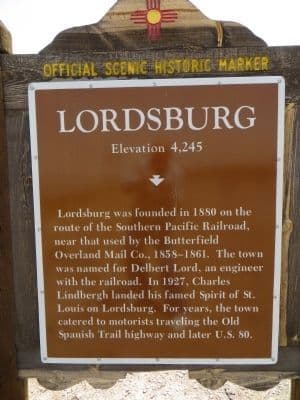
Lordsburg is the natural starting point because the city traces its own beginning to 1880, when the Southern Pacific Railroad came through from the west. The city says the original camp grew with railroad workers, freighters, miners, cowboys, ranchers, gamblers, and merchants, a mix that tells you how quickly a rail stop could become a community in southwestern New Mexico.
That rail story shows up in the wider railroad timeline too. New Mexico railroad history places the Southern Pacific in Lordsburg in October 1880, in Deming in December 1880, and in El Paso a month before the Santa Fe reached it in May 1881. For a roadside history trip, that matters because it shows Lordsburg not as an isolated dot on the map but as part of a fast-moving corridor that linked inland New Mexico with the borderlands and farther west.
If you want a practical place to begin or end the loop, the Lordsburg-Hidalgo County Museum gives you one. It sits at 710 E 2nd St. in Lordsburg, NM 88045, and is open Monday through Thursday from 10:00 am to 3:00 pm. Marsha Hill is listed as director, and the museum gives the county a central, walkable anchor before you head out toward the more spread-out markers.
How the county marker map works as a road-trip tool
Hidalgo County covers 3,438.6 square miles and has about 4,041 residents, or roughly 1.2 people per square mile. That low density is part of what makes a self-guided marker route useful here: the history is not compressed into one downtown district, but scattered across rail stops, old camps, and transportation sites that still sit in the open.
The Historical Marker Database search page helps make sense of that spread because it shows 15 matching entries for Hidalgo County, New Mexico. Instead of treating the county as a single destination, you can use those entries to build a loop that follows how people actually moved through the area, from settlement to settlement and from one transportation era to the next.
A good weekend route begins with Lordsburg, then fans out to the places where the county’s history took a different shape. The strongest pattern is movement: trains brought in workers and trade, roads connected remote communities, and later aviation added another layer to a county already defined by travel. The markers do not just identify old sites. They show how the county grew around them.
- Begin with Lordsburg’s rail-era story and the museum on East 2nd Street.
- Use the county marker listings to trace where rail towns and outlying settlements sit today.
- Plan extra driving time. In a county this large and sparsely populated, the historic stops are separated by real distance, not just by a few blocks.
Make the turn toward Rodeo and the county’s quieter infrastructure history
Rodeo adds a different kind of stop to the itinerary. New Mexico Historic Preservation Division marker records include Rodeo Intermediate Field Civil Aeronautics Authority #57A, which gives the county an aviation chapter alongside its railroad story. That marker is a reminder that Hidalgo County’s history is not only about trains and freight camps but also about the infrastructure built when aviation began to matter in rural New Mexico.
The Rodeo story also has an archaeological side. A Museum of New Mexico report says testing at a twentieth-century railroad site in Rodeo was conducted from January 3 through 6, 1989. Put beside the airfield marker, that detail shows how one small community can hold more than one transportation era at once: rail on one layer, aviation on another, and the traces of both still visible to people who know where to look.
That is what makes Rodeo worth the drive. The marker is not just an abstract label in a database. It points you toward a place where twentieth-century infrastructure still matters in the way the county is read on the ground, especially for families trying to understand how a small town fit into a much wider system of movement and access.
Read Hidalgo County as a story of movement, not a single monument
The county’s history makes more sense when you stop looking for one grand site and start following the routes that connected them. The rail line that reached Lordsburg in 1880, the camp that filled with workers and merchants, the marker at Rodeo, and the museum on East 2nd Street all tell the same basic story: Hidalgo County grew through transportation, and its communities still sit in the shadow of those old corridors.
That broader frame is also why the marker guide works so well for a local weekend. State marker records preserve more than one kind of transportation history, including a road marker in neighboring Grant County titled A.M. Curley Traynor Memorial Highway. Hidalgo County’s own entries answer with rail and airfield stops, giving the county a landscape-sized story that can be followed from the seat of a car.
The best part of the route is that it is still practical. Lordsburg remains the county seat, the museum gives you a starting point, and the marker list gives you the rest of the itinerary. Put together, they turn Hidalgo County into a drive where rail towns, border settlements, highways, and early aviation all still register in the places people see every day.
This article was produced by Prism’s automated news system from verified source data, official records, and press releases, then run through automated quality and moderation checks before publishing. The system is built and supervised by the people who set the standards it runs under. Read our full AI policy.
Did this article answer your question?