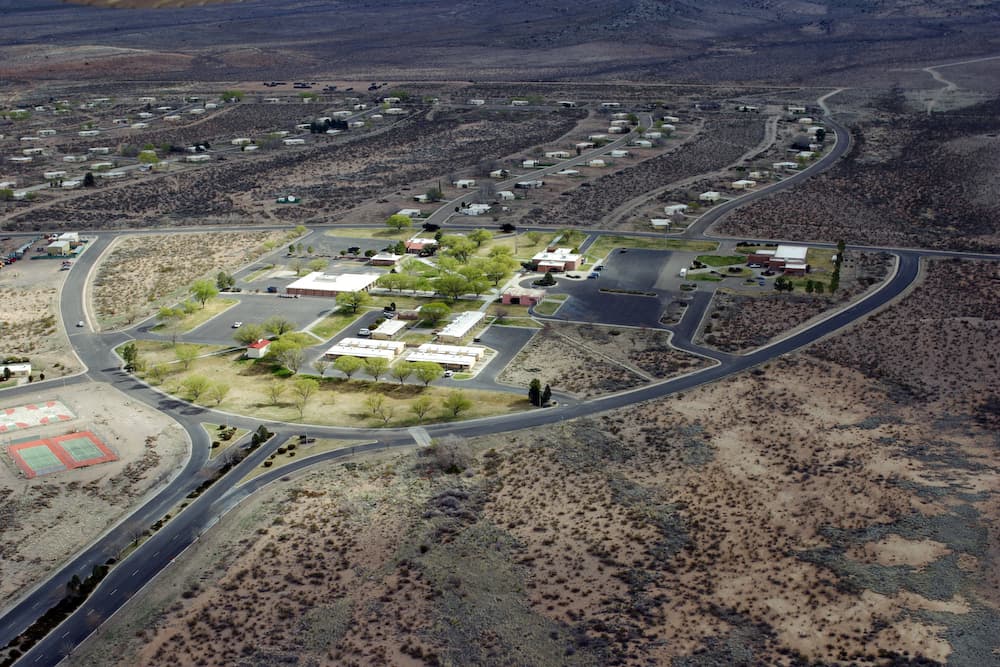
Lightning Dock geothermal plant expands in Animas Valley, New Mexico
Lightning Dock is already producing power in Animas Valley, and a proposed deeper well shows why this Hidalgo County site still matters to New Mexico’s geothermal future.
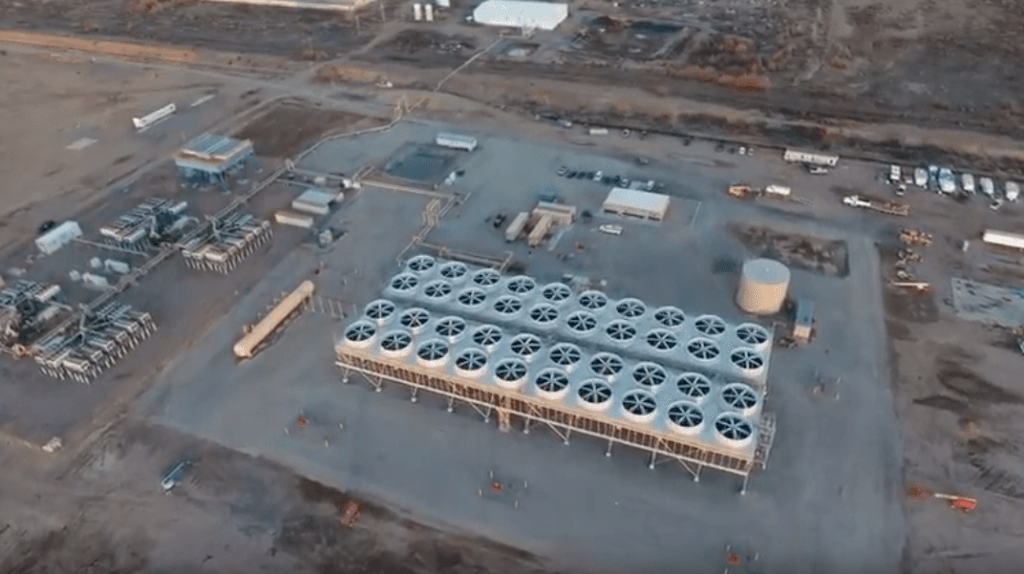
At the edge of Animas Valley, Lightning Dock is not a theory or a line on a renewable-energy map. It is a working geothermal plant at 18 Greenhouse Drive in Animas, where hot water is pumped day and night from deep underground and turned into electricity at one of New Mexico’s largest geothermal facilities.
What makes the site matter locally is that the plant is visible proof that Hidalgo County sits on a real geothermal resource, not just a promising rock formation. The current plant is managed by David Ramirez, and the permit record shows the next step may be a proposed production well, 17B-7, that would push the field deeper still, about 2,200 feet southwest of the plant.
What the plant does on the ground
Lightning Dock Geothermal HI-01, LLC runs as a binary-cycle power plant, a design that keeps the geothermal fluid and the turbine loop separate. Geothermal water is brought to the surface through a production well, passes through a heat exchanger, then is reinjected into the reservoir, while a separate low-boiling-point working fluid vaporizes to spin the turbine and generate electricity.
That setup is what allows Lightning Dock to keep operating around the clock. The New Mexico Energy, Minerals and Natural Resources Department fact sheet says the plant pumps geothermal water 24 hours a day from roughly 1,340 to 2,900 feet below ground. For neighbors in Animas Valley, that means the plant is not a seasonal demonstration project or an occasional pilot run. It is a continuously operating industrial site tied to a subsurface heat source that has been tapped for years.
The proposed well 17B-7 shows where expansion could go next. The permit file places it about 2,200 feet southwest of the plant and says it would be drilled to about 23,000 feet. In practical terms, that is the difference between a functioning power plant and a larger, deeper field that could help determine how much more power Lightning Dock can support.
Why the geology matters here
Lightning Dock sits on the east side of Animas Valley near the Pyramid Mountains, where geology does the work that surface features only hint at. Stanford researchers studying the field reported that the geothermal wells produce from fractures where buried normal faults intersect, and they used 1,206 geophones in a passive seismic deployment to image the underground flow pathways.
That underground structure is not random. The research describes a system controlled by a caldera ring fracture zone, a basement structure zone, and a young normal fault tip. In the older geology literature, the Lightning Dock Known Geothermal Resource Area was already being studied because its hot waters appeared to be structurally controlled by the intersection of the Muir cauldron ring-fracture zone, the Animas Valley fault, and a northeast-trending lineament.
The numbers in that older work are striking even now. The 1983 New Mexico Bureau of Mines and Mineral Resources circular reported hot wells in the area ranging from 70°C to 115.5°C. It also notes that boiling water at 115.5°C was encountered in an Animas Valley water well in 1948, a reminder that this reservoir has been on local radar for generations. The same circular points to widespread travertine and near-surface mineral veins, the kinds of surface clues that tell geologists hot water has been moving through rock here for a long time.
The historical hot-well site is not isolated from the rest of the county’s geography, either. The circular says Cotton City is the nearest settlement, about 7.5 kilometers away. That detail matters because it anchors Lightning Dock in the lived landscape of southern Hidalgo County, where the site is part of the same valley system that residents know from daily travel, ranching, and work.
What has materialized, and what is still growing
Lightning Dock is one of the clearest examples in New Mexico of a geothermal resource that has moved from study into production. A January 2024 legislative analysis puts the plant’s capacity at 4.7 megawatts and identifies it as one of the largest geothermal power plants in the state. That scale is modest beside a big gas or solar installation, but for geothermal in New Mexico it is a meaningful industrial asset, especially because it runs on steady subsurface heat rather than weather.

At the same time, the site is still developing. The proposed 17B-7 well, the seismic imaging work, and the U.S. Department of Energy’s 2023 geothermal internship announcement, which included a Lightning Dock project to improve a shallow crustal velocity model, all show that the field remains active for research and planning. This is not a finished chapter. It is a site where operators and scientists are still trying to map how much resource sits beneath Animas Valley and how far it can be extended.
Why policy now shapes the plant’s future
New Mexico’s geothermal policy has started to match the reality on the ground. State geothermal tax provisions took effect January 1, 2025, including an income tax credit of $0.015 per kilowatt-hour for geothermal electricity generation, capped at $5 million per calendar year. The law also includes gross receipts and compensating tax deductions for construction and equipment tied to geothermal electricity generation facilities.
Those incentives matter because geothermal projects are capital intensive, and the cost comes long before steady power sales begin. For a field like Lightning Dock, where the existing plant already produces electricity and the next phase depends on deeper drilling and more subsurface data, the policy structure helps explain why the site remains strategically important to developers and regulators alike.
For Hidalgo County, Lightning Dock is valuable for a simple reason: it is real. The plant is already operating, the geology is already mapped, and the expansion path is already visible in the permit record. In Animas Valley, geothermal is not an abstract promise about what clean energy might become somewhere else. It is a working asset with a known address, a known manager, a known capacity, and a future that still depends on what lies below the valley floor.
This article was produced by Prism’s automated news system from verified source data, official records, and press releases, then run through automated quality and moderation checks before publishing. The system is built and supervised by the people who set the standards it runs under. Read our full AI policy.
Did this article answer your question?