Lordsburg museum preserves Hidalgo County history for residents, visitors
Run by volunteers and fueled by donations, the Lordsburg museum keeps Hidalgo County’s railroad, ranching and wartime history in one accessible stop.
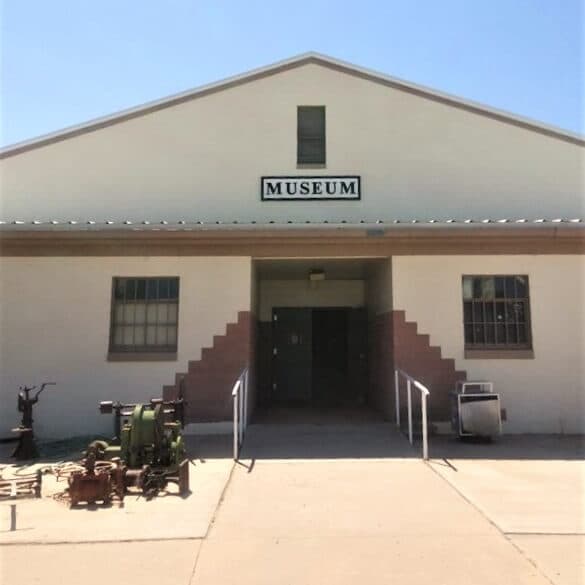
The Lordsburg-Hidalgo County Museum does more than display old objects. In a county shaped by rail lines, ranching, desert travel and wartime displacement, the museum acts as a community archive, a school resource and a modest tourism draw, all in one building at 710 E. 2nd St. in Lordsburg. It is a nonprofit operation supported in part by volunteers and donated items from area residents, and that unpaid labor is what keeps a large share of Hidalgo County’s memory public and available.
A volunteer-run institution with a wide public role
The City of Lordsburg lists Marsha Hill as the museum director and says the museum is open Monday through Thursday from 10:00 a.m. to 3:00 p.m. at its downtown location. The Lordsburg-Hidalgo Chamber of Commerce describes it as free, nonprofit and partly volunteer-run, with new donations arriving monthly from residents, both past and present. That combination matters in a rural county where small institutions often carry the burden of preserving what larger museums overlook.
The museum’s value is practical, not ceremonial. Families can bring children to see local history in one place, teachers can use the collection to anchor lessons in regional context, and researchers can find clues about the people and industries that built the town. For travelers moving through the New Mexico Bootheel, it is also a low-cost stop that explains how Lordsburg became a railroad town and why its history still resonates.
What the collection preserves
The museum’s exhibit rooms cover an unusually broad slice of county life. The collection includes material on the Lordsburg internment and prisoner-of-war camp, mining artifacts, bottle collections, railroad history, the Lordsburg airport, antique tools, arrowheads, minerals and rocks, ranching heritage and military history. The Chamber of Commerce says the museum holds thousands of artifacts, photographs and pieces of equipment dating back to the late 19th century, which makes it less like a static display and more like a working repository of local evidence.
That range gives the museum a larger job than nostalgia. It preserves the tools of labor, the traces of migration and the physical record of how people lived in a desert county where railroads, ranches and wartime movement all left visible marks. Without that work, many of the items now on view could easily remain in private hands, disappear into storage or be lost to time.
Camp Lordsburg and the history that cannot be separated from the town
The museum’s internment-camp room carries particular weight because Camp Lordsburg is part of both local and national history. The National Park Service says construction began in February 1942, and in July 1942, 613 Japanese American Issei men were transferred there from the Fort Lincoln Internment Center in Bismarck, North Dakota. Eventually, about 1,500 Japanese were interned at the New Mexico camp.
The camp is also marked by tragedy. The National Park Service says two critically ill Japanese American internees were shot by a sentry on July 27, 1942 under questionable circumstances. It also identifies Camp Lordsburg as the only U.S. Army internment camp specifically built for Japanese Americans. Other historical sources add more context: Densho says the camp operated from June 1942 to June 1943 as an internment camp with a peak population of about 1,500, while the New Mexico Japanese American Citizens League says plans began in January 1942 and that the site functioned as both an internment and prisoner-of-war camp from June 1942 to June 1945.
That history is why the museum’s camp room matters beyond the county line. In a remote borderland setting, visitors may otherwise never encounter this story in a local context. By keeping artifacts and documents tied to Camp Lordsburg close to home, the museum makes a difficult chapter easier to understand, and harder to forget.
A town built by railroad arrival
The museum also helps explain why Lordsburg exists where it does. The City of Lordsburg says the town dates to 1880, when the Southern Pacific Railroad came through from the west. The Library of Congress places that origin on October 18, 1880, when the railroad reached the area and drew railroad workers, freighters, gamblers, cowboys, merchants and journalists.
That origin story is reflected directly in the museum’s collections. Railroad history, mining artifacts, ranching heritage and military material all fit the same broader pattern: Lordsburg grew because people and goods moved through it. The museum’s holdings help connect those movements to the lived experience of county residents, past and present.
Why the unpaid work matters now
The museum’s volunteer labor is not a side note. It is civic infrastructure, the kind that keeps a community’s record accessible without requiring residents to travel far or pay admission. The Chamber of Commerce says the museum continues to grow monthly through donations from people who live here now and from those who once did. That steady stream of material suggests the museum is still trusted as a place where family history, county history and public history can meet.
It also strengthens the local tourism picture. The Chamber of Commerce lists the museum alongside Shakespeare Ghost Town, the Chiricahua Desert Museum, the Chiricahua Gallery, Steeple Rock and the Lordsburg Hidalgo Library. Taken together, those places give visitors more than a quick stop. They offer a route into the county’s identity, from frontier settlement and rail expansion to art, landscape and memory.
The oral history record reinforces that connection between public memory and private experience. An interview preserved in the New Mexico Farm & Ranch Heritage Museum collection recalls that a consultant learned of the internment camp from the local newspaper and that residents feared both the prisoners of war and whether young Lordsburg men would return from the war. That memory captures the wider human stakes behind the museum’s work: the institution is preserving not just objects, but the way war, migration, labor and local fear shaped daily life.
For Hidalgo County, the museum is not simply a place to look backward. It is where the county keeps proof of how it came to be, what it survived and what still deserves to be passed on.
This article was produced by Prism’s automated news system from verified source data, official records, and press releases, then run through automated quality and moderation checks before publishing. The system is built and supervised by the people who set the standards it runs under. Read our full AI policy.
Did this article answer your question?