Rodeo blends railroad history, art, birding and desert stargazing
Rodeo is Hidalgo County’s small but distinctive borderlands stop, where railroad history, art galleries, birding trails and dark desert skies fit into one easy day trip.
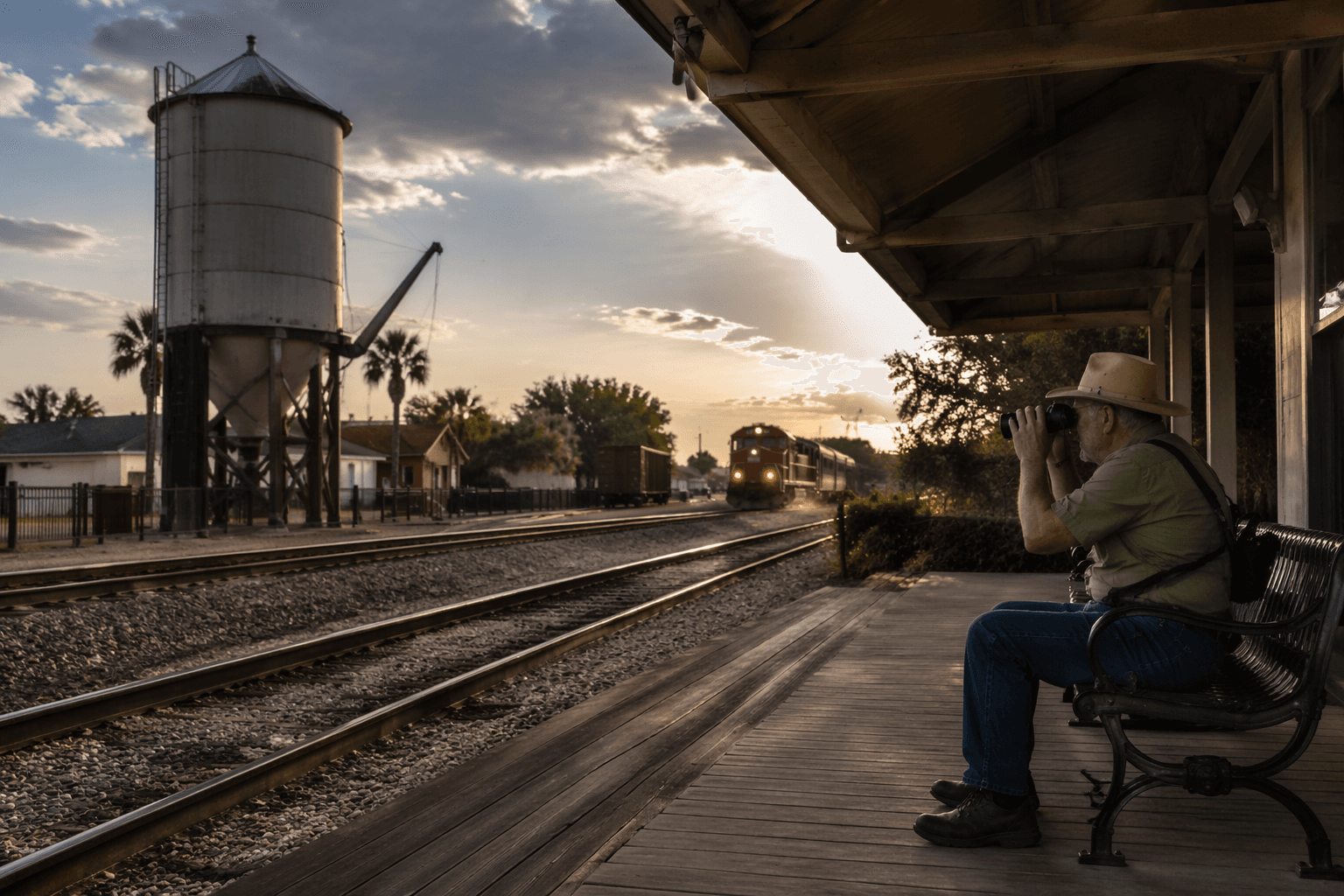
Rodeo gives Hidalgo County something rare: a one-day stop that feels remote, but still has enough texture to fill an afternoon, evening and early morning. The town sits in the San Simon Valley, where New Mexico Tourism says the state line runs right down the middle, and its identity is built from rail history, art, birds and the wide darkness that makes the sky itself part of the attraction.
Railroad roots and the borderlands setting
Rodeo’s place in the county starts with the El Paso and Southwestern Railroad, which ran through Antelope Pass and down to the town, turning Rodeo into an important livestock shipping point. That history still explains why the town sits where it does: in a corridor shaped by movement, freight and the line between New Mexico and Arizona. The roadway tells the same story in a different form. NM-80 runs north about 30 miles to I-10 at Road Forks and southwest about 2 miles to the state line, then continues as AZ-80 to Douglas, Arizona.
That borderland geography gives Rodeo its unusual character. It is close enough to the interstate to reach without a long detour, but far enough off the main flow that the town still feels like a place you arrive at on purpose. The San Simon Valley and the nearby Chiricahua and Peloncillo ranges create a landscape that feels open, but never empty.
What is actually worth stopping for
Rodeo is not a place to rush through. The strongest stop is the town’s arts identity, which New Mexico Tourism describes as an art center that attracts artists from both New Mexico and Arizona. The town has two art galleries, along with the Chiricahua Art Museum, which makes the arts scene more than a roadside claim. It is a real part of the town’s daily life, not a decoration pasted onto the highway map.
A practical visit also includes the small-town businesses that make Rodeo work as a stop. New Mexico Tourism points to a friendly cafe and a tavern that serves meals Wednesday through Saturday, details that matter if you are building a day around the town rather than just passing through it. The community also keeps its civic rhythm with recurring events such as a 4th of July parade, which reinforces that Rodeo is a living place with its own calendar, not just a scenic backdrop.
Birding, hiking and the value of open space
The outdoors piece is as strong as the cultural one. New Mexico Tourism notes that hiking and birding are splendid here, and the surrounding terrain explains why. The Chiricahua Mountains are the largest of Arizona’s Sky Island mountain ranges and the second-highest, according to the U.S. Forest Service, with Engelmann spruce reaching its southernmost limit in North America there. That mix of elevation, habitat and isolation draws wildlife and gives the area a very different feel from the flatter desert around it.
Birding Hotspots places Rodeo in a useful travel corridor for people moving between the interstate and southeastern Arizona. The region functions as a transition zone, and that is part of the appeal. The open valley and mountain edges give birders, hikers and anyone who wants a slower day a landscape with room to breathe, watch and listen.
For a longer outdoor stop, Chiricahua National Monument sits about 45 minutes south of I-10 and offers hiking, camping, wildlife viewing and dark skies. The National Park Service also points visitors toward the rhyolite pinnacles and balanced rocks there, either on foot or by car. That makes Rodeo a practical base for people who want to pair a town stop with a deeper look at the region’s geology and wildlife.
When to go for stargazing
Rodeo’s dark-sky appeal is strongest after sunset, when the remoteness that makes the town feel far from everything becomes the main attraction. New Mexico Tourism points to the state’s dry climate, high elevations, low population density and clear nights as reasons it is ideal for stargazing, and Rodeo fits that profile especially well because the valley is so lightly developed. The surrounding darkness is not an abstract selling point. It is the reason a night outside town feels different from a night in most county seats.
DarkSky International counts more than 270 Dark Sky Places across 22 countries and 6 continents, which places Rodeo’s kind of experience within a larger conservation-minded movement. In practical terms, the best time to look up is after full dark, away from the brighter lights near the town center and well off the highway. A campground near Chiricahua National Monument gives another natural setting for that kind of viewing.
A useful day plan for Rodeo
A simple way to use Rodeo is to treat it as a two-part stop. Spend the daylight hours on the town side first, where the galleries, museum, cafe and tavern show you how the community presents itself today. Then move out toward the valley edges or the monument country for birds, hiking or a longer desert drive before ending the day under the stars.
The route into town matters as much as the destination. The shift from I-10 to NM-80, then into AZ-80, is part of what makes the visit memorable. The road makes the geography legible, and Rodeo is one of the few places in Hidalgo County where railroad history, borderland art, wildlife habitat and night sky all line up in one compact stop.
That combination is why Rodeo stands out. In a county that covers 3,438.6 square miles but had only 3,966 residents estimated in 2024, the town makes use of the space around it rather than fighting it. Rodeo’s remoteness is not a drawback to work around. It is the feature that makes the history, the galleries, the birds and the dark sky feel connected.
This article was produced by Prism’s automated news system from verified source data, official records, and press releases, then run through automated quality and moderation checks before publishing. The system is built and supervised by the people who set the standards it runs under. Read our full AI policy.
Did this article answer your question?