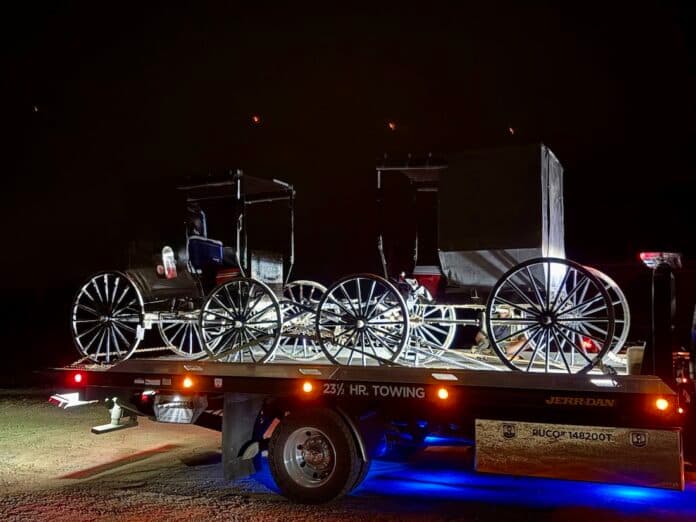
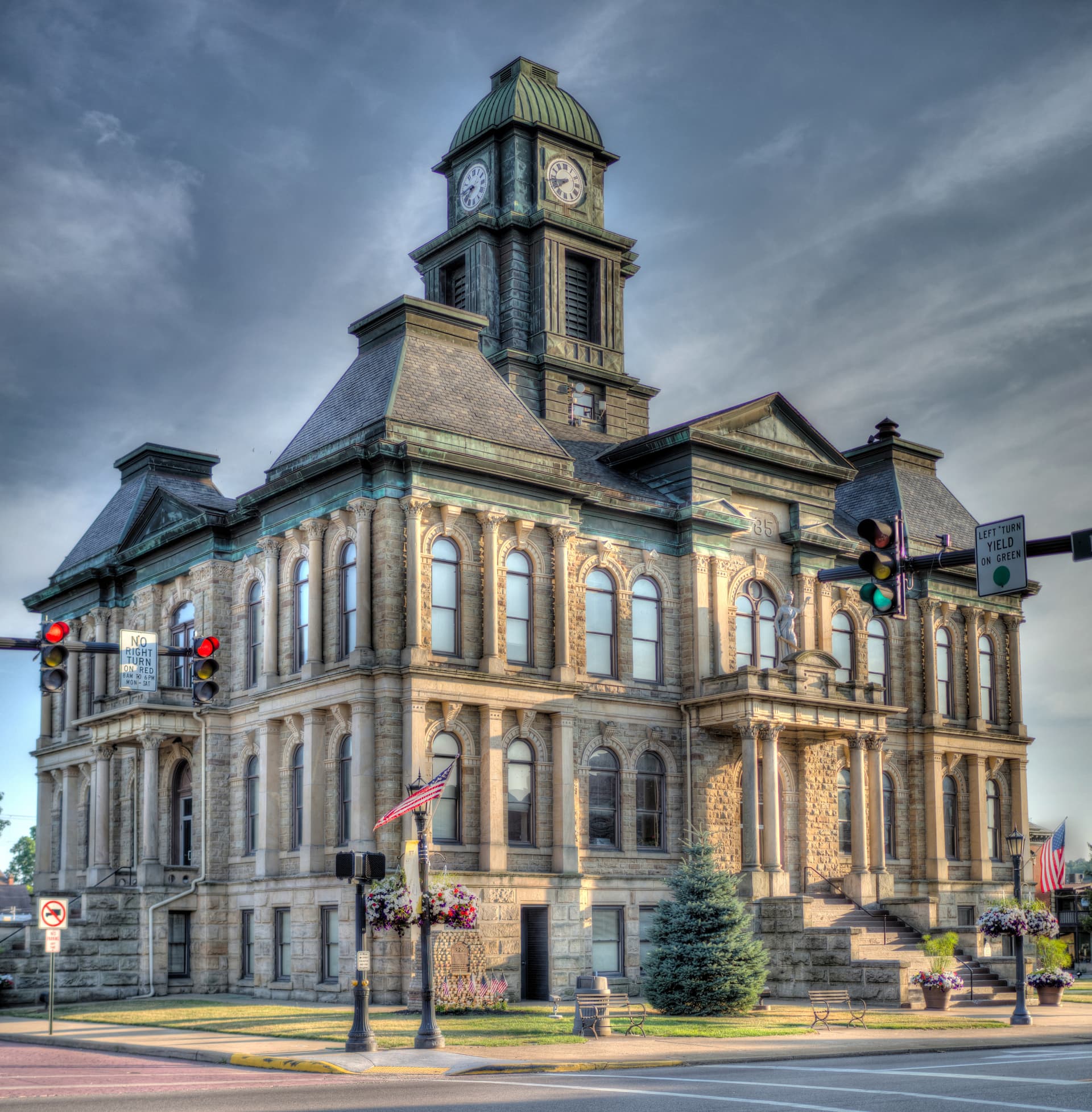
Holmes County Trail blends buggies, bikes and scenic recreation
Holmes County Trail is built for bikes, buggies, horses and walkers, with separate surfaces, posted rules and trailheads that connect village to village.
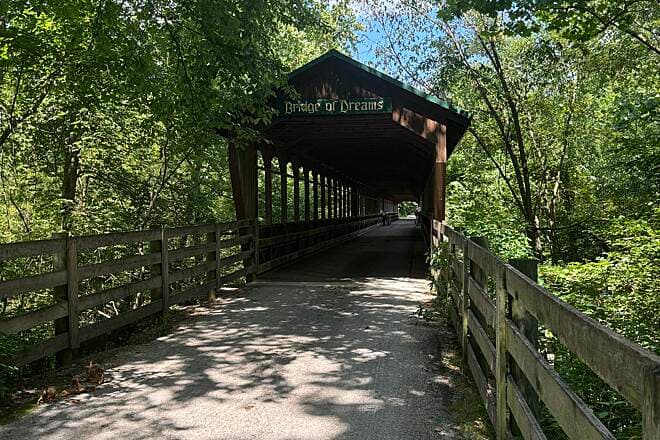
Holmes County Trail is not a standard bike path. Its asphalt lane and adjoining chip-and-seal buggy and equestrian lane let bicycles, pedestrians, runners, roller-bladers, wheelchairs, horseback riders and Amish buggies move through the same corridor without forcing everyone onto the same surface.
A railroad turned into shared-space infrastructure
The trail’s roots go back to the 1969 flood, which ended active railroad use in Holmes County and left a corridor that would eventually be reworked for public travel. In 1996, Dr. Robert A. Hart of Millersburg formed the Holmes County Rails-to-Trails Coalition to pursue what the trail describes as the nation’s first recreation and transportation trail built to accommodate Amish buggies. After the former railroad was purchased in 1998, the coalition says it helped raise well over $15 million in federal, state, local and private grants, along with local contributions and fundraising events, to acquire adjoining land and bring the route into usable condition.
That investment still shows up in the way the trail functions now. The Holmes County Park District describes it as a recreation and transportation route, not just an amenity for cyclists, and its own numbers frame the scale: the corridor is 29 miles long, 22 miles are open, and the district says the system offers more than 26 miles of paved scenic pathways. The difference between those figures reflects the trail’s hybrid role. It is a transportation corridor, a recreation asset and a working piece of local infrastructure all at once.
How the corridor is laid out
The trail is easiest to understand as a series of linked village-to-village segments. Trail maps identify the stretches from Fredericksburg to Holmesville, Holmesville to Millersburg, Millersburg to Killbuck and Killbuck to Glenmont. Another section, Glenmont to Brinkhaven, was paved and opened in 2017, showing that the route has continued to expand and improve rather than remain frozen in a single buildout.
That geography matters because the trail does not cut Holmes County off from itself. It stitches communities together, including Millersburg, Holmesville, Killbuck and Glenmont, while also connecting into the Ohio to Erie Trail system. The trail homepage says Holmes and Knox counties will eventually have more than 50 miles of uninterrupted trail, which gives the corridor a regional function well beyond a single county line.
The design itself explains why the route works for such different users. One lane is asphalt and intended for biking, walking, running, roller-blading and wheelchairs. The adjoining buggy and equestrian lane uses chip-and-seal for horse-drawn vehicles and horseback riding. In practice, that means the trail separates faster, smaller traffic from buggies and horses while still letting all of them share the same overall path.
What you need to know before you go
The trail is open from 5 a.m. to 10 p.m., and its pages stress posted rules and speed limits. That matters because the corridor is not a casual open meadow where everyone simply improvises; it is a shared route where pace and awareness help prevent conflict between bikes, buggies, horses and walkers.
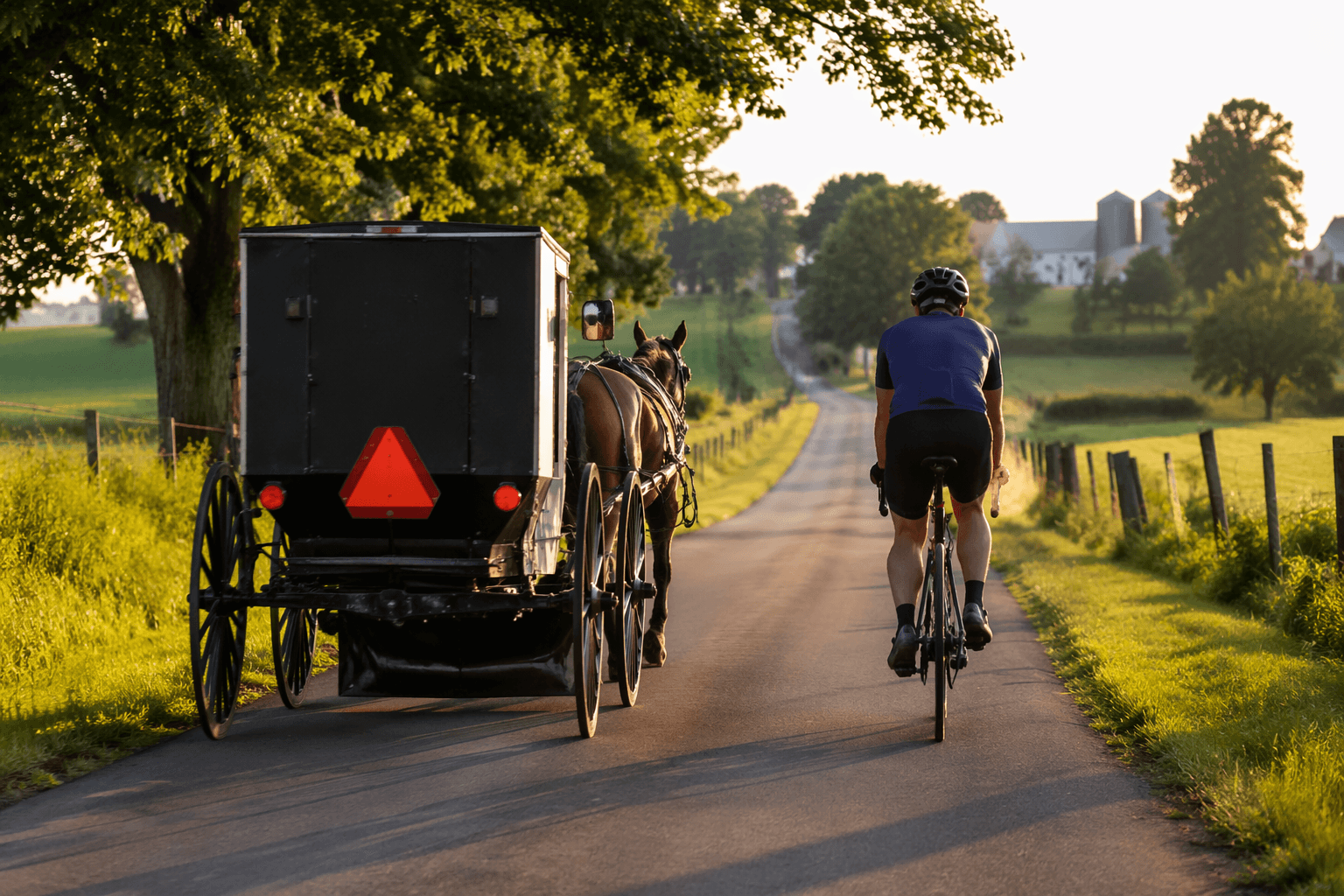
A few practical details make a big difference once you are on the ground:
- Trailhead restrooms are available at the Millersburg Depot, Holmesville, Killbuck and Glenmont.
- The Millersburg Depot serves as a trail and railroad information center.
- Picnic areas are available at the depot, Killbuck and Glenmont.
- A horse watering trough sits beside the trail near the Millersburg Depot, also identified as Hipp Station.
- Special-use permits are available for group night rides or events.
Those amenities show how the trail is managed for daily use rather than one-time sightseeing. The depot functions as an orientation point, the restrooms support longer trips between villages and the horse trough acknowledges that equestrian and buggy traffic is not decorative here. For anyone planning a first trip, the key is to treat the route as mixed-use transportation space, not just a recreation loop.
Why the shared route matters in Holmes County
Holmes County and adjacent counties are home to more than 36,000 Amish citizens, and the region draws millions of visitors each year. That combination makes the trail unusually important. It serves local transportation patterns shaped by horse-drawn travel while also carrying the visitor traffic that comes with Amish Country tourism.
That is why the Holmes County Trail gets described as singular in the national trail landscape. Ohio Magazine reported in 2024 that it is the only companion buggy trail in the United States, and that distinction helps explain why the route draws attention far beyond eastern Ohio. It is built for a cultural landscape where buggies remain a practical mode of travel, not a novelty.
The trail is also still being improved through state transportation projects designed to accommodate multiple users, including horse-and-buggies, bikes, pedestrians and other motorized and non-motorized vehicles. That continuing work matters because the corridor is not finished in the way a suburban bike path is finished. It is evolving to keep pace with traffic patterns, trail demand and the county’s long-term transportation needs.
For Holmes County, the trail’s value lies in that combination of history and function. A former railroad bed became a corridor where asphalt, chip-and-seal, buggies, bicycles and horses all have a place, and the result is a route that still reflects how the county actually moves.
This article was produced by Prism’s automated news system from verified source data, official records, and press releases, then run through automated quality and moderation checks before publishing. The system is built and supervised by the people who set the standards it runs under. Read our full AI policy.
Know something we missed? Have a correction or additional information?
Submit a Tip