Avenue of the Giants offers a scenic tour through old-growth redwoods
If you have an hour south of Eureka, the Avenue of the Giants is worth the turn off 101 for old-growth stops, Eel River access and a 32-mile auto tour through redwoods.
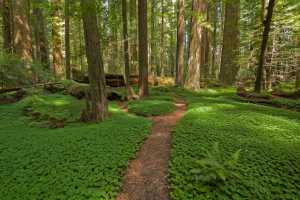
The Avenue of the Giants is worth leaving Highway 101 only when you have time to stop, because it is built as a 32-mile, 8-stop auto tour through the heart of Humboldt Redwoods State Park. In southern Humboldt County, the corridor threads past Weott, Redcrest, Myers Flat and Phillipsville, opens toward the Eel River, and crosses a 53,000-acre forest that includes about 17,000 acres of old-growth redwood forest. If you treat it like a quick bypass, you miss most of what makes it matter.
Why the detour pays off
California State Parks describes Humboldt Redwoods State Park as one of the largest remaining contiguous stands of ancient coast redwoods, with 50 miles of roads and 60 miles of trails spread across the park. That scale is the reason the Avenue feels different from a standard scenic pullout on 101: it is not a roadside glimpse, but a route that lets you move from highway speed into a layered forest landscape where river access, picnic areas and trailheads sit close together.
The park also sits in a useful geographic middle. It is about 40 miles south of Eureka, eight miles north of Garberville and 240 miles north of San Francisco, which helps explain why the Avenue works best as a deliberate stop rather than a spur-of-the-moment detour. Once you turn in, the road is doing more than offering views. It is giving you access to the redwood canopy, the Eel River corridor and a cluster of small communities that anchor the drive.
How much time to give it
If you only have an hour, the smartest move is the core 32-mile drive with a stop at the visitor center and the Gould Grove Nature Trail. That stop delivers the fastest payoff because State Parks says visitors can see 300-foot-tall redwoods there without committing to a long hike. It is the right version of the Avenue when you want the forest experience without turning your whole day around.
If you have half a day, add Founders Grove and the Dyerville Giant. State Parks marks the self-guided Founders Grove Nature Loop at 0.6 miles and about 30 minutes, which makes it one of the easiest meaningful walks in the park for mixed-age groups or anyone who wants to stretch their legs without planning a major hike. The Dyerville Giant, a 362-foot redwood that fell in 1991, adds a different kind of scale, because the tree now stays in the forest as habitat and nourishment rather than as a standing landmark.
If you have a full day, the route opens up further to the California Federation of Women’s Clubs Hearthstone, Founders Grove and Rockefeller Forest. That combination is where the Avenue stops being a quick scenic drive and starts feeling like a concentrated cross-section of Humboldt County, with history, ecology and walkable stops all folded into one corridor.
The stops that earn the parking space
The most efficient stop for first-time visitors is the visitor center area, because it gives you orientation before you commit to walking. From there, Gould Grove is the best quick introduction if you want the towering redwoods without losing time to logistics.

Founders Grove is the better stop when the goal is to actually get out of the car and feel the forest floor. The 0.6-mile Nature Loop is short enough for families, but the setting still gives you the old-growth density that makes this route memorable. Pairing it with the Dyerville Giant turns the stop into a lesson in scale, from living giants to a fallen trunk that still feeds the ecosystem.
The California Federation of Women’s Clubs Hearthstone gives the route a different texture. Designed by architect Julia Morgan, it adds built heritage to a drive many people think of only in terms of trees, and it is one of the clearest reminders that the Avenue is a cultural landscape as much as a natural one.
What the road looks like when you slow down
The corridor is at its best when you let it become a day in the Eel River towns, not just a pass-through between trailheads. Weott, Redcrest, Myers Flat and Phillipsville are part of the route’s character, and the park’s picnic areas and access points make it easy to break the drive into small pieces instead of one continuous ribbon of pavement. That matters because the Avenue’s appeal is cumulative: one stop is pleasant, but several stops show how close the river, the forest and the small communities are to one another.
Rockefeller Forest is the stop that makes the scale of the old-growth story hard to ignore. California State Parks identifies it as part of one of the largest remaining old-growth redwood expanses on the planet, which is why a full-day itinerary feels more like a field trip through a major natural preserve than a simple back-road drive. The farther you get from 101, the more the Avenue becomes a place where the forest sets the pace.

The history that changes the drive
The road also carries a difficult past. In the early 1900s, loggers were cutting ancient redwoods for grape stakes and shingles, a reminder that what now looks protected and inevitable was once being chopped down for everyday industrial use. Humboldt Redwoods State Park began in 1921 with the Bolling Memorial Grove, and the Save the Redwoods League grew that first acquisition into a much larger preservation effort by raising money to expand the park.
The Native history runs deeper still. The Sinkyone people lived in what is now Humboldt Redwoods State Park for thousands of years before European contact, and many tribal members still live in the local area. That context changes the way the Avenue reads on the ground: it is not just a scenic route through a famous forest, but a landscape shaped by long occupation, dispossession, conservation and public access.
Season also matters. Seasonal footbridges are installed at several backcountry access points and typically remain in place from mid-June through September, which gives the park a different rhythm in summer and explains why some trail connections feel more open at certain times of year. For anyone deciding whether to leave 101, that is the real measure of the Avenue: it rewards the driver who is willing to slow down, stop often and treat the redwoods as the destination.
This article was produced by Prism’s automated news system from verified source data, official records, and press releases, then run through automated quality and moderation checks before publishing. The system is built and supervised by the people who set the standards it runs under. Read our full AI policy.
Did this article answer your question?