Humboldt Room preserves county history, family records and local memory
The Humboldt Room gives residents a free place to trace surnames, map old homes and recover local records before they vanish into private closets and file boxes.

On the second floor of Eureka Main Library, the Humboldt Room serves as Humboldt County’s local-history archive for families tracing estates, addresses and records lost to time. Its shelves and files hold cemetery records, census and tax rolls, yearbooks, historic maps, obituary help and county-specific collections that let residents trace people, places and neighborhoods in one place.
What the Humboldt Room holds
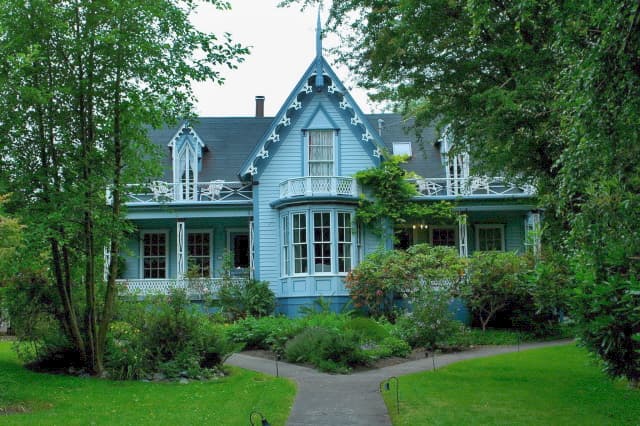
The Humboldt Room is a local history collection built for anyone researching Humboldt County and the surrounding area. Its holdings go well beyond a general history shelf. They include a California Indian Collection, cemetery records, census and tax rolls, historical maps, high school yearbooks, the Humboldtiana memorabilia collection, and the inventory of historical homes assembled by the Eureka Heritage Society.
One of the most useful surname tools is the Ancestral Quest Data File, which contains more than 100,000 entries and was created and periodically updated by Larry Allen. The room also works with the Vellutini Collection, Steenfott Photographs, Shades of Humboldt Historical Photographs, a local history research service and an obituary search service. The Humboldt County Historical Society’s Humboldt Historian is indexed there as well, and older issues can be searched through the California State Library information file.
It can help a renter identify the former owners of a house, a descendant verify a family line, or a reporter pull background on a small community that never made it into a neatly digitized online archive.
How to use it for family history, property research and local records
The best way to begin is with names, dates and places you already know. Bring an ancestor’s full name, a birth or death year, a neighborhood address, a school name or a cemetery clue, then ask a reference librarian or Humboldt Room docent to point you toward the right collection. Local residents can get free help in person at the Main Library, while out-of-county researchers can request a staff search for a fee.
- For family history, start with the Ancestral Quest Data File, obituary help and the cemetery records.
- For a house history, use the inventory of historical homes, historical maps and the local history research service.
- For school memories, high school yearbooks often provide names, faces and class years that are hard to recover elsewhere.
- For Indigenous, settlement and county-development history, the California Indian Collection and the Susie Baker Fountain Papers are essential starting points.
Out-of-county local-history requests currently cost $10 per request, and requests are filled in the order received. The obituary search service is separate: local residents can visit the Main Library for free help, while out-of-county residents can mail in a request.

The Susie Baker Fountain Papers add depth you cannot get from a search engine
The Susie Baker Fountain Papers are among the room’s richest historical holdings. Fountain was Humboldt State University’s first graduate in 1915, and she built a chronicle-and-clippings file that follows Humboldt County and Del Norte County history from about 1850 to 1966. The collection is especially strong on early settlement, Indian-white interactions, military history, real estate, the lumber and railroad industries, families and individuals, small communities and mining history.
A second set of the collection is housed at the Humboldt County Library and exists on microfilm.
Maps and photographs show the county changing block by block
The Humboldt County Collection map holdings are stored in six 5-drawer map filing cases, focused on Northwestern California. The collection was expanded with an additional map case funded by a National Endowment for the Humanities preservation grant in 2006. The maps were further inventoried and processed in 2011.
For residents trying to research a property or an old street pattern, those maps help show how Eureka, waterfront land, rural roads and neighborhood boundaries changed over time. Related map sets include Eureka Survey from 1884, Eureka Waterfront, Sanborn Eureka maps and other Northwestern California materials that can help place a building or parcel in its historical setting.
The room also gives access to major local photographic collections. The Peter E. Palmquist Working Photograph Collection contains about 5,000 images, and roughly 3,700 can be viewed in the Humboldt Room. That makes it possible to see streets, houses, storefronts and landscapes as they were captured in earlier decades, which is often the fastest way to identify a place or confirm a visual memory.
Why the room matters in Humboldt County’s library system
The Humboldt Room sits inside a county library system with unusually deep roots. Eureka became the first city in California to support a free public library with public funds in 1878, and Arcata was also tax-supported that same year. Humboldt County established its free library system in 1915 to serve people outside Eureka, Ferndale and Arcata.
Today, the Humboldt County Library system includes a main library, ten branch libraries and a bookmobile, serving a largely rural county across the Northern California coast and mountains. The branches reach Arcata, Blue Lake, Ferndale, Fortuna, Garberville, Hoopa, McKinleyville, Rio Dell, Trinidad and Willow Creek, while the Eureka Main Library remains the county’s central archive and service hub.
The main library itself opened in 1995 in a redwood-inspired waterfront building, and the Friends of the Redwood Libraries’ Serendipity Book Store sits on the second floor.
This article was produced by Prism’s automated news system from verified source data, official records, and press releases, then run through automated quality and moderation checks before publishing. The system is built and supervised by the people who set the standards it runs under. Read our full AI policy.
Did this article answer your question?