Humboldt radio club to showcase emergency communications at Field Day
Humboldt ham operators used Field Day at Woodley Island Marina to show how radio can keep emergency traffic moving when cell networks fail.
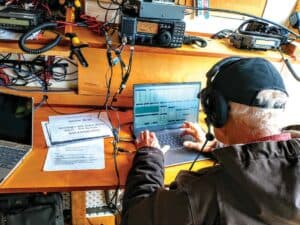
At Woodley Island Marina in Eureka, Humboldt Amateur Radio Club operators spent June 27-28 demonstrating how a radio network can keep messages moving when cell service goes down. The public was invited Saturday, June 27, from 9 a.m. to 4 p.m. at 601 Startare Dr. to see the setup in action.
The club’s Field Day appearance gave the county a public look at a backup communications system built on volunteers, not towers. The Humboldt Amateur Radio Club says it serves Eureka and all of Humboldt County, and it describes itself as the original ham club in the area. Club records place its local roots in 1947, just after World War II, and show that it joined the American Radio Relay League in 1951 under the call sign W6ZZK.

Field Day itself is designed as more than a club gathering. The American Radio Relay League says the annual event is ham radio’s open house and a demonstration of emergency communications readiness, with groups using it to practice operating when normal systems fail. The 2026 exercise ran from June 27 to June 28, always on the fourth full weekend in June, beginning at 1800 UTC Saturday and ending at 2059 UTC Sunday. ARRL says more than 30,000 amateur radio operators typically take part across the United States and Canada.
In Humboldt County, that drill has a practical edge. Remote terrain, weather, wildfire risk, road closures and outages can all complicate communications on the North Coast, making a spare channel for messages more than a novelty. The club says its Humboldt Auxiliary Communications Team is a volunteer unit of the Humboldt County Sheriff’s Office of Emergency Services, made up of hams who serve the community through amateur radio and join local and regional exercises.

The Field Day display at Woodley Island Marina also worked as a recruitment and training table for the next generation of operators. It showed how a hobby can double as a civic tool, keeping older skills alive while giving newcomers a hands-on look at how Humboldt could stay connected when regular networks go dark.
This article was produced by Prism’s automated news system from verified source data, official records, and press releases, then run through automated quality and moderation checks before publishing. The system is built and supervised by the people who set the standards it runs under. Read our full AI policy.
Did this article answer your question?