Local students lead conservation talk, saving the sunflower seastar
Cal Poly Humboldt students and faculty are presenting a Sequoia Park Zoo lecture tonight on efforts to conserve the sunflower seastar, a species that has experienced severe regional declines. The in person event at the Flamingo Room in Eureka also streams on Zoom, offering residents an opportunity to learn about local research, ask questions, and connect with ongoing restoration work.

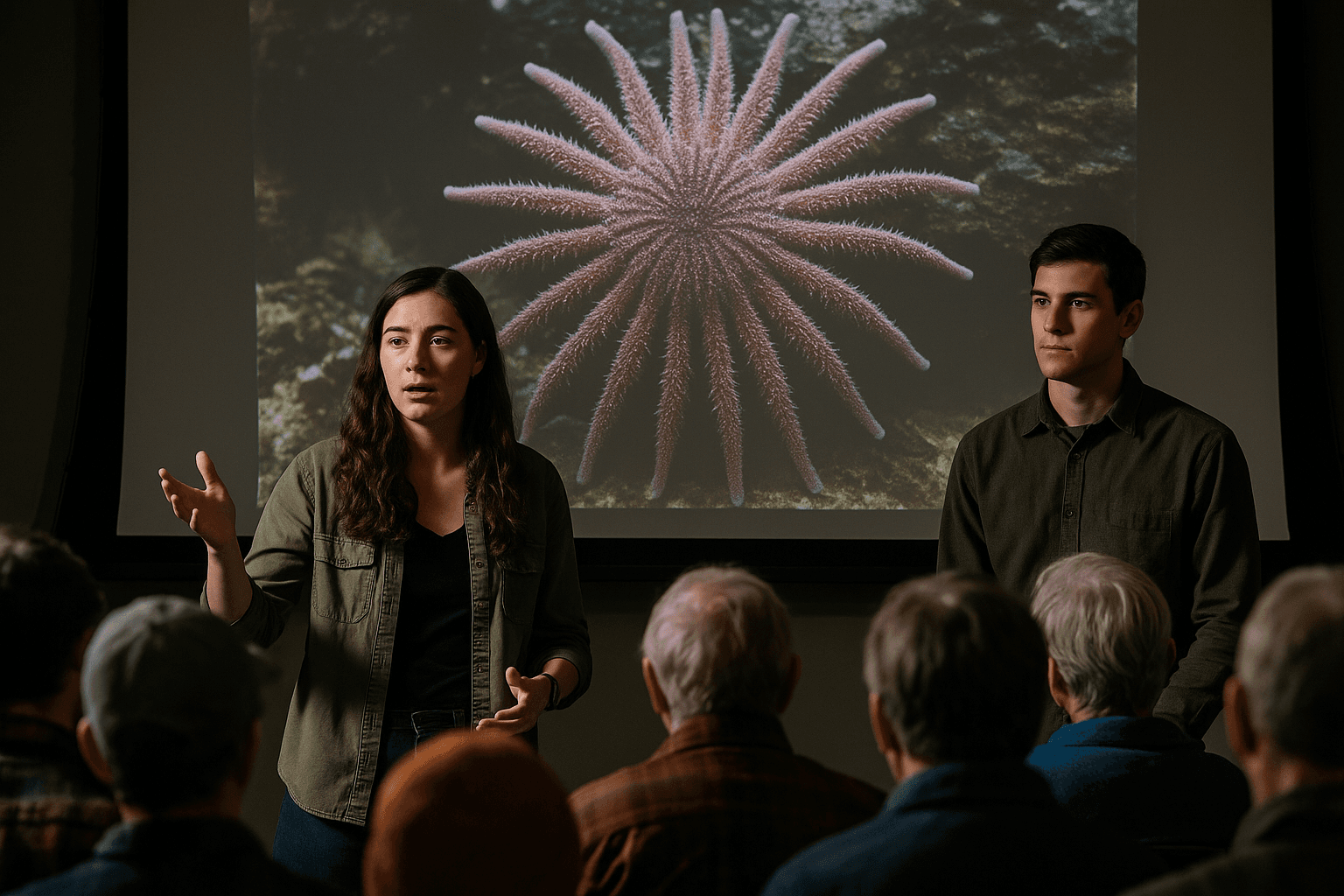
Tonight the Sequoia Park Zoo hosts a conservation lecture titled Saving the sunflower seastar, Students making waves in conservation, presented by David Sinn, Rafael Cuevas Uribe, and Sean Craig from Cal Poly Humboldt’s Departments of Wildlife and Fisheries. The program begins at 7:00 PM with refreshments and a zoo update slideshow at 6:45 PM in the Flamingo Room at 3414 W Street in Eureka. In person attendees are asked to enter through Gate C and the lecture is also available virtually through a Zoom link posted on the zoo website today. Attendees are encouraged to ask questions following the presentation.
The sunflower seastar has become a focal species for coastal conservation because dramatic declines in recent years altered nearshore ecosystems and prompted research into disease dynamics and recovery strategies. The student led presentation aims to summarize field and laboratory work underway at Cal Poly Humboldt, explain how local monitoring contributes to larger regional datasets, and outline community actions that can support recovery efforts.
For Humboldt County residents the talk offers concrete benefits. Local scientists and students will explain how changes in seastar populations can cascade through kelp forest and intertidal food webs, affecting species that matter to recreational users and small scale fisheries. The event creates a direct channel for residents to learn about volunteer monitoring, sampling protocols, and how local observations can feed into policy discussions and restoration priorities.
Making the lecture available both in person and online broadens access for schools, fisheries stakeholders, and residents who cannot travel. The zoo update preceding the talk will provide current information about zoo programs and recent local research collaborations. By highlighting student research and community science, the event underscores how university expertise and public participation can shape long term conservation outcomes for species important to Humboldt County’s coastal ecosystems.
This article was produced by Prism’s automated news system from verified source data, official records, and press releases, then run through automated quality and moderation checks before publishing. The system is built and supervised by the people who set the standards it runs under. Read our full AI policy.
Did this article answer your question?