Playhouse Arts asks Arcata residents to imagine park sounds
Playhouse Arts is turning Arcata’s parks into a public sound map, asking residents to help define what should be heard, protected, and preserved.
Arcata’s parks are getting a new kind of attention
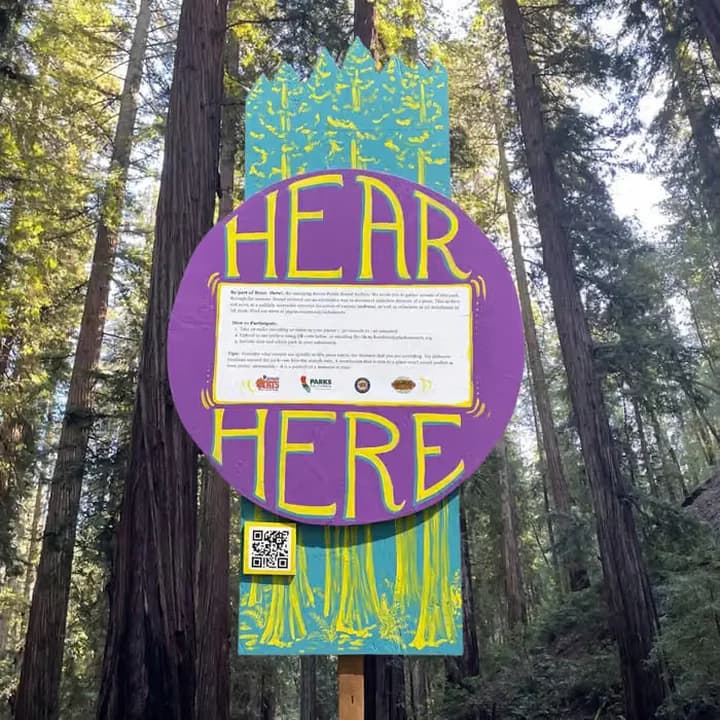
Playhouse Arts is asking Arcata residents to think about something most people tune out: what the city’s parks actually sound like, and what those sounds should become as the city grows. The project gathers recordings from Greenview Playground, Stewart Park, Redwood Park, Larson Park, and the Arcata Marsh for an emerging Arcata Public Sound Archive that will culminate in an installation in fall 2026.
That makes this more than a creative exercise. It is a civic invitation to decide what kind of public space Arcata wants to preserve, from the everyday sounds of foot traffic, children, birds, and wind to the quieter atmosphere people may be trying to hold onto as development pressure, weather shifts, and changing park use reshape the city.
What the project asks people to do
Playhouse Arts says the archive can be built with any device, including a phone, which lowers the barrier for participation and opens the door to a much wider range of voices. Contributors are asked to include the date and park location with each recording so the archive can capture a specific place at a specific moment, not just a general impression of “Arcata park sounds.”
That detail matters because the project is trying to build a living record across seasons. A playground at Greenview sounds different on a weekday morning than an evening at Redwood Park, and the marsh will not sound the same in winter as it does in summer. By collecting those moments, Playhouse Arts is treating sound as part of local memory, not background noise.
The organization describes sound archives as a way to document collective memory and points to the World Soundscape Project and Cities and Memory as precedents. In Arcata, that approach gives residents a tool to preserve the everyday audio texture of parks before it is lost, changed, or overlooked.
Why the sound of parks is a community issue
The project sits squarely inside Playhouse Arts’ Outside Art effort, which is designed to draw people to parks around Arcata they may not normally visit. That includes smaller or less-trafficked places that can easily disappear from public conversation even though they are part of the city’s shared landscape.
In a place like Arcata, that is not a minor aesthetic question. Parks are where residents exercise, gather, rest, celebrate, and encounter wildlife, and the sounds that fill those spaces help define who feels welcome there and what uses are prioritized. A park that is lively with recreation, for example, can feel very different from one that is valued for quiet, reflection, or habitat protection.
This is where the project’s civic stakes become clear. By asking residents to listen carefully and contribute recordings, Playhouse Arts is also asking them to weigh competing visions of public space: active versus quiet, human-centered versus habitat-centered, neighborhood refuge versus citywide destination.
The archive is also about equity and access
Arcata’s parks system gives this project unusual scale. According to the city’s Parks and Recreation Element, Arcata owns and maintains more than 3,744 acres of parkland at 41 sites. The city also says it has numerous parks, playgrounds, and sports fields, which helps explain why a sound project in parks is not decorative window dressing but a reflection of a major public asset.
That scale also makes access an equity issue. Some neighborhoods sit closer to heavily used parks, while others may be farther from the spaces that get the most attention. By directing people toward parks they may not normally visit, the Outside Art effort pushes against the tendency for a few well-known places to dominate the city’s sense of itself.

The first round of sites, which includes Greenview Playground, Stewart Park, Redwood Park, Larson Park, and the Arcata Marsh, gives the project a cross-section of Arcata’s park identity. It reaches from a playground to a major community park and out to a marsh setting, suggesting that the archive is meant to represent more than one version of public life in the city.
Arcata’s arts policy helps explain why this project fits here
The city’s Strategic Arts Plan, adopted by the Arcata City Council on November 17, 2021, expanded and formalized support for Arcata’s arts and artists. One of its stated goals is to increase public arts equitably throughout Arcata, and it also acknowledges a more formalized relationship between the city and Playhouse Arts as Arcata’s Local Arts Agency.
That policy framework matters because it places the sound archive inside a longer public process rather than a one-off art event. The city is not only allowing arts in public space, it is using arts to help shape how that space is understood and shared.
In that sense, the archive is as much about governance as it is about creativity. It asks who gets to define the character of a park, whose routines count as part of city life, and whether public art can help communities document what they value before change outpaces memory.
Redwood Park shows how park identity evolves
The project also arrives alongside visible change in Arcata’s park system. The city says Redwood Park is its premier community park in the redwood forest, and renovation work on the playground was completed this spring.
That renovation gives the sound project a timely backdrop. As parks are refreshed, repaired, or reimagined, the sensory experience of those places changes too. New playground equipment, shifting visitor patterns, and updated landscaping all influence how a space feels and sounds to the people who use it.
For Arcata residents, that makes the archive more than a record of ambience. It is a snapshot of a city deciding what kind of public life it wants to amplify. If the recordings capture the park system at this moment, they may later serve as a reminder of what was audible, shared, and worth protecting before the city’s soundscape moved on.
A collective record of Arcata’s public life
The Arcata Public Sound Archive is still emerging, but its purpose is already clear. It is meant to gather park soundscapes through the seasons, create a publicly accessible resource for artists, and culminate in an installation in fall 2026.
That combination of public participation, citywide reach, and artistic purpose makes the project unusually revealing. It is not simply asking people to listen differently. It is asking them to help define what Arcata’s parks are for, who they serve, and how the city’s open spaces should sound as its future takes shape.
This article was produced by Prism’s automated news system from verified source data, official records, and press releases, then run through automated quality and moderation checks before publishing. The system is built and supervised by the people who set the standards it runs under. Read our full AI policy.
Did this article answer your question?