Yurok Tribe says spring condor checks show flock in good health
Spring health checks found Yurok-area condors in good shape, with no birds needing lead treatment after a season that still produced one failed nest.
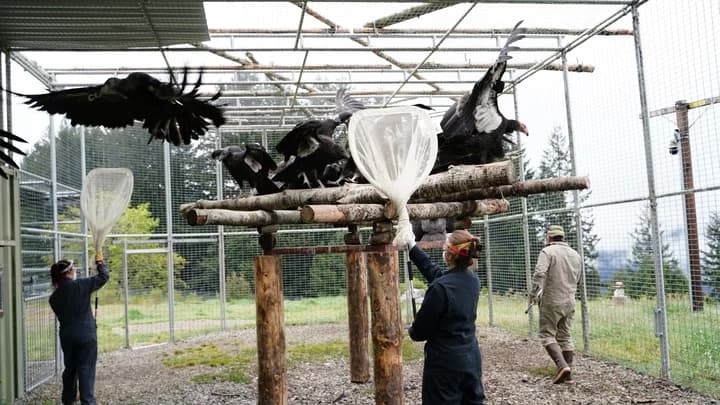
Free-flying California condors over Yurok ancestral territory came through their spring health checks in good shape, and none of the birds needed treatment for lead exposure. For a species still fighting for every breeding adult, that is more than a routine checkup. It is a measurable sign that the Northern California flock is holding its ground.
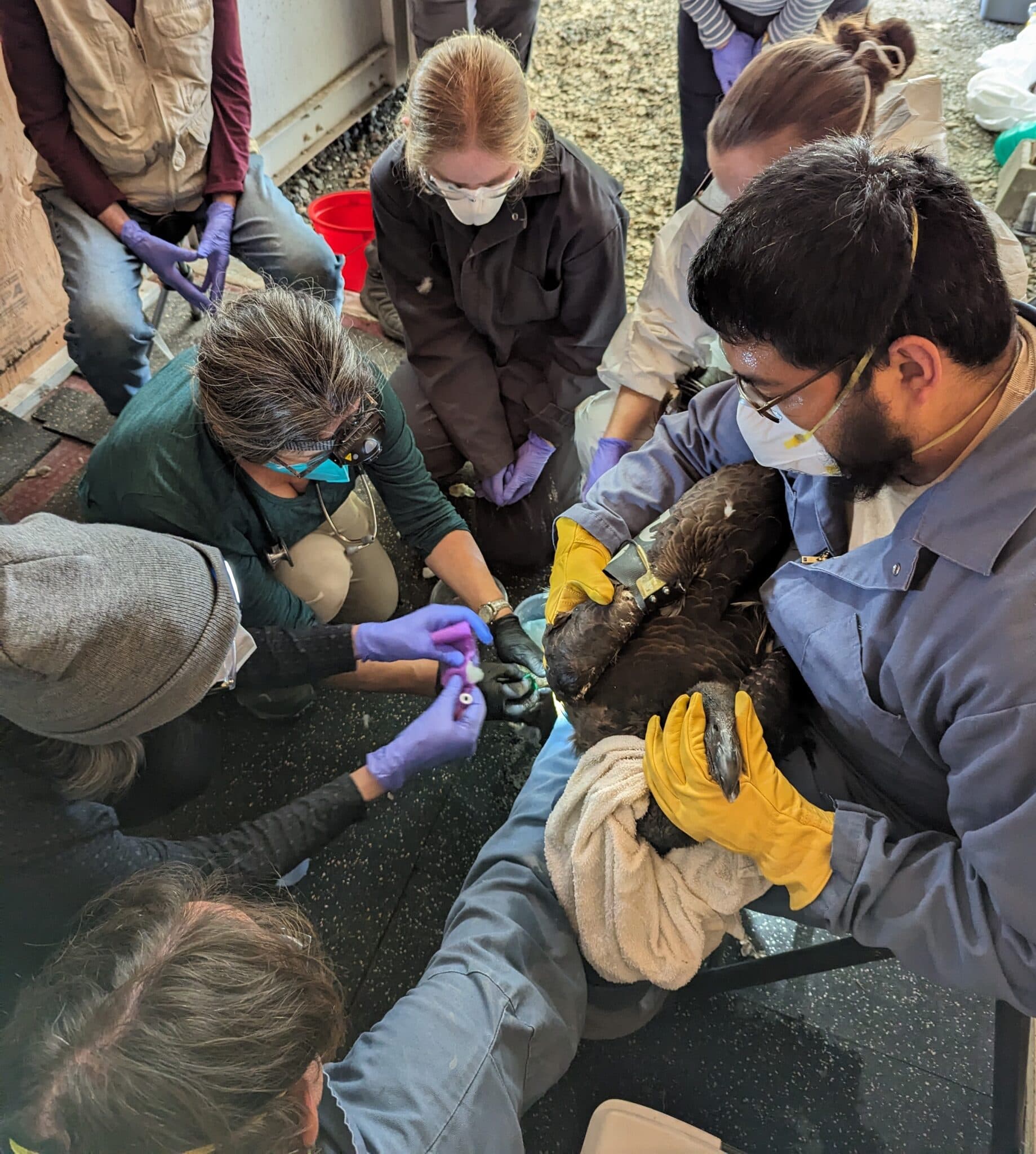
The Yurok Tribe said all of the condors that range over the region appeared healthy during the annual exams. Blood lead levels were low overall, and only one bird showed a slightly elevated reading that suggested some exposure but not enough to require intervention. That result matters in Humboldt County, where condors soaring over the redwoods and coastal hills are not just a conservation symbol but part of a long, tribe-led recovery effort on the North Coast.

The spring results also stand in sharp contrast to a lead scare the tribe reported in October 2023, when five of eight free-flying condors had concerning lead levels after feeding on a poacher-killed elk in the Bald Hills of Humboldt County. One young condor, A6, received chelation treatment and was released after 22 days in care. Against that backdrop, the latest checks suggest the birds have made it through another season without a major lead incident.
Lead remains the biggest threat to wild condors. The U.S. Fish and Wildlife Service says spent ammunition is the primary cause of death in wild California condors and the largest obstacle to building a self-sustaining population. From 1992 through 2025, the agency recorded 161 confirmed wild deaths from lead poisoning. The federal recovery plan calls for two wild, geographically distinct self-sustaining populations of at least 150 birds each, plus a third captive population.
The Yurok Tribe, Redwood National and State Parks, and the U.S. Fish and Wildlife Service are partners in the Northern California Condor Restoration Program, one of the tribe’s flagship conservation efforts. The program has active release sites in California, Arizona, and Baja California, Mexico, but the North Coast flock carries special weight because these birds were among the first reintroduced to Northern California and have been free-flying since 2022.

The birds’ breeding season offered another sign of progress, even if the outcome was mixed. A0, Ney-gem' 'Ne-chween-kah, and A1, Hlow Hoo-let, were the first pair in the flock to nest this spring. Tribal staff first noticed nesting behavior in early February in a cavity of an old-growth redwood in the Redwood Creek drainage. The egg later was found not to be viable, but even that failed attempt gives biologists a clearer look at how the pair is adapting in Yurok Country. For a population this small, every nest attempt helps show whether the recovery effort is moving toward something durable.
This article was produced by Prism’s automated news system from verified source data, official records, and press releases, then run through automated quality and moderation checks before publishing. The system is built and supervised by the people who set the standards it runs under. Read our full AI policy.
Did this article answer your question?