DNR Secures 73,000-Acre Conservation Easement Protecting Michigamme Highlands
DNR's $20M conservation deal locks in permanent public access to 114 square miles of Michigamme Highlands for hunting, fishing, ORV riding, and camping.
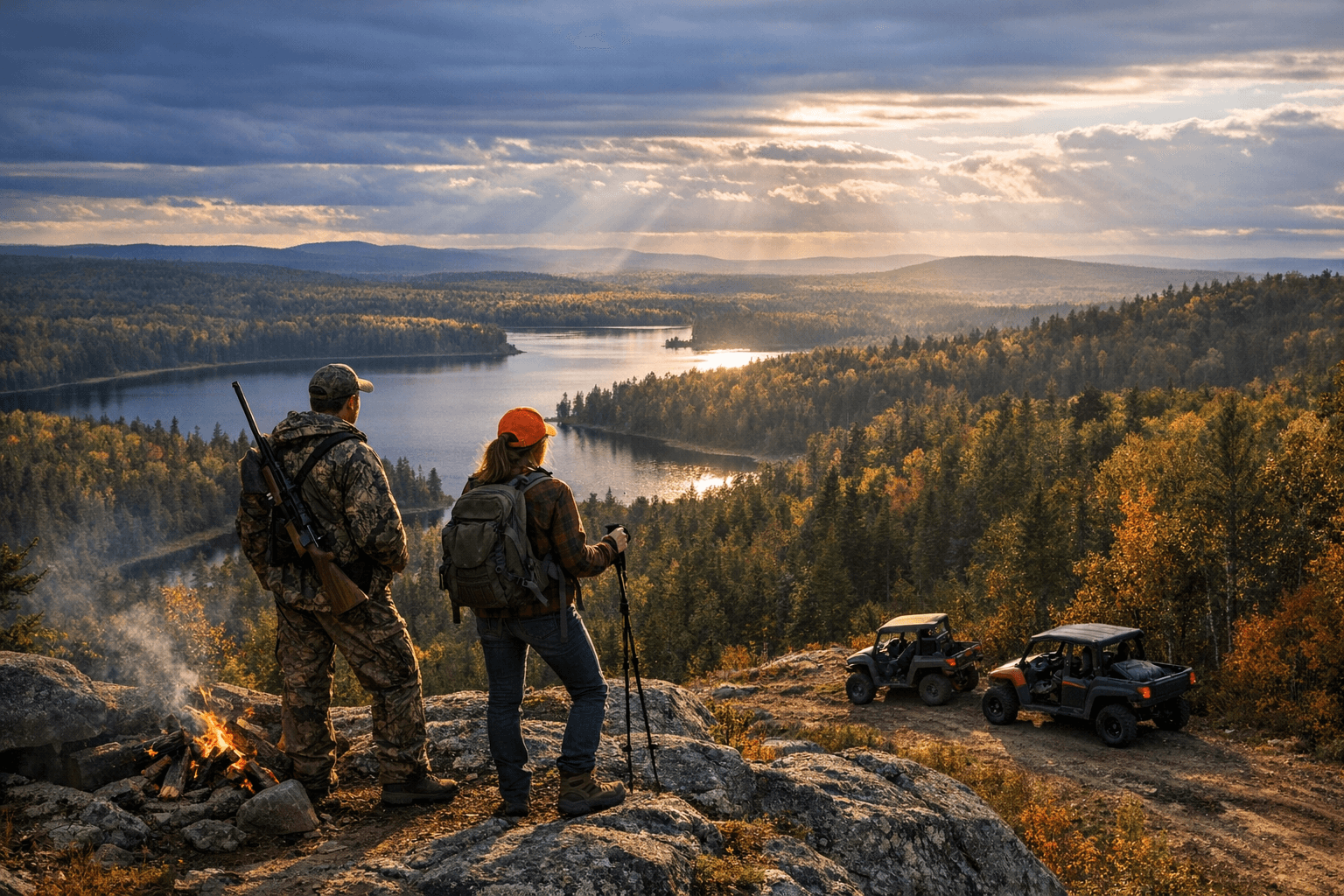
The Michigan DNR closed last Thursday on a $20 million conservation easement locking in permanent public access to 73,000 acres of the Michigamme Highlands, a deal that guarantees Iron County hunters, anglers, snowmobilers, and ATV riders cannot be priced or parceled out of some of the Upper Peninsula's most productive wildland. At 114 square miles, the protected footprint is nearly identical in size to Pictured Rocks National Lakeshore, and it stretches across portions of Iron, Baraga, and Marquette counties.
The easement, signed with Lyme Great Lakes Timberlands, unlocks a specific menu of uses: hunting, fishing, hiking, kayaking, biking, cross-country skiing, camping, snowmobiling on designated routes, and off-road vehicle use on designated trails. The motorized network inside the easement includes 77 miles of roads and trails open to snowmobiles and 70 miles of designated ORV routes. Those corridors connect into Iron County's existing state forest trail grid, meaning riders based in Iron River, Caspian, and Crystal Falls gain a seamless extension of terrain heading northeast into the highlands via the M-95 corridor and state forest roads branching into the easement's interior. The property borders 70 miles of existing state and federal lands, including the McCormick Wilderness and Craig Lake State Park, creating one of the most contiguous blocks of accessible public land in the western U.P.
The terrain the easement protects is not generic U.P. forestland. Within the 73,000 acres sit 37 miles of rivers, 220 miles of perennial streams, 96 lakes and ponds, more than 13,600 acres of wetlands, over 4,800 acres of white-tailed deer wintering habitat, and cold trout waters that feed watersheds directly relevant to Iron County fishing. Moose, brook trout, and several federal and state-listed threatened or endangered species depend on the landscape. The easement also preserves public access to Mt. Arvon, at 1,979 feet the highest natural point in Michigan.
Kerry Heckman, forest land administrator for the DNR's Forest Resources Division, described the deal as protecting "some of the most important forest land in the Great Lakes region." The DNR framed the transaction as a working-forest model: Lyme Great Lakes Timberlands, part of The Lyme Timber Company, retains private ownership and continues sustainable timber harvest, while the DNR holds easement rights and monitors compliance to protect named special features, wildlife habitat, and recreation access. The arrangement is designed to keep working forests economically productive without sacrificing the public uses that outdoor recreation businesses and individual residents in Iron County depend on.
The entire $20 million was assembled without state general fund dollars, drawn instead from the federal Forest Legacy Program, which contributed more than $15 million, along with the Natural Resources Trust Fund, the Life Time Foundation, and Walmart's Acres for America program through the National Fish and Wildlife Foundation. That financing structure means the deal was built on conservation grants and private donations, not taxpayer appropriations.
For Iron County's economy, the binding access guarantee strengthens the case for continued investment in guiding operations, lodging, and outdoor retail, all of which depend on the assumption that the forests northeast of Crystal Falls will remain open to the public. That assumption is now written into a permanent legal instrument.
Sources:
Know something we missed? Have a correction or additional information?
Submit a Tip