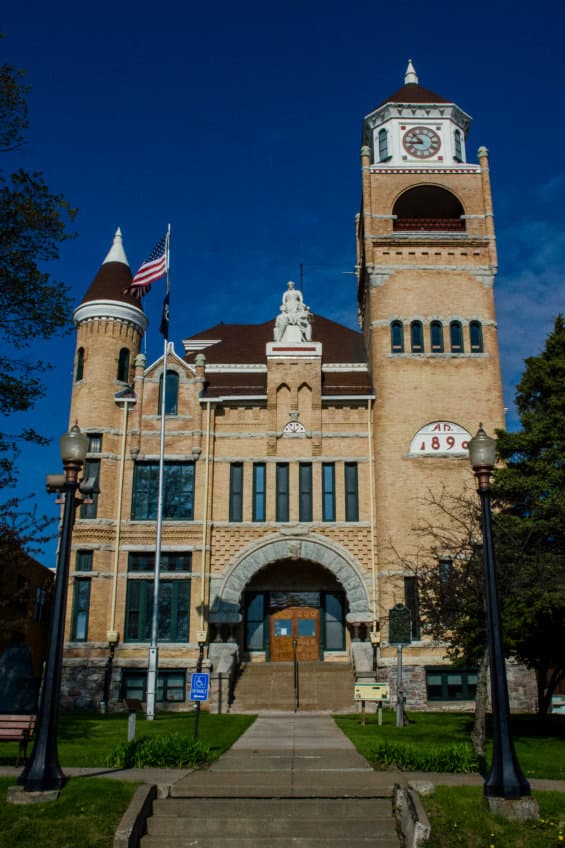
Iron County plat books and maps help residents read land parcels
Iron County’s plat books and tax maps show parcel lines, owner names, and county offices, turning land questions into everyday answers.

If you are trying to figure out where a lot ends, who owns the woods next door, or whether a hunting parcel reaches the creek, Iron County’s plat books and tax maps put those answers in one place. In a county shaped by lakes, forest, and scattered townships, that kind of paper trail is not abstract paperwork. It is the quickest way to read the land before you buy, build, inherit, or head into the woods.
What the plat book puts on the page
Iron County’s current plat-book line is built for people who need to “get the map” and “know the land.” The county’s 2024 edition costs $40, with an added $8 shipping fee if you want it mailed, and the materials can also be picked up at the clerk’s office. Directories are free for pickup while supplies last, which makes them one of the simplest entry points for anyone trying to understand a parcel without starting from scratch.
The books are not just pretty atlases. Iron County says they include owner names, parcel boundaries, acreage, town-and-range information, a county index map, a general highway map, and an index to owners. A 2024 county flyer adds that the books are especially useful for researching people or property outside urban areas because they identify property owners and show building locations. That matters in a county where a parcel may sit between a lake edge, a forest road, and a township line with little else to orient you.
The 2026 Iron County land atlas and plat book goes further, listing parcel boundaries, acreage data, ownership information, roadways, waterways, railways, and facing-page 3D aerial maps for side-by-side comparison. The county says that work builds on more than 80 years of plat books and more than 5,000 editions published, which gives the project a long institutional memory even as the landscape changes lot by lot.
How county records stay current
Plat books only work if the underlying records stay current, and that is where Iron County’s Equalization Department comes in. The department maintains assessment and tax rolls, and it updates tax maps as splits, combinations, and developments occur. In practical terms, that is the machinery behind the map when a parcel is carved up, joined with another, or changed by a new build.
Iron County says the plat-book project covers land-parcel ownership in the unincorporated areas of the county for parcels 5 acres or larger. That detail is important because it shows the map is aimed at the kind of land many people actually ask about in Iron County: larger tracts, wooded acreage, and properties that may sit outside the denser city grid.
The Equalization Department also contracts with four townships, Crystal Falls, Hematite, Mansfield, and Stambaugh, and three cities, Crystal Falls, Gaastra, and Iron River, to provide assessment and tax-roll maintenance. That tells you the map work is not isolated in one office. It is tied into day-to-day local administration across multiple jurisdictions, which is why a parcel question can quickly become a tax question, a boundary question, or both.
Why the maps matter beyond browsing
For hunters, cabin owners, new residents, and genealogists, the value of a plat book is immediate. It can show who owns a neighboring parcel, where one property boundary ends and another begins, and what land is likely to be public, private, or in transition. In a county with a lot of lakes, forest, and scattered townships, that can be the difference between assuming a trail is open and knowing exactly whose land you are on.
The same records also help when county tax questions come up. Iron County’s Treasurer’s Office says it certifies deeds and plat maps and other documents related to tax histories and litigation, which is one reason these maps reach beyond casual reference use. They can become part of the paper trail when a property’s history needs to be traced for legal or tax purposes.
Iron County’s land-record structure also helps explain why the maps carry so much weight. The Register of Deeds and County Clerk positions were combined in January 2017, and the Register of Deeds is the official recording office for all land records in Iron County. That arrangement puts land recording, clerk functions, and public access closer together when people need a legal description, a recorded deed, or another official reference point.
Where to buy one in Crystal Falls
The Iron County Clerk’s office sits at 2 South Sixth Street, Suite 9, in Crystal Falls, and that is the place to start for plat books, maps, and directories. The county offers several formats depending on how you plan to use them.
- Plat books: $40 each, plus $8 shipping if mailed.
- Iron County wall maps: $100, laminated, full color, and 50 by 42 inches.
- Iron County Road Commission wall maps: $4 each.
- Directories: free for pickup while supplies last.
Those options serve different needs. A plat book fits on a desk or in a truck. A wall map works for a cabin, office, garage, or township space where you want the county spread out in one glance. The low-cost Road Commission wall map gives a cheaper broad overview, while the directory is a simple pickup item for anyone who wants names and references without buying the full book.
A map with a long public memory
Iron County’s plat books sit inside a much older survey tradition. Michigan General Land Office plat maps are derived from original surveyor notes from the early to mid-1800s, and the University of Michigan’s land records collection says Michigan plat books preserve copies of original township survey maps. The Archives of Michigan also preserves thousands of maps spanning 1810 to 1970, which shows how long the state has relied on mapped land descriptions to define ownership and use.
That history matters because today’s parcel questions often rest on very old lines. A neighbor dispute, a timber question, a hunting boundary, or a tax issue may all turn on the same basic fact: where the legal description begins and ends. In Iron County, the plat book is the public shortcut to that answer, and the county offices around it are what keep the answer current.
This article was produced by Prism’s automated news system from verified source data, official records, and press releases, then run through automated quality and moderation checks before publishing. The system is built and supervised by the people who set the standards it runs under. Read our full AI policy.
Know something we missed? Have a correction or additional information?
Submit a Tip